
Gennadius of Novgorod
December 4 OS/December 17 Gregorian·16th century·Russia
Gennadius of Novgorod was the Archbishop of Novgorod the Great and Pskov from 1484 to 1504. He is primarily remembered for his instrumental role in combating the Heresy of the Judaizers and for compiling the first complete Slavic Bible codex, known as the Gennady Bible, in 1499. He is venerated as a saint in the Russian Orthodox Church.
Key Facts
- ›He served as Archbishop of Novgorod the Great and Pskov from 1484 to 1504.
- ›Gennadius was instrumental in fighting the Heresy of the Judaizers.
- ›He compiled the first complete Slavic Bible codex in 1499, known as the Gennady Bible.
- ›He was formerly the hegumen of the Chudov Monastery in Moscow.
- ›Gennadius was accused of simony and retired from office in 1504.
- ›He died on December 4, 1505, at the Chudov Monastery and was buried there until its destruction.
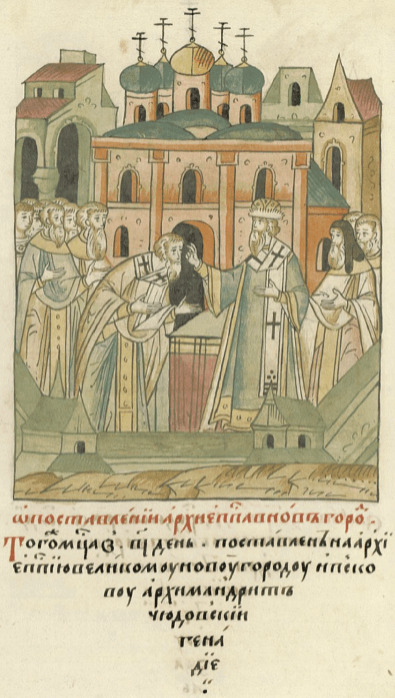
Gennady
About Gennadius of Novgorod
Gennadius (c. 1430s – 4 December 1505) was a prominent Russian Orthodox cleric who served as the Archbishop of Novgorod the Great and Pskov from 1484 to 1504. Born into the boyar clan of Moscow, he previously held the position of hegumen at the Chudov Monastery within the Moscow Kremlin. Gennadius is a recognized saint of the Russian Orthodox Church, with his feast day observed on December 4th (Old Style) or December 17th (Gregorian Calendar).
Life and Ministry
Appointed Archbishop of Novgorod in 1484, Gennadius arrived in a city recently brought under direct Muscovite control. His primary mandate was to align the Novgorodian church more closely with Muscovite ecclesiastical practices, a task he pursued despite initial opposition from local clergy. He skillfully navigated this resistance by incorporating local saints into liturgical commemorations.
His archiepiscopate was largely defined by his vigorous campaign against the Heresy of the Judaizers, which had spread from Novgorod to Moscow. Gennadius is noted for adopting severe measures, reportedly inspired by the Spanish Inquisition, and for overseeing the burning of several individuals accused of heresy, with the support of the grand prince and metropolitan.
Beyond his ecclesiastical duties, Gennadius also contributed to civic projects. He helped fund the reconstruction of the Detinets (Kremlin) walls in Novgorod between 1484 and 1490. Furthermore, in 1492, he undertook the crucial task of calculating Easter for the subsequent thousand years. This calculation was vital for the Russian Church and society, especially given the prevailing belief that the year 7000 of the Byzantine Calendar (corresponding to 1492 AD) would mark the end of the world, which would have disrupted religious observances and agricultural planning.
Death and Legacy
Gennadius participated in the Moscow Council of 1503. The following year, he retired from his archiepiscopate following accusations of simony. He returned to Moscow and died on December 4, 1505, at the Chudov Monastery. His burial site within the monastery's main church was lost following its destruction in 1929.
Gennadius's enduring legacy rests on his instrumental role in combating religious dissent and his monumental achievement in compiling the first complete Slavic Bible codex, the Gennady Bible, in 1499. This compilation was a landmark event in the history of Slavic biblical literature and contributed significantly to the standardization of religious texts and practices within the Russian Orthodox Church.
Source: Wikipedia ↗
Frequently Asked Questions
When was Gennadius Archbishop of Novgorod?
Gennadius served as the Archbishop of Novgorod the Great and Pskov from 1484 to 1504. He was installed in office on December 12, 1484.
What is Gennadius chiefly remembered for?
He is most remembered for his significant efforts in combating the Heresy of the Judaizers and for his compilation of the first complete Slavic Bible codex in 1499, known as the Gennady Bible.
What was the Heresy of the Judaizers?
The Heresy of the Judaizers was a religious movement that Gennadius actively fought against during his archiepiscopate in Novgorod and Moscow. He employed methods that were noted to be similar to those of the Spanish Inquisition.
What was the significance of the Gennady Bible?
The Gennady Bible, compiled by Archbishop Gennadius in 1499, was the first complete codex of the Bible in the Slavic language. This monumental work was a significant achievement for biblical scholarship and dissemination within the Slavic world.
What led to Gennadius's retirement?
Gennadius retired from his position as Archbishop in 1504 after being accused of simony. He subsequently returned to Moscow, where he died the following year.
Where was Gennadius buried?
Gennadius was buried in the Chudov Monastery in Moscow, near Metropolitan Aleksei. His remains were lost after the monastery's destruction in 1929.
Related Saints
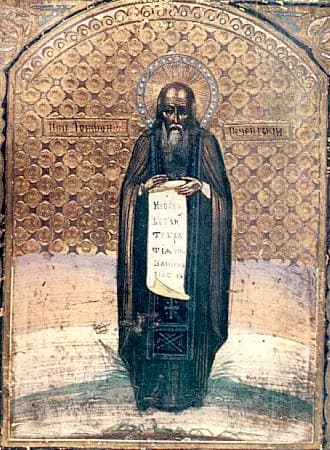
Tryphon of Pechenga
Tryphon of Pechenga was a 16th-century Russian monk and ascetic who became known as the "Enlightener of the Sami." He is chiefly remembered for founding the Pechenga Monastery and for his missionary work among the Sámi people of the Kola Peninsula and Lapland.
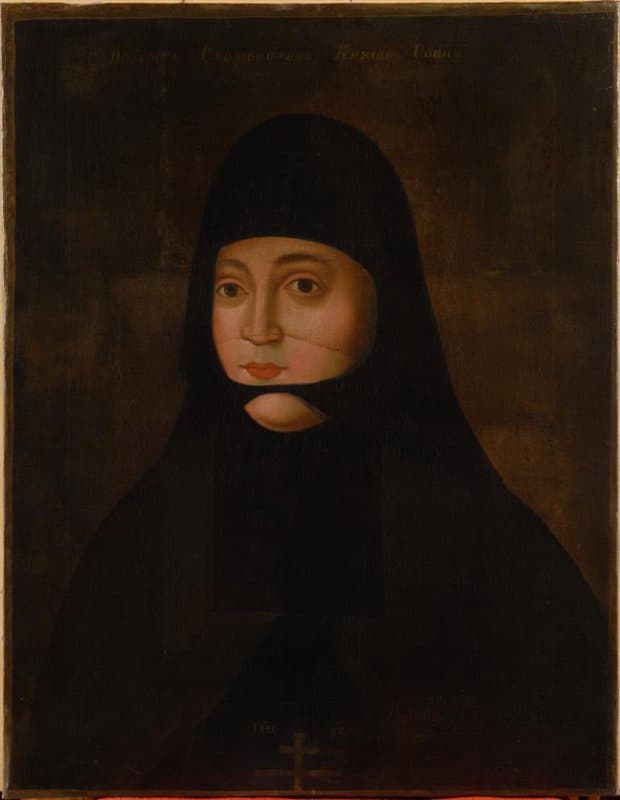
Sophia of Suzdal
Sophia of Suzdal, formerly known as Solomonia Yuryevna Saburova, was the Grand Princess of Moscow as the wife of Vasili III. She is remembered for her piety and for her canonization by the Russian Orthodox Church after a life marked by the struggle for an heir and her eventual monastic vows. She is chiefly remembered for her devout life as a nun and her subsequent veneration.
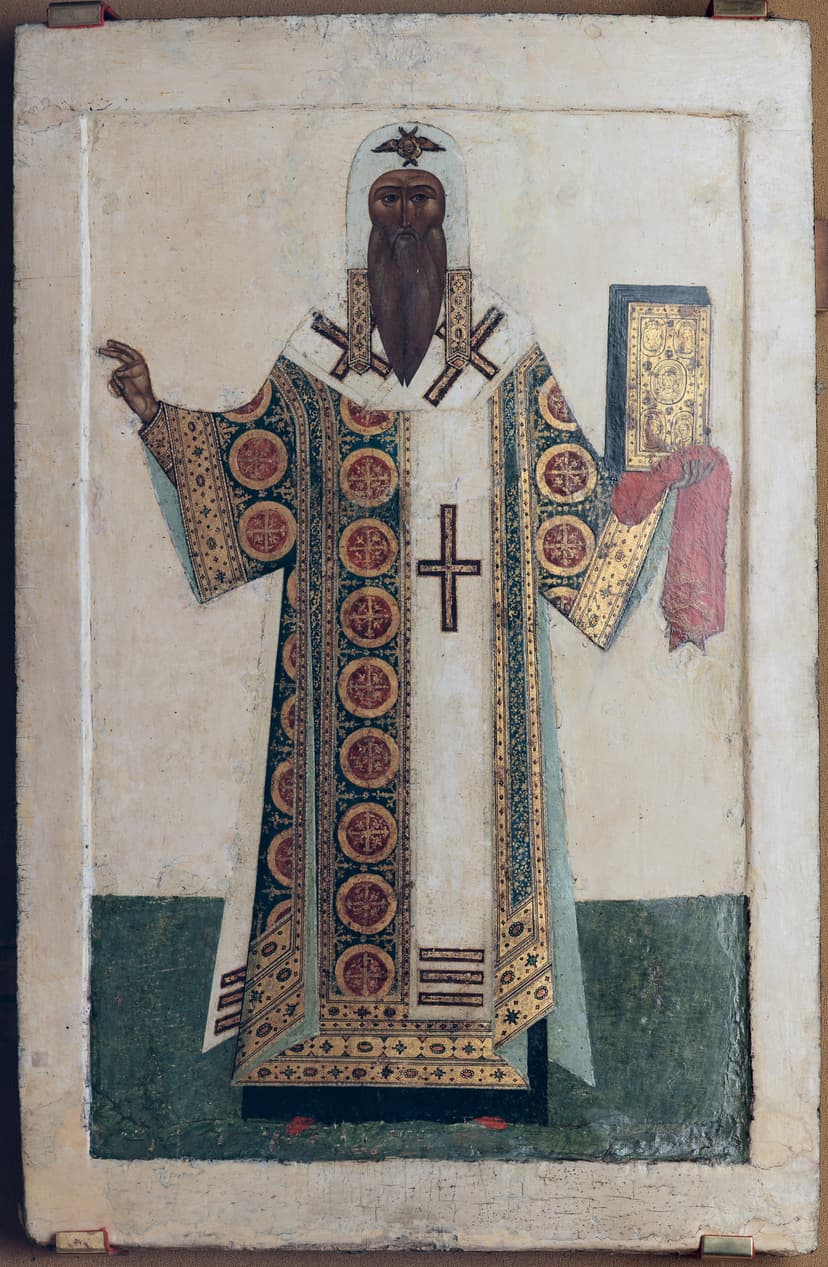
Macarius of Moscow
Macarius of Moscow was Metropolitan of Moscow and all Rus' from 1542 to 1563, serving as the primate of the Russian Orthodox Church. He is remembered as a significant cleric, writer, and icon painter who played a crucial role in church reforms and state affairs during the reign of Ivan the Terrible. Macarius is particularly noted for his compilation of saints' lives and his role in the canonization of numerous Russian saints.