
Ezra
July 13·5th century BC·Middle East
Ezra was an important Jewish scribe and priest in the early Second Temple period, traditionally credited with restoring Jewish scriptures and religion after the Babylonian exile. He is revered for his role in reintroducing the Torah and enforcing its observance among the people, particularly regarding intermarriage. While his historical existence and the extent of his actions are debated among scholars due to a lack of extrabiblical evidence, he remains a highly respected figure in Judaism and is venerated as a saint in Catholic and Orthodox traditions.
Key Facts
- ›Ezra is described in the Hebrew Bible as a scribe and priest who returned from Babylonian captivity.
- ›He is traditionally credited with writing and editing the books of Ezra and Nehemiah, and also the Books of Chronicles and Malachi.
- ›According to the Book of Ezra, he was sent from Babylon to Jerusalem to teach the laws of God and enforced the dissolution of marriages between Jewish men and foreign women.
- ›Rabbinic tradition credits Ezra with establishing the Great Assembly and several features of contemporary Judaism.
- ›His historical existence is debated due to a lack of extrabiblical evidence and conflicting scholarly interpretations.
- ›He is known as Uzair in Islam and his tomb is a pilgrimage site near Basra, Iraq.
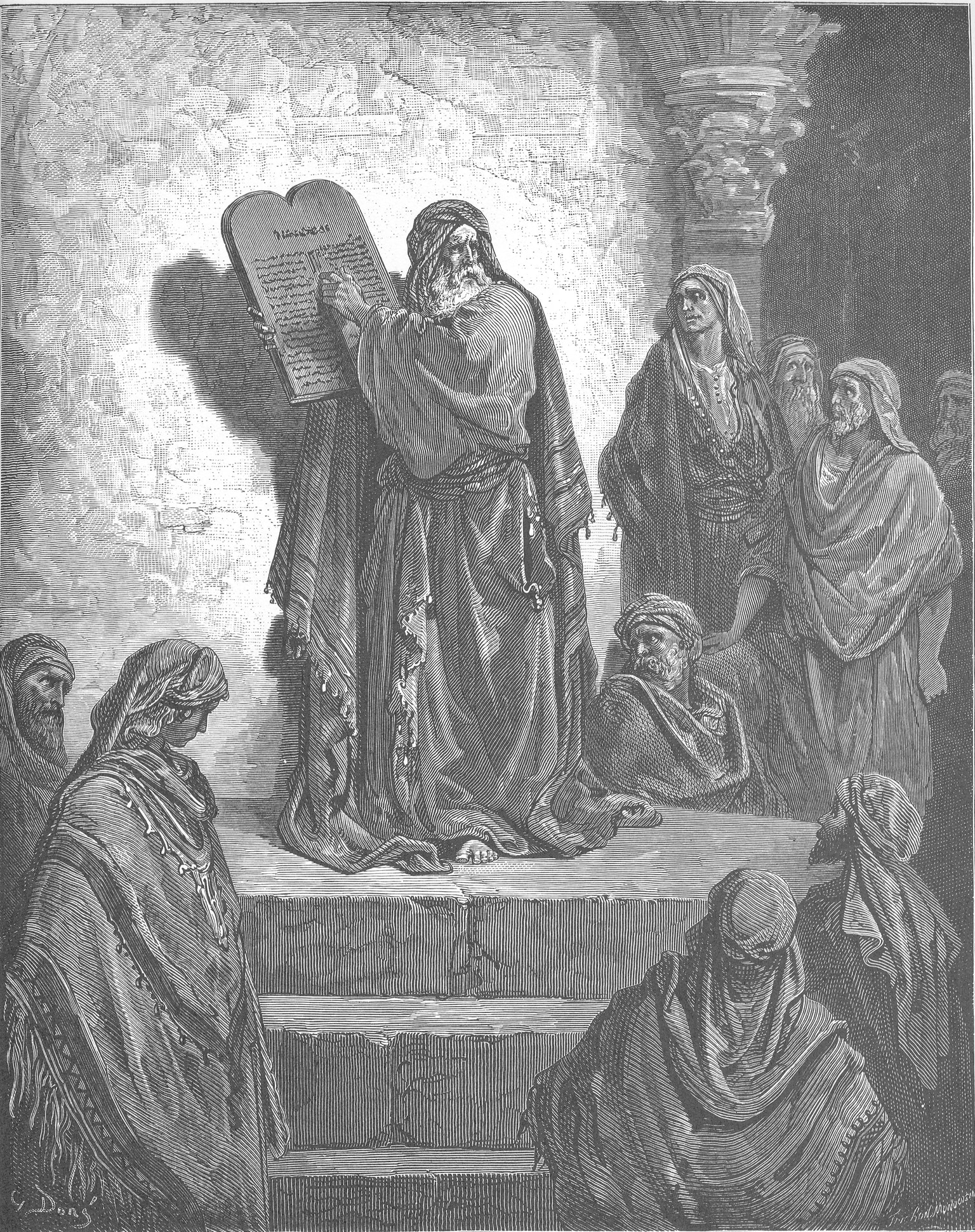
ʿUzayr, Esdrās, Esdras
Torah Scroll, Book
About Ezra
Ezra (fl. fifth or fourth century BCE) is a pivotal figure in the Hebrew Bible, primarily known as a scribe and priest instrumental in the religious restoration of the Jewish people after their return from Babylonian captivity. His name, possibly an Aramaic shortening of 'Yahweh helps,' reflects his perceived divine association. The canonical Book of Ezra and the Book of Nehemiah are the oldest sources detailing his activities, though he is traditionally credited with authorship of other biblical texts, including the Books of Chronicles and Malachi.
Life and Historical Context
According to biblical accounts, Ezra was a descendant of the last High Priest of Solomon's Temple and returned from exile to Jerusalem. In the seventh year of King Artaxerxes I (around 457 BCE), he was commissioned to travel to Jerusalem to teach the laws of God. The biblical narrative highlights Ezra's vigorous efforts to re-establish adherence to the Torah, most notably by enforcing the dissolution of marriages between Jewish men and foreign women, which he viewed as a transgression. Later, Nehemiah, sent as governor, worked to rebuild Jerusalem's walls, and upon completion, Ezra read the Torah to the assembled Israelites, leading them to enter into a covenant to uphold its laws.
Scholarly Debate on Historicity
The historical existence and specific actions of Ezra are subjects of considerable scholarly debate. A lack of extrabiblical evidence and conflicting interpretations of biblical texts have led to a range of views, from considering him a historical figure whose life was embellished to viewing him as a literary construct. Challenges include the dating of his mission, potential inconsistencies with the timeline of Nehemiah's activities, and the seemingly exaggerated authority described in the account of his commission by the Persian king.
Religious and Cultural Significance
Despite historical uncertainties, Ezra holds immense significance in Jewish tradition. Rabbinic Judaism credits him with establishing the Great Assembly, a precursor to the Sanhedrin, and instituting key elements of Jewish religious practice. He is often metaphorically referred to as the 'father of Judaism.' In Christian traditions, Ezra is recognized as a saint, with his feast day celebrated on July 13 in the Roman Catholic Church and on the Sunday of the Holy Forefathers in the Eastern Orthodox Church. In Islam, he is known as Uzair, and his tomb near Basra, Iraq, is a site of pilgrimage.
Later Traditions and Writings
Beyond the canonical books, Ezra is associated with a body of later literature. The text known as 1 Esdras preserves a version of Ezra's story with variations from the canonical account. The apocalyptic Fourth Book of Ezra, written around 100 CE, presents Ezra as a prophet receiving divine revelations, reflecting on the destruction of Jerusalem and the course of history. These later works underscore his enduring role as a figure of spiritual authority and divine inspiration.
Source: Wikipedia ↗
Frequently Asked Questions
Who was Ezra according to the Hebrew Bible?
According to the Hebrew Bible, Ezra was an important Jewish scribe and priest in the early Second Temple period. He is depicted as instrumental in reintroducing the Torah and restoring the Jewish religion after the return from Babylonian captivity.
What is Ezra traditionally credited with writing?
Traditionally, Ezra is held to have written and edited the books of Ezra and Nehemiah. He is also credited in tradition with the authorship of the Books of Chronicles and the Book of Malachi.
What was Ezra's role in enforcing the Torah?
The Book of Ezra describes Ezra enforcing the observance of the Torah, most notably by confronting Jewish men who had married foreign pagan women and advocating for the dissolution of these marriages to purify the community.
Is Ezra considered a historical figure?
There is no historical consensus on Ezra's existence or mission due to a lack of extrabiblical evidence and conflicting scholarly interpretations. Some view him as a historical figure whose life was enhanced in scripture, while others consider him a literary figure.
How is Ezra venerated in different traditions?
Ezra is highly respected in Judaism and is regarded as a saint in the Roman Catholic Church, with a feast day of July 13. He is also venerated as a saint in the Eastern Orthodox Church.
What are the traditional burial places of Ezra?
Various traditions place Ezra's burial in different locations. One tradition suggests he is buried in Ezra's Tomb near Basra, Iraq, while another alleges his burial in Tadef near Aleppo in northern Syria.
Who is Ezra known as in Islam?
In Islam, Ezra is known as Uzair. He is mentioned in the Qur'an and is considered a prophet by some Muslim scholars, though not explicitly named as one. His tomb near Basra, Iraq, is a pilgrimage site.
Related Saints
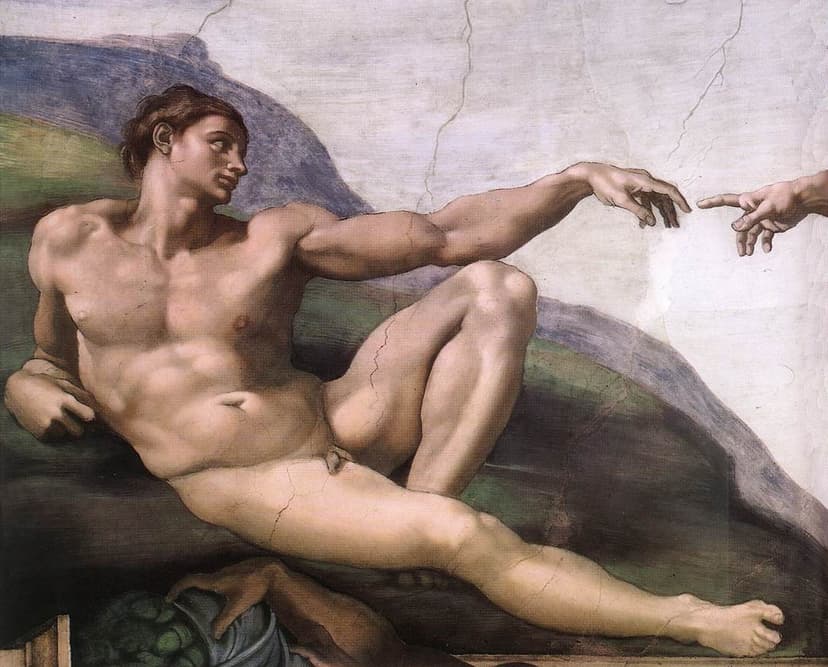
Adam
Adam is the first human being, created by God according to the Book of Genesis and revered in Judaism, Christianity, Islam, and other belief systems. He is remembered for his creation from dust, his sin in the Garden of Eden by eating forbidden fruit, and his subsequent expulsion, which introduced death and sin into the world. His story serves as a foundational narrative for understanding humanity's relationship with God, the origins of sin, and the concept of redemption.

Malachi
Malachi is the name of the author of the Book of Malachi, the final book of the Nevi'im in the Tanakh. The name itself means "messenger," leading some scholars to believe it is a pseudonym. Jewish tradition identifies Malachi with Ezra the scribe, who prophesied during the Persian period.
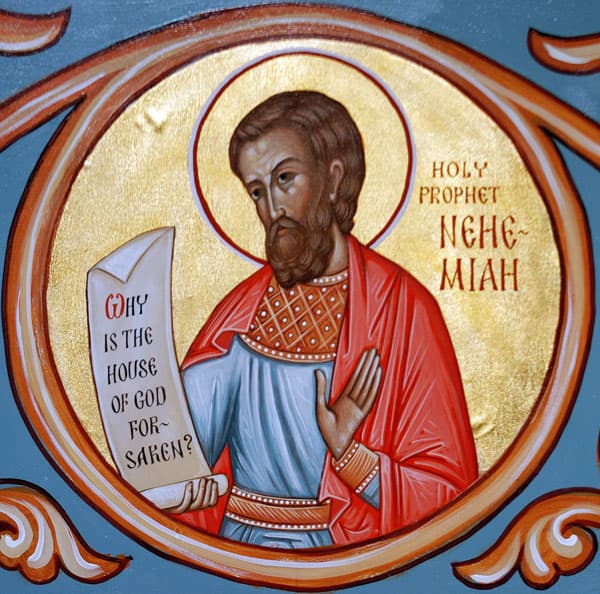
Nehemiah
Nehemiah was a significant figure in the rebuilding of Jerusalem during the Second Temple period, serving as governor of the autonomous province of Judea within the Achaemenid Empire. He is remembered for his determined efforts to reconstruct the city walls against opposition and for his role in religious and social reforms. While his historicity is debated in academic circles, he is venerated as a saint in the Eastern Orthodox Church.