
Demetrius of Rostov
October 28·18th century·Ukraine
Demetrius of Rostov was a prominent opponent of the Russian Orthodox Church's reform under Peter the Great, advocating for traditional practices and the influence of Cossack Baroque spirituality. He is best known as the author of "The Lives of Saints" (Cheti-Minei) and is sometimes credited with composing the first Russian opera, "Rostov Mysteries."
Key Facts
- ›Born Daniil Savvich Tuptalo in 1651 into a Cossack family.
- ›Entered the Kievo-Mohyla Academy at age 11 and took monastic vows in 1668, receiving the name Demetrius.
- ›Authored "the Lives of Saints" (Cheti-Minei), a comprehensive collection of saints' lives.
- ›Opposed both Old Believers and Peter the Great's ecclesiastical policies.
- ›Appointed Metropolitan of Siberia in 1701, but preferred to remain in Moscow until becoming Archbishop of Rostov.
- ›Died on October 28, 1709, with his relics later placed at St. Jacob's Monastery.
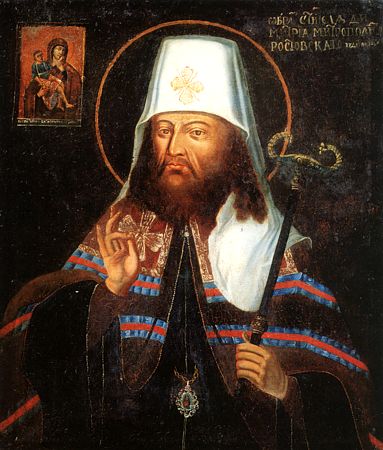
Dymytrii Rostovsky, Daniil Savvich Tuptalo, Tuptalenko
About Demetrius of Rostov
Demetrius of Rostov (1651–1709), born Daniil Savvich Tuptalo, was a significant figure in the Russian Orthodox Church during a period of major ecclesiastical reform. He is primarily remembered as a leading opponent of the reforms championed by Peter the Great and Theophan Prokopovich, advocating for the preservation of traditional religious practices and the distinctive Cossack Baroque spiritual influence prevalent at the turn of the 17th and 18th centuries.
Life and Ministry
Demetrius was born into a Cossack family and received his education at the Kievo-Mohyla Academy. He took monastic vows in 1668, adopting the name Demetrius. His early career involved service in various monasteries in Ukraine, where his sermons against moral laxity gained him recognition across Russia. He eventually settled at the Kiev Pechersk Lavra, dedicating himself to his ambitious literary project.
In 1701, Demetrius was appointed Metropolitan of Siberia but chose to remain in Moscow due to ill health until he was invested with the archbishopric of Rostov. Throughout his time in Russia, he maintained opposition to both the Old Believers and Peter the Great's ecclesiastical policies. Shortly before his death, he was involved in the creation of a forged document intended to undermine the Old Believers. He also contributed to education in Rostov by establishing a school and a small theatre.
Major Works and Contributions
Demetrius's most renowned work is "The Lives of Saints" (Четьи-Минеи), a monumental compilation that integrated the lives of Russian saints into a single, accessible narrative. This work, published between 1684 and 1705, became a cornerstone of Russian hagiography. He is also sometimes credited as the composer or compiler of the "Rostov Mysteries" (1705), a lengthy work often considered an early Russian opera or oratorio, based on the lives of saints.
Beyond these, Demetrius was an active composer, with many of his Penitential Psalms achieving wide circulation and influencing Ukrainian folk music. His devotional texts, characterized by Western Baroque spirituality, also found resonance, leading to the sanctioning of specific devotions in Western Rite Churches.
Legacy
Demetrius of Rostov's opposition to the reforms of Peter the Great positioned him as a defender of traditional Orthodoxy. His "Lives of Saints" remains a vital resource for understanding Russian religious history and hagiography. His relics were placed at St. Jacob's Monastery following his death in 1709, which was later rebuilt as his shrine. The city of Rostov-on-Don is named in his honor.
Source: Wikipedia ↗
Frequently Asked Questions
Who was Demetrius of Rostov?
Demetrius of Rostov, born Daniil Savvich Tuptalo, was a prominent church figure in the late 17th and early 18th centuries. He was an archbishop and a leading opponent of the church reforms instituted by Peter the Great.
What is Demetrius of Rostov most famous for?
He is most famous for his extensive compilation "The Lives of Saints" (Cheti-Minei), which gathered biographies of saints important to the Russian Orthodox Church. He is also sometimes credited with composing the "Rostov Mysteries," considered an early Russian opera or oratorio.
What was Demetrius of Rostov's stance on church reforms?
Demetrius of Rostov was a staunch opponent of the Caesaropapist reforms promoted by Theophan Prokopovich and Peter the Great. He represented a more traditionalist faction within the Russian Orthodox Church, influenced by Cossack Baroque spirituality.
When and where did Demetrius of Rostov live?
Demetrius of Rostov was born in 1651, likely in the vicinity of Kyiv, Ukraine. He lived and worked in various locations within Ukraine and Russia, eventually becoming Archbishop of Rostov, and died there on October 28, 1709.
What other contributions did Demetrius of Rostov make?
Beyond his theological and literary works, Demetrius of Rostov was involved in education, opening a school and a small theatre in Rostov. He also composed Penitential Psalms that became part of Ukrainian folk tradition.
Related Saints
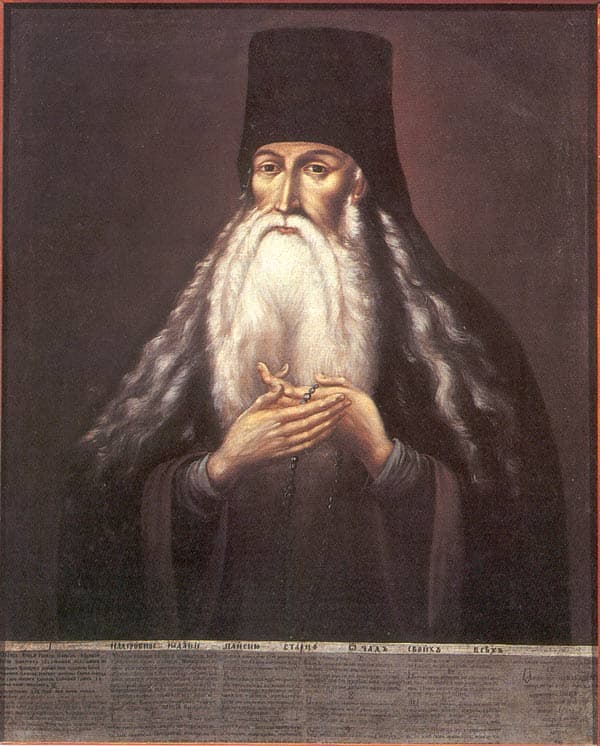
Paisius Velichkovsky
Paisius Velichkovsky was an Eastern Orthodox monk and theologian instrumental in revitalizing hesychastic monasticism in the Slavic world. He is remembered for spreading the concept of the spiritual elder (staretsdom) and for his work in translating and disseminating patristic texts, most notably the Philokalia. His efforts significantly influenced the spiritual renewal of Orthodoxy in the 18th century and beyond.

Joasaph of Belgorod
Joasaph of Belgorod was an 18th-century Russian Orthodox hierarch who served as the bishop of Belgorod from 1748 until his death in 1754. He is remembered for his pastoral care, visiting the poor and sick, and for the miracles attributed to his incorrupt relics after his death. His glorification in 1911 led to widespread veneration, though his relics were lost and later recovered.
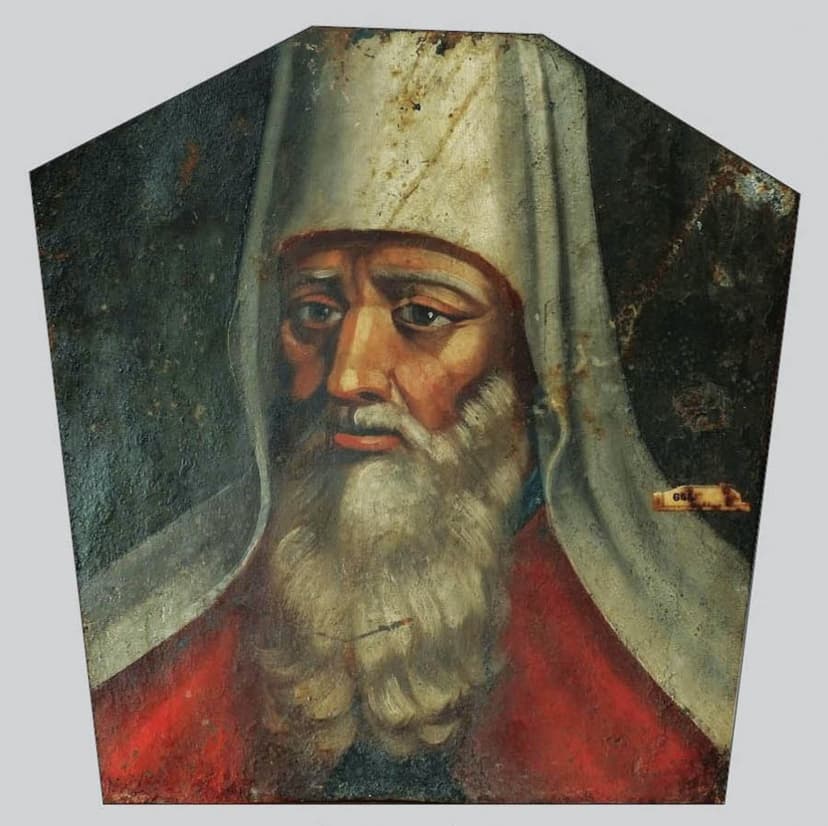
John of Tobolsk
John of Tobolsk was a Ukrainian Cossack-born clergyman who served as the Russian Orthodox archbishop of Chernigov and later metropolitan of Tobolsk and all Siberia. He is remembered for his theological writings, particularly "Iliotropion," and for his missionary and educational work in Siberia. Officially canonized by the Russian Orthodox Church in 1916, he is venerated for his spiritual leadership and the miracles attributed to him.