
David of Gareji
David of Gareji was a 6th-century anchorite, Desert Father, and wonderworker in the Kingdom of Iberia. He is venerated as one of the thirteen Assyrian Apostles and is chiefly remembered for founding the David Gareji monastery and for his pilgrimage to Jerusalem, from which he brought back a miracle-working stone. His tomb became a significant pilgrimage site, and he is considered a founder of the Georgian Thebaid and a patron of the Georgian Church.
Key Facts
- ›David of Gareji was an anchorite and Desert Father who lived in the 6th century.
- ›He was one of the thirteen Assyrian Apostles of the Kingdom of Iberia.
- ›David founded the David Gareji monastery with his disciples Dodo and Lukiane.
- ›He undertook a pilgrimage to Jerusalem, taking three stones from the Holy Land.
- ›He returned to Iberia with one miracle-working stone, known as the 'stone of grace'.
- ›His tomb was later transformed into a place of public worship.

David who sits outside
Georgian Church
Miracle-Working Stone
About David of Gareji
David of Gareji was a 6th-century anchorite, Desert Father, and wonderworker who played a significant role in the early Christianization of the Kingdom of Iberia. He is venerated as a saint in the Eastern Orthodox Church and is counted among the thirteen Assyrian Apostles who are credited with establishing Christianity in Georgia.
Life and Historical Context
David was a disciple of John of Zedazeni and is credited with founding the David Gareji monastery, a complex that would become a major spiritual and cultural center in Georgia. His life was marked by asceticism and a deep commitment to spiritual pursuits. A notable event in his life was his pilgrimage to Jerusalem. Upon reaching Palestine, David famously climbed only one of the hills surrounding the city, deeming himself unworthy to enter its gates and walk in the footsteps of Jesus. During this pilgrimage, he took three stones from the Holy Land with the intention of bringing them back to Iberia. However, envoys of the Patriarch of Jerusalem intercepted him near Nablus and reclaimed two of the stones, leaving David with only one.
This single stone became a renowned relic in the Georgian kingdom, known as the "stone of grace." It was believed to possess miraculous healing powers and attracted veneration from Christian pilgrims and even Muslim visitors, illustrating the spiritual connections between Georgia and the Holy Land.
Veneration and Legacy
After his return from pilgrimage, David of Gareji remained at his monastery until the end of his life, dying in the second half of the 6th century. He was buried in the David Gareji Lavra. In the 9th century, on the initiative of Hilarion the Iberian, David's tomb was developed into a site of public worship. His "vita," or life story, titled "Life and Deeds of Our Saint Father David of Gareji," was later composed in Georgian monasteries on Mount Athos.
David of Gareji is recognized as the "founder of the Georgian Thebaid" and is among the most venerated saints and patrons of the Georgian Church. The historical accuracy and significance of written sources and local traditions concerning him were further demonstrated by archaeological findings from the opening and cleaning of his tomb in 2000. The miracle-working stone, which was often hidden in various locations during periods of invasion, has been kept at the Sameba Cathedral in Tbilisi since the 1990s.
Source: Wikipedia ↗
Frequently Asked Questions
Who was David of Gareji?
David of Gareji was a 6th-century anchorite, Desert Father, and wonderworker in the Kingdom of Iberia, venerated as a saint in the Eastern Orthodox Church. He is recognized as one of the thirteen Assyrian Apostles.
What is David of Gareji known for?
He is primarily known for founding the David Gareji monastery and for his pilgrimage to Jerusalem. During this pilgrimage, he brought back a single stone from the Holy Land, which became a famous miracle-working relic known as the 'stone of grace'.
Where is David of Gareji buried?
David of Gareji died in the second half of the 6th century and was buried in the David Gareji Lavra. His tomb was later turned into a place of public worship.
What is the significance of the 'stone of grace'?
The 'stone of grace' is a relic that David of Gareji brought back from the Holy Land. It was believed to possess healing powers and was highly venerated by pilgrims of various faiths. Since the 1990s, it has been kept at the Sameba Cathedral in Tbilisi.
What is David of Gareji's role in Georgian Christianity?
David of Gareji is considered a highly venerated saint and patron of the Georgian Church. Orthodox hagiography calls him the 'founder of the Georgian Thebaid', highlighting his foundational role in monastic life in the region.
Related Saints
Abibos of Nekresi
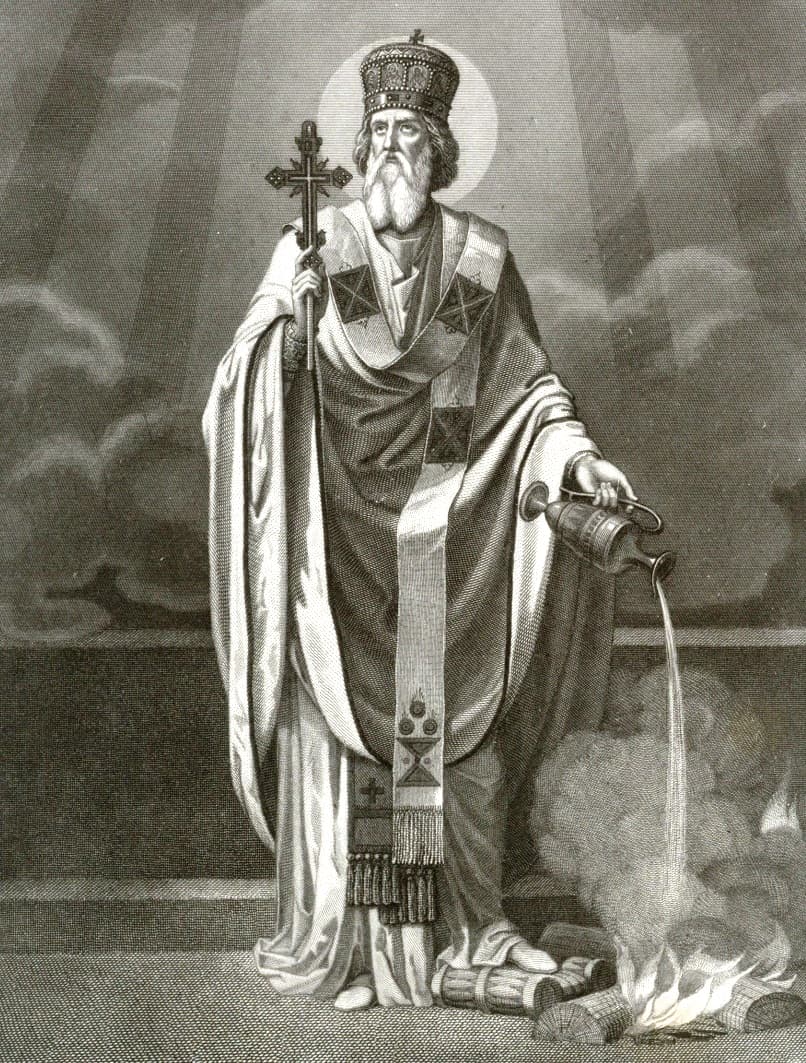
Abibos of Nekresi was one of the thirteen Assyrian apostles who brought Christianity to Georgia in the 6th century, serving as the bishop of Nekresi. He is remembered for his missionary work among both Georgians and mountain tribes, and for his martyrdom under Persian Zoroastrian rule. Abibos was stoned to death by Zoroastrian Persians for dousing a sacred flame.
Gregory of Khandzta
Gregory of Khandzta was a pivotal Georgian monk and ecclesiastical leader in the 8th and 9th centuries, celebrated for his instrumental role in reviving Georgian monasticism. He founded numerous monasteries that flourished as centers of learning and spiritual life, significantly shaping the cultural and religious landscape of Tao-Klarjeti.
Nino of Georgia
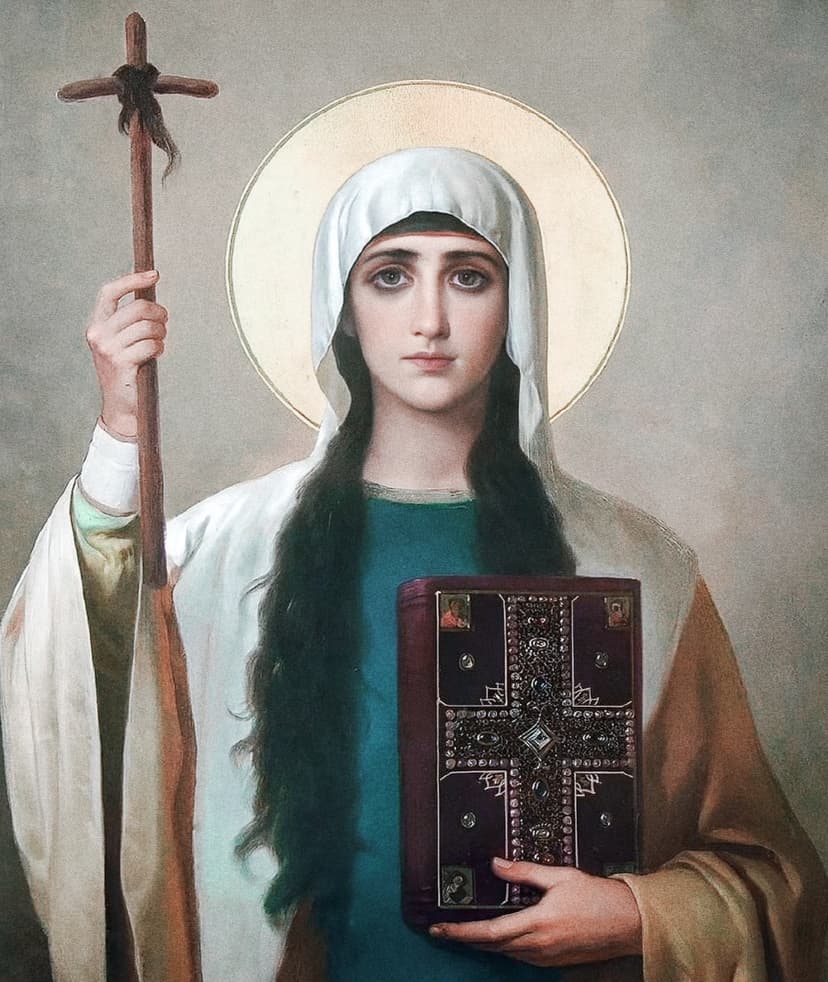
Saint Nino was a woman who preached Christianity in the Kingdom of Iberia, located in present-day Georgia. Her missionary efforts led to the Christianization of the entire country, making Iberia the second Christian state after Armenia. She is chiefly remembered for her role in establishing Christianity in Georgia and is a highly venerated saint in the Georgian Orthodox Church.