
David IV of Georgia
David IV of Georgia, known as David the Builder, was the 5th king of Georgia from 1089 to 1125. Widely regarded as the most successful Georgian ruler, he liberated the country from Seljuk occupation, notably through his victory at the Battle of Didgori. His comprehensive reforms of the army and administration restored Georgian unity and extended its influence across the Caucasus, ushering in a Georgian Golden Age.
Key Facts
- ›David IV was king of Georgia from 1089 to 1125.
- ›He is popularly considered the greatest and most successful Georgian ruler in history.
- ›He achieved a decisive victory against the Seljuk Turks at the Battle of Didgori in 1121.
- ›His reforms strengthened the army and administration, reuniting the country.
- ›He expanded Georgian control over much of the Caucasus region.
- ›David IV was canonized by the Georgian Orthodox Church.

David IV the Builder, David IV Aghmashenebeli
Georgia
About David IV of Georgia
David IV of Georgia (r. 1089–1125)
David IV, also known as David IV the Builder (Georgian: დავით IV აღმაშენებელი, romanized: davit IV aghmashenebeli), was the 5th king of the Kingdom of Georgia from 1089 until his death in 1125. Born in 1073, he was the son of King George II and Queen Helen of the Bagrationi dynasty. David IV is widely considered to be the greatest and most successful Georgian ruler in history and is recognized as an architect of the Georgian Golden Age.
Life and Reign
David IV ascended the throne at the age of sixteen, inheriting a kingdom severely weakened by Seljuk Turkish incursions and internal strife. His reign is broadly divided into three phases: internal reform (1089–1103), reconquest of lost territories (1107–1118), and securing external safety (1120–1125). He successfully drove the Seljuk Turks out of Georgia, most notably through his decisive victory at the Battle of Didgori in 1121.
Reforms and Unification
David IV implemented far-reaching reforms to revitalize the Georgian state. He reorganized the army, creating a professional force and a royal guard known as the monaspa, which strengthened central authority. He also convened the Council of Ruisi-Urbnisi in 1103 to reform the Georgian Orthodox Church, addressing corruption and aligning it more closely with the state. These reforms enabled him to reunite the country and bring most of the lands of the Caucasus under Georgia's control.
Foreign Policy and Legacy
David IV pursued a foreign policy focused on securing Georgia's borders and expanding its influence. He forged alliances with North Caucasian tribes, including the Kipchaks, to bolster his military strength against Muslim invaders. A devout promoter of Christian culture, David IV was canonized by the Georgian Orthodox Church. His reign marked a period of unprecedented prosperity, military strength, and cultural flourishing, establishing the foundation for Georgia's subsequent Golden Age.
Source: Wikipedia ↗
Frequently Asked Questions
Who was David IV of Georgia?
David IV of Georgia, also known as David the Builder, was the 5th king of the Kingdom of Georgia, reigning from 1089 until his death in 1125. He is celebrated as one of Georgia's greatest rulers.
What is David IV of Georgia most remembered for?
David IV is most remembered for his military successes, particularly driving out the Seljuk Turks and winning the Battle of Didgori in 1121. He is also credited with extensive reforms that unified and strengthened the Georgian state.
What were David IV's major reforms?
David IV implemented significant reforms in both the military and administration. He reorganized the army, centralized royal authority, and reformed the church, laying the groundwork for Georgia's Golden Age.
What was the Battle of Didgori?
The Battle of Didgori, fought in 1121, was a decisive victory for David IV of Georgia against the Seljuk Turks. This victory was crucial in expelling the Seljuks from Georgia and securing the kingdom's independence.
Why is David IV called 'the Builder'?
The epithet 'the Builder' (Aghmashenebeli) refers to his role in rebuilding and restoring the Georgian kingdom after periods of devastation and invasion. His efforts consolidated the state and fostered its cultural and political resurgence.
Is David IV of Georgia a saint?
Yes, David IV of Georgia was canonized by the Georgian Orthodox Church. He is venerated for his role in defending Christianity and promoting Christian culture within his kingdom.
Related Saints
George of Chqondidi
George of Chqondidi was a Georgian churchman and court minister who served as archbishop of Chqondidi and was the closest adviser to King David IV. He is best remembered as King David IV's tutor and spiritual father, playing a crucial role in the king's reforms of church and state and in military campaigns against the Seljuk Turks. His death in 1118 was deeply mourned by the kingdom and the king.
George the Hagiorite
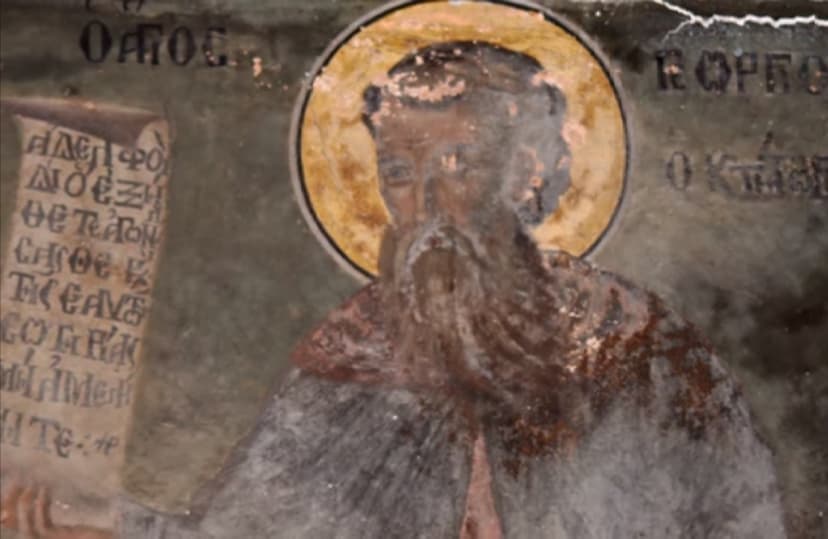
George the Hagiorite was a Georgian monk, theologian, and translator who was instrumental in fostering Georgian monastic communities within the Byzantine Empire. He is remembered for his extensive translations of patristic works and his defense of the autocephaly of the Georgian Orthodox Church, which earned him veneration as one of Georgia's most important saints.
Mirian III of Iberia
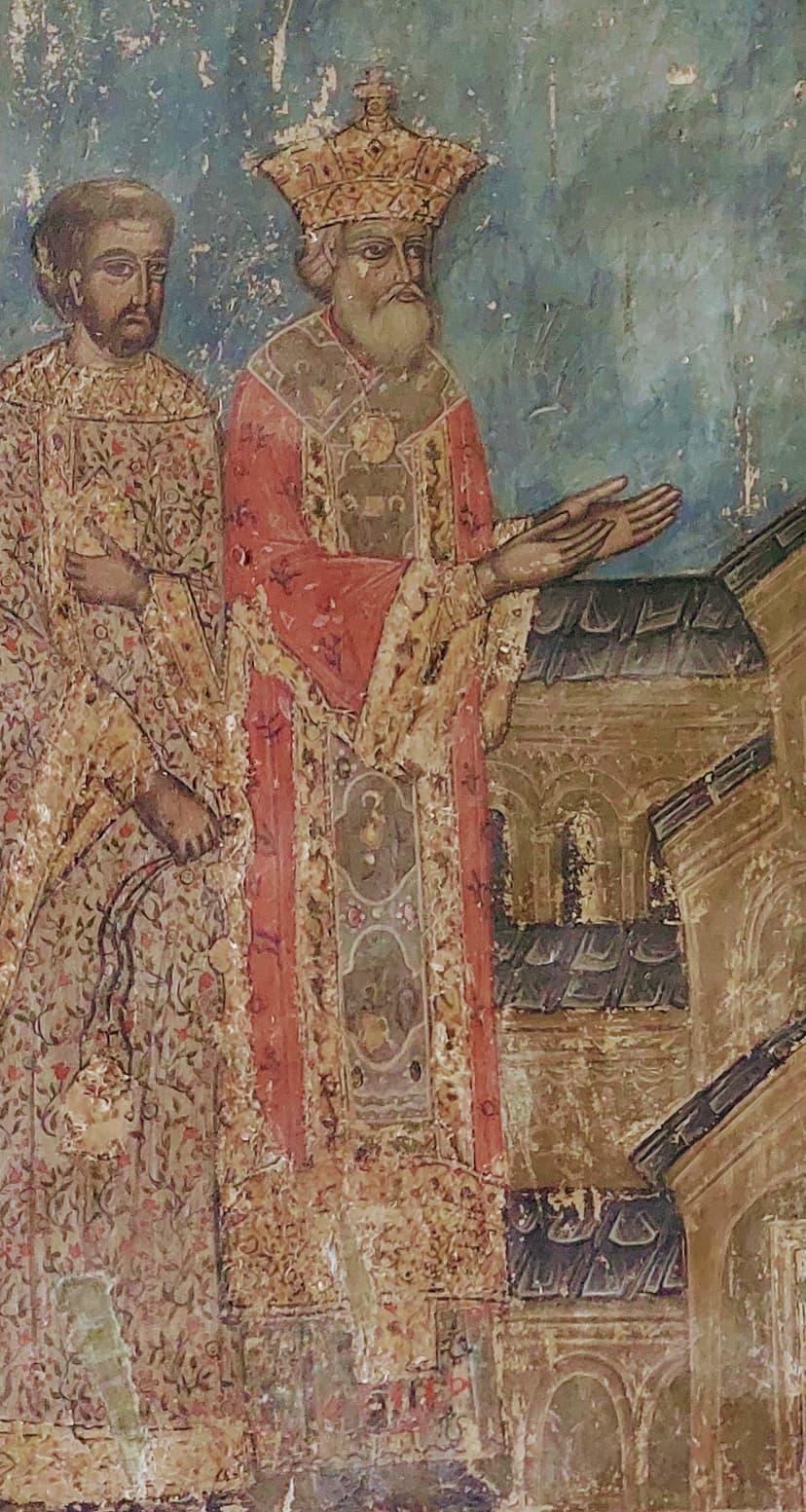
Mirian III was a king of Iberia (modern Georgia) and the founder of the Chosroid dynasty, living contemporaneously with Roman Emperor Constantine the Great. He is chiefly remembered as the first Christian king of Iberia, having established Christianity as the state religion through the ministry of Saint Nino. The Georgian Orthodox Church venerates him as a saint, equal to the Apostles.