
George the Hagiorite
July 10·11th century·Georgia
George the Hagiorite was a Georgian monk, theologian, and translator who was instrumental in fostering Georgian monastic communities within the Byzantine Empire. He is remembered for his extensive translations of patristic works and his defense of the autocephaly of the Georgian Orthodox Church, which earned him veneration as one of Georgia's most important saints.
Key Facts
- ›George the Hagiorite was born in Trialeti, Georgia, into an aristocratic family.
- ›He studied in Constantinople and mastered Greek, gaining knowledge of Byzantine theology.
- ›George became the hegumen of the Iviron Monastery on Mount Athos in 1044.
- ›He defended the autocephaly of the Georgian Orthodox Church before the Patriarch of Antioch.
- ›George translated numerous patristic works and improved existing Georgian translations.
- ›He is commemorated annually on July 10th by the Georgian Orthodox Church.
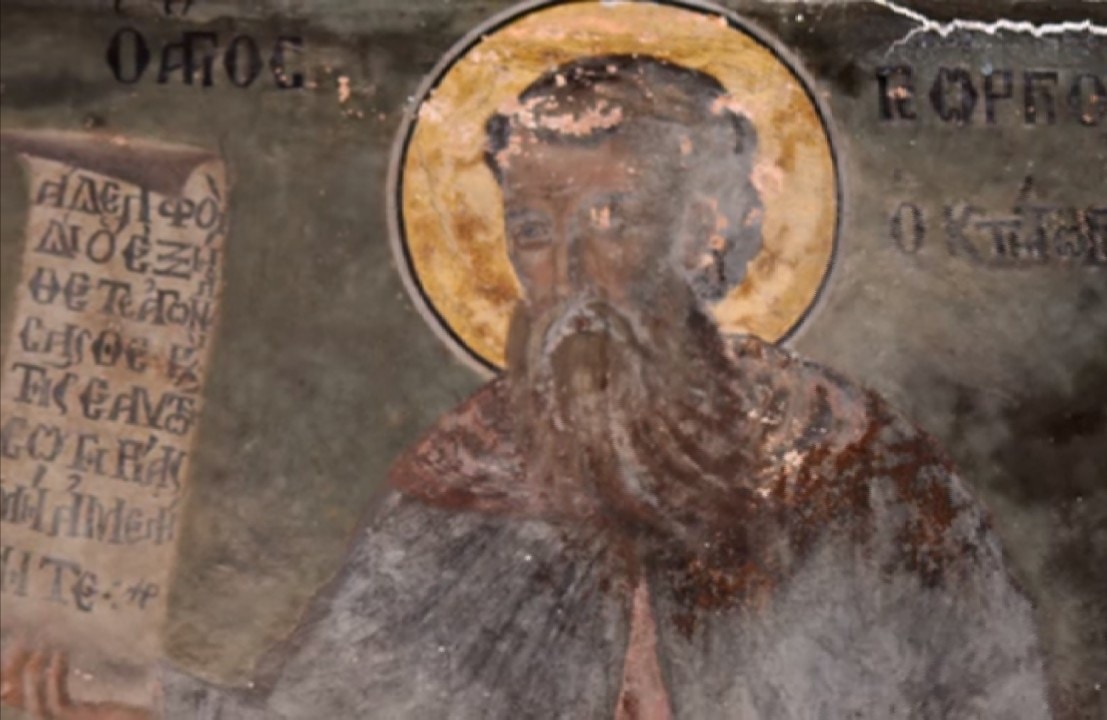
George Mtatsmindeli, George Athonite
About George the Hagiorite
George the Hagiorite (1009 – 27 June 1065) was a pivotal figure in the religious and cultural history of medieval Georgia. A monk, calligrapher, religious writer, theologian, and translator, he was instrumental in leading Georgian monastic communities within the Byzantine Empire, particularly at the Iviron Monastery on Mount Athos. His epithets, Mt'ats'mindeli and At'oneli, signify his deep connection to the "Holy Mountain" and Mount Athos.
Life and Significance
Born into an aristocratic family in southern Georgia, George received his early education in local monasteries before traveling to Constantinople around 1022. There, he mastered Greek and became deeply versed in Byzantine theology. After returning to Georgia and undertaking monastic vows, he eventually established himself at the Iviron Monastery on Mount Athos in 1040. Four years later, he rose to become the hegumen of the monastery, revitalizing it as a center of Georgian Orthodox culture.
George the Hagiorite is highly regarded for his extensive translations of works by the Church Fathers, the Psalms, and exegetical texts from Greek into Georgian. Some of these works were introduced into the Georgian language for the first time through his efforts. He also revised existing translations and improved upon the work of his predecessors, such as Euthymius of Athos.
Defense of Autocephaly and Cross-Cultural Engagement
One of George's most significant contributions was his role as an arbitrator and facilitator of engagement between Georgia and the Byzantine Empire. A crucial moment in his life was his defense of the autocephaly (self-governance) of the Georgian Orthodox Church before the Patriarch of Antioch. This defense, drawing on historical arguments and Georgian ecclesiastical tradition, was vital in securing the church's independent status, a feat that solidified his position as one of Georgia's most venerated saints.
He also played a role in regulating local canon law in Georgia and facilitated the education of young Georgians at Athos. George's approach to the East-West Schism of 1054 was notably moderate, though he maintained opposition to the Filioque clause.
Legacy
George the Hagiorite's influence on Georgian religious tradition was profound. His translations and original writings, including his major work "The Vitae of John and Euthymius," set high standards for Georgian literature, hymnography, and hagiography. His work is considered a continuation and refinement of earlier Georgian monastic literary traditions. The principles he helped establish in monastic life and the relationship between the church and royal authority were later officially adopted by the national ecclesiastical council of Ruisi-Urbnisi in 1103.
The Georgian Orthodox Church canonized George the Hagiorite, and he is commemorated annually on July 10th. His relics are venerated at the Iviron Monastery on Mount Athos.
Source: Wikipedia ↗
Frequently Asked Questions
Who was George the Hagiorite?
George the Hagiorite was a prominent Georgian monk, theologian, writer, and translator of the 11th century. He played a significant role in organizing Georgian monastic life within the Byzantine Empire, particularly on Mount Athos.
What is George the Hagiorite remembered for?
He is primarily remembered for his extensive translations of Greek patristic texts into Georgian, many of which were new to the language. He is also highly venerated for his successful defense of the autocephaly of the Georgian Orthodox Church.
Where did George the Hagiorite live and work?
George was born in Georgia and studied in Constantinople. He later became the hegumen of the Iviron Monastery on Mount Athos in Greece and also spent time in Antioch and briefly in Georgia.
What was George the Hagiorite's most important original work?
His most significant original work is "The Vitae of John and Euthymius," a biography dedicated to his predecessors at the Iviron Monastery. This work combines hagiography with historical and theological content.
What was George the Hagiorite's stance on the East-West Schism?
George adopted a moderate position, not considering the Latin practice of the Eucharist heretical. However, he did view the Filioque clause as heretical and translated anti-Latin works into Georgian.
Related Saints
Jerome
Jerome was an early Christian priest, theologian, and historian, best known for his Latin translation of the Bible, the Vulgate. He is recognized as one of the four Great Latin Church Fathers and is revered for his extensive biblical commentaries and his teachings on Christian moral life, particularly for women. His scholarly endeavors and translation work significantly shaped Western Christianity.
Jacob of Edessa
Jacob of Edessa was a Syriac Orthodox bishop, scholar, and translator renowned for his multilingualism and significant contributions to biblical revision, canon law, grammar, and liturgy. He played a crucial role in standardizing theological terminology and synthesizing Greek and Syriac traditions, profoundly shaping Syriac Christianity and facilitating the transmission of Hellenistic thought into the Islamic world. He is venerated as one of the most important scholars of the Christian-Aramean tradition.
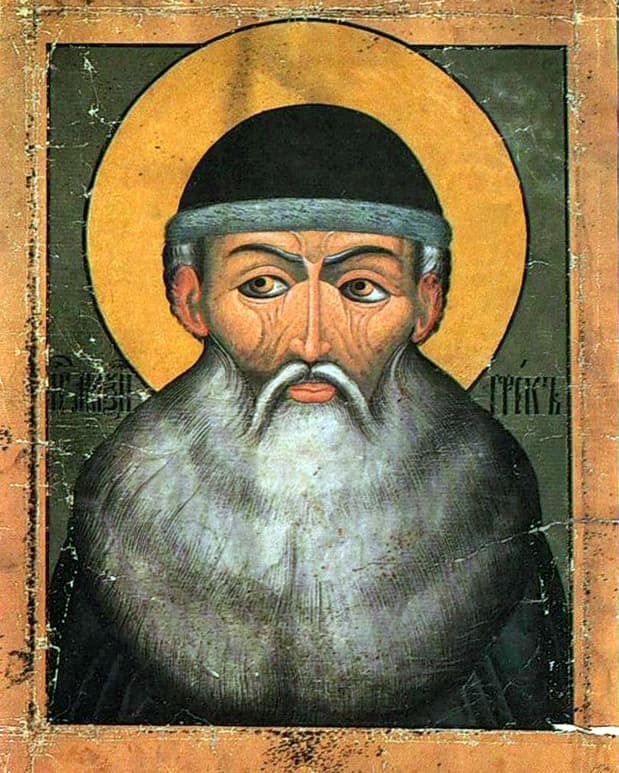
Maximus the Greek
Maximus the Greek was a 15th-century Greek monk, scholar, and translator who became a prominent figure in Russia. He is remembered for his extensive writings and translations, his advocacy for religious reform, and his courageous criticism of the Muscovite authorities, which led to his imprisonment and exile. Canonized as a saint, he is venerated for his intellectual contributions and his steadfast adherence to his Christian ideals.