
Cyril the Philosopher
Cyril the Philosopher, born Constantine, was a Byzantine theologian and missionary, renowned for his work with his brother Methodius in evangelizing the Early Slavs. They are chiefly remembered for devising the Glagolitic alphabet, the first script for Old Church Slavonic, and for their mission to Great Moravia. Both brothers are venerated as saints and are considered "Apostles to the Slavs."
Key Facts
- ›Cyril was born Constantine in Thessalonica, Byzantine Empire, around 827-828.
- ›He was ordained as a priest and later became a monk, taking the name Cyril shortly before his death.
- ›Cyril and his brother Methodius were missionaries to the Khazars and later to Great Moravia.
- ›They are credited with creating the Glagolitic alphabet, the first written script for the Slavic languages.
- ›Cyril died in Rome on February 14, 869, after which Methodius continued their mission.
- ›Both brothers are venerated in the Eastern Orthodox Church as saints and in the Catholic Church as co-patron saints of Europe.
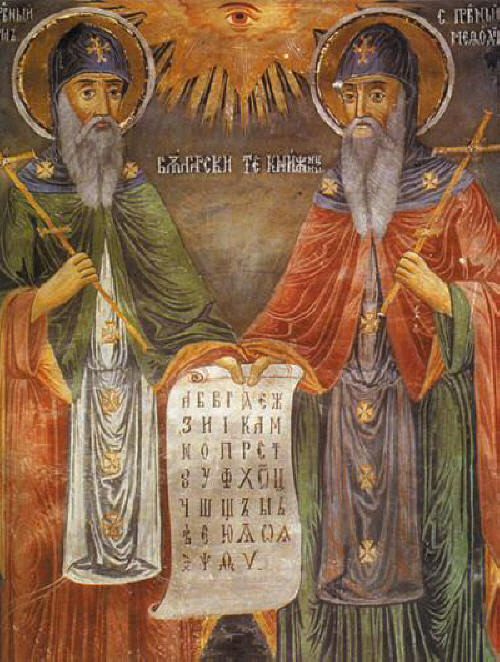
Constantine, Constantine the Philosopher
Europe, Slavs, Literacy
Glagolitic Alphabet, Book
About Cyril the Philosopher
Cyril the Philosopher, born Constantine, was a pivotal figure in the Christianization and cultural development of the Early Slavs. Born in Thessalonica within the Byzantine Empire around 827-828, Cyril, along with his elder brother Methodius, undertook extensive missionary work that earned them the title "Apostles to the Slavs." Their most significant contribution was the creation of the Glagolitic alphabet, the first script designed to transcribe the Old Church Slavonic language. This innovation was instrumental in translating religious texts and establishing a written tradition for Slavic peoples, thereby facilitating the spread of Christianity and literacy.
Cyril's early life was marked by education and intellectual pursuits. He studied under the influential Theoktistos and later taught philosophy at the University of Magnaura in Constantinople. Before his missionary endeavors, he had a brief mission to the Khazars around 860. The brothers' most historically significant mission began in 863 when they were dispatched to Great Moravia at the request of Prince Rastislav. There, they encountered resistance from Frankish clergy who favored the Latin rite and sought to impose linguistic and liturgical uniformity. To counter this, Cyril and Methodius developed the Glagolitic alphabet and translated the Gospels and liturgical books into Old Church Slavonic.
Their work in Great Moravia led to conflicts with the German episcopate, prompting Cyril and Methodius to travel to Rome to seek papal authorization. They were received warmly by Pope Adrian II, who supported their mission and authorized the use of the Slavic liturgy. It was in Rome, shortly before his death on February 14, 869, that Constantine took the monastic name Cyril. His death occurred approximately fifty days after becoming a monk. Following Cyril's passing, Methodius continued their mission, eventually being elevated to Archbishop of Sirmium.
Both Cyril and Methodius are highly venerated in both the Eastern Orthodox and Catholic Churches. They are recognized as saints, with their feast day celebrated on February 14th in the Catholic Church and on May 11th (or May 24th according to the Julian calendar) in the Eastern Orthodox Church. In 1980, Pope John Paul II declared them co-patron saints of Europe, acknowledging their profound impact on the continent's religious and cultural landscape. The legacy of Cyril the Philosopher endures through the continued use of the Cyrillic alphabet, a descendant of the Glagolitic script, and the rich literary and religious heritage of the Slavic world.
Source: Wikipedia ↗
Frequently Asked Questions
Who was Cyril the Philosopher?
Cyril the Philosopher, born Constantine, was a Byzantine theologian and missionary. Along with his brother Methodius, he is revered as an "Apostle to the Slavs" for his significant missionary work and linguistic innovations.
What is Cyril the Philosopher most famous for?
He is most famous for co-creating the Glagolitic alphabet, the first alphabet used to write the Old Church Slavonic language. This innovation was crucial for translating religious texts and establishing a written tradition for Slavic peoples.
What was Cyril's mission to Great Moravia?
In 863, Cyril and Methodius were sent to Great Moravia at the request of Prince Rastislav to evangelize the Slavic population. Their mission involved translating the Gospels and liturgical books into Old Church Slavonic and establishing a native liturgy.
When and where did Cyril the Philosopher die?
Cyril the Philosopher died in Rome on February 14, 869. He had become a monk shortly before his death and was given the name Cyril at that time.
How is Cyril the Philosopher venerated today?
Cyril the Philosopher is venerated as a saint in both the Eastern Orthodox and Catholic Churches. He and his brother Methodius are honored as co-patron saints of Europe and are celebrated for their role in spreading Christianity and literacy among the Slavs.
Related Saints
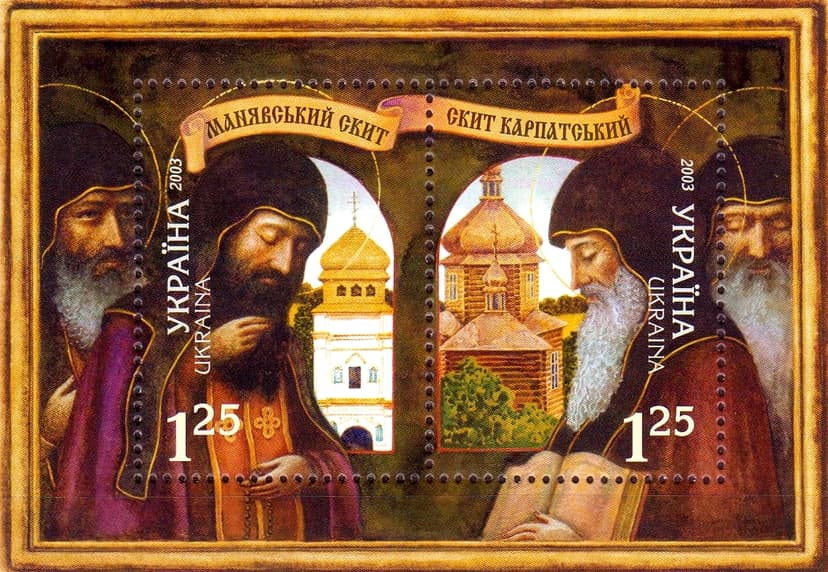
Theodosius of Manyava
Theodosius of Manyava was a Ukrainian Orthodox saint, ascetic, and the second hegumen of Manyava Skete, a monastery in the Carpathian Mountains. He is remembered for his strict ascetic practices, his role in establishing and leading the Manyava Skete community, and his spiritual authority which led to his community being designated as the head monastery over many others in western Ukraine and Moldavia.
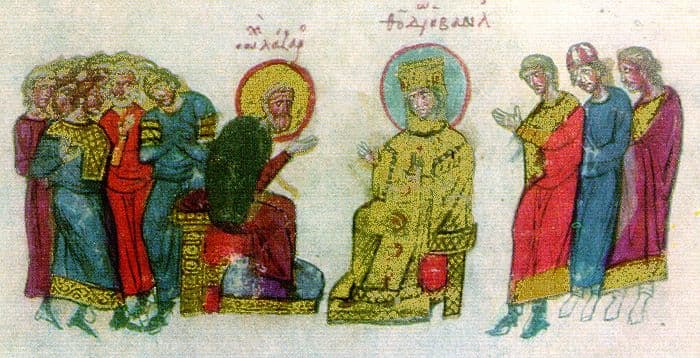
Lazarus the Iconographer
Lazarus the Iconographer was a 9th-century Byzantine monk, priest, and saint, celebrated as the first iconographer to be formally canonized. He is remembered for his unwavering devotion to creating and restoring holy images during the period of Byzantine Iconoclasm, even under severe persecution from the emperor. His ability to paint icons was considered a divine gift, and he served as a symbol of perseverance for those who suffered for their faith.
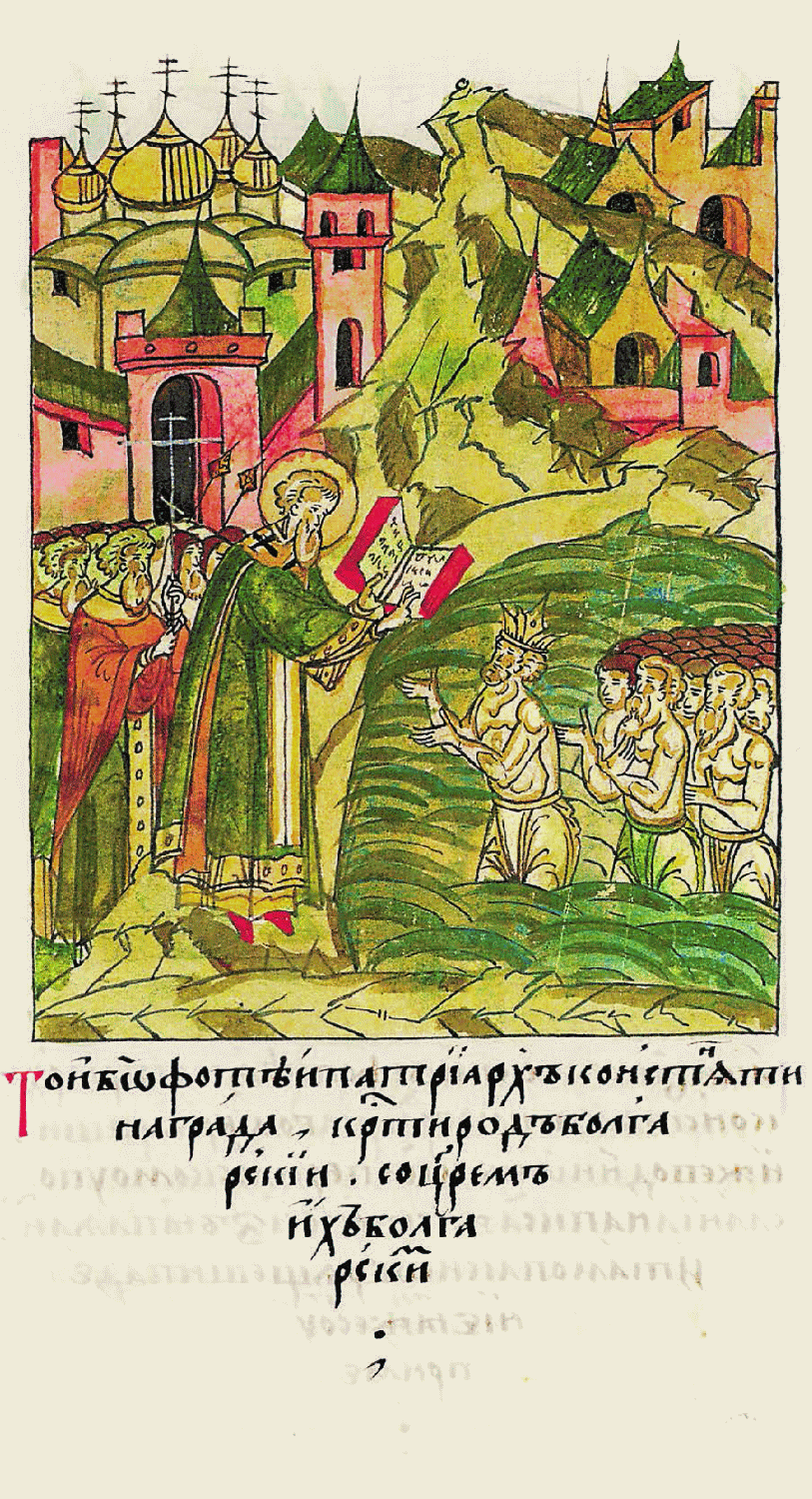
Photius the Great
Photius I of Constantinople, also known as Saint Photius the Great, was a towering intellectual and influential church leader of the 9th century. He served as Ecumenical Patriarch of Constantinople twice and played a pivotal role in the conversion of the Slavs and the Photian schism. He is remembered as a brilliant scholar, a systematic compiler of Church Law, and a defender of Greek spiritual independence.