
Cyril Lucaris
June 27·17th century·Greece
Cyril Lucaris was a Greek prelate and theologian who served as Patriarch of Alexandria and Ecumenical Patriarch of Constantinople. He is remembered for his attempts to reform the Eastern Orthodox Church along Calvinist lines, a controversial endeavor that led to his condemnation by some synods but later acquittal by others. Cyril Lucaris was eventually martyred, strangled by Janissaries in 1638, and is locally venerated as a hieromartyr.
Key Facts
- ›Cyril Lucaris was born in Candia (Heraklion), Crete, on November 13, 1572.
- ›He studied in Venice, Padua, Wittenberg, and Geneva, where he was influenced by Calvinism.
- ›He served as Patriarch of Alexandria from 1601 to 1620 and later as Ecumenical Patriarch of Constantinople.
- ›Lucaris authored the "Confessio", a statement of Calvinist doctrine adapted for the Orthodox Church, which caused significant controversy.
- ›He sponsored the first translation of the New Testament into Modern Greek by Maximos of Gallipoli.
- ›Cyril Lucaris was strangled on June 27, 1638, on the orders of the Ottoman Sultan Murad IV.

Cyril I of Constantinople, Kyrillos Loukaris
Alexandrian Orthodox Church, Eastern Orthodox Church
About Cyril Lucaris
Cyril Lucaris (born November 13, 1572) was a prominent Greek prelate and theologian who served as Patriarch of Alexandria and later as Ecumenical Patriarch of Constantinople. Born in Candia (Heraklion) on Crete, then part of the Republic of Venice, his early life and education took him across Europe, including studies in Venice, Padua, Wittenberg, and Geneva. It was in Geneva that he was significantly influenced by Calvinism and the Reformed faith, developing a critical stance towards Roman Catholicism.
Life and Ministry
Ordained in Constantinople, Cyril Lucaris was dispatched to the Polish–Lithuanian Commonwealth to counter the Union of Brest. He spent six years as a professor at the Orthodox academy in Vilnius. In 1601, at the age of twenty-nine, he was installed as Patriarch of Alexandria, a position he held for two decades. During this time, his theological views increasingly aligned with Protestant Reformation doctrines. He corresponded with prominent figures like Marco Antonio de Dominis and expressed his conviction that the Reformed faith was more aligned with God's Word.
Facing pressure from Turkish oppression and the proselytizing efforts of Jesuit missionaries, Cyril Lucaris recognized a need to strengthen Orthodox education. He founded a theological seminary at Mount Athos, known as the Athoniada school. In 1627, he authorized the establishment of the first Greek language printing press in Constantinople, which unfortunately was closed a year later due to French protests over its anti-Catholic publications. He also sponsored Maximos of Gallipoli's translation of the New Testament into Modern Greek.
Theological Reforms and Controversy
Cyril Lucaris's most significant and controversial undertaking was his attempt to reform the Eastern Orthodox Church along Calvinistic lines. He supported young Greek theologians in their studies at European universities and, in 1629, published his "Confessio" (Confession of Faith). This work presented Calvinist doctrine, though it was carefully accommodated to Orthodox language and creeds. The "Confessio" sparked a major theological controversy, leading to criticisms at synods in Constantinople (1638) and Iași (1642), and culminating in the Synod of Jerusalem (1672), which condemned Calvinistic doctrines. However, the authenticity and authorship of the "Confessio" have been debated, with some scholars arguing that the evidence for Lucaris's authorship is overwhelming, including a manuscript in his handwriting.
Lucaris also had a positive disposition towards the Church of England, maintaining correspondence with the Archbishops of Canterbury. Many valuable manuscripts collected by him and his contemporaries, like Metrophanes Kritopoulos, now form part of the Patriarchal Library.
Politics and Martyrdom
Cyril Lucaris's tenure was marked by political instability. He was temporarily deposed and banished multiple times, often at the instigation of his Orthodox opponents and ambassadors from France and Austria, while receiving support from the Dutch and English ambassadors. His final downfall occurred when the Ottoman Sultan Murad IV, preparing for war, had him accused of inciting unrest among the Cossacks. To prevent trouble during his absence, the Sultan ordered Cyril Lucaris to be strangled by Janissaries on June 27, 1638, aboard a ship in the Bosporus. His body was cast into the sea but was recovered and buried in Nicomedia. His remains were later brought back to Constantinople.
Legacy and Veneration
Cyril Lucaris was honored as a saint and martyr shortly after his death. In modern times, the Holy Synod of the Patriarchate of Alexandria glorified Loukaris on October 6, 2009, and he is commemorated on June 27. The debate surrounding his theological views and the authenticity of his "Confessio" continues among scholars, but his martyrdom has secured his place in Orthodox veneration.
Source: Wikipedia ↗
Frequently Asked Questions
Who was Cyril Lucaris?
Cyril Lucaris was a Greek prelate and theologian who held significant positions within the Eastern Orthodox Church, including Patriarch of Alexandria and Ecumenical Patriarch of Constantinople. He is known for his scholarly pursuits and his attempts to reform Orthodox theology.
What was Cyril Lucaris known for trying to do?
Cyril Lucaris is primarily remembered for his efforts to reform the Eastern Orthodox Church along lines similar to Calvinism. He published a "Confessio" that presented Calvinist doctrines, which caused considerable debate and opposition within the Orthodox Church.
How did Cyril Lucaris die?
Cyril Lucaris died a martyr, strangled by Janissaries in 1638 aboard a ship in the Bosporus, on the orders of the Ottoman Sultan Murad IV. His body was thrown into the sea but was later recovered and buried.
Is Cyril Lucaris considered a saint?
Yes, Cyril Lucaris is locally venerated as a hieromartyr in the Alexandrian Orthodox Church, which glorified him in 2009. He is commemorated on June 27.
What was the controversy surrounding Cyril Lucaris's "Confessio"?
The "Confessio" was a statement of Calvinist doctrine that Cyril Lucaris published, adapting it to Orthodox language and creeds. This publication led to criticism and condemnation by various synods, although later synods, like the Synod of Jerusalem in 1672, acquitted him, suggesting the condemnation was due to his perceived authorship rather than the content itself.
Related Saints
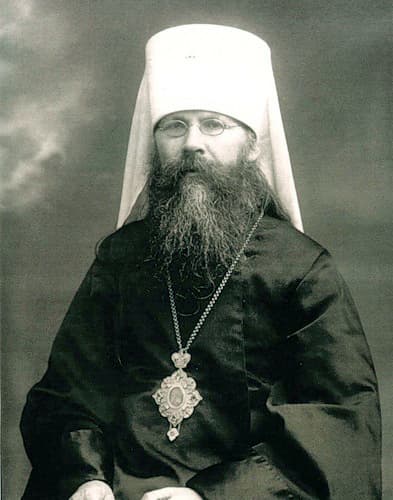
Benjamin of Petrograd
Benjamin of Petrograd was a hieromartyr and bishop in the Russian Orthodox Church, serving as Metropolitan of Petrograd and Gdov from 1917 to 1922. He is remembered for leading nonviolent resistance to Soviet anti-religious legislation and for his execution by firing squad following a show trial. In 1992, he was canonized by the Russian Orthodox Church along with other martyrs executed with him.
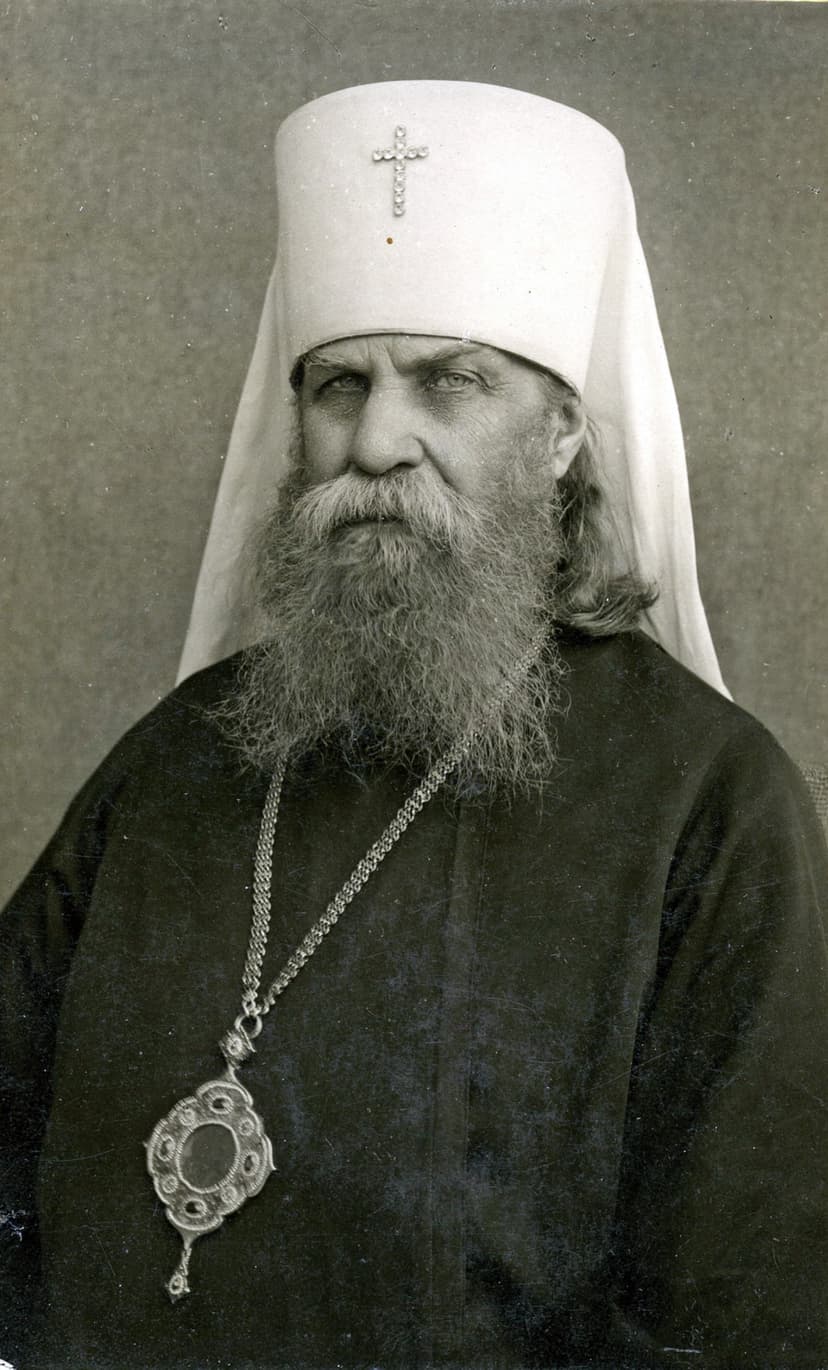
Peter of Krutitsy
Peter of Krutitsy was a Russian Orthodox bishop who served as the patriarchal locum tenens, the head of the Russian Orthodox Church, from April to December 1925. He is remembered as a hieromartyr for his steadfast refusal to compromise with Soviet authorities and schismatic groups, which led to prolonged imprisonment and ultimately his execution. Despite harsh conditions and fabrications about his death, he remained the nominal head of the Church until his martyrdom.
Sava of Gornji Karlovac
Sava Trlajić was a bishop of the Serbian Orthodox Church who served as Bishop of the Eparchy of Gornji Karlovac from 1938 until his martyrdom in August 1941. He is venerated as a saint by the Serbian Orthodox Church, remembered as a new martyr and hieromartyr for his refusal to abandon his flock during the persecution of Serbs in the Independent State of Croatia. His steadfastness in the face of extreme violence led to his death at the hands of the Ustaše, solidifying his legacy as a defender of his people.