
Taebaeksan
Taebaeksan is a significant South Korean mountain located in the Taebaek mountain range, notable for its role in the Baekdu-daegan mountain range where it turns westward. Designated as South Korea's 22nd national park, it holds deep spiritual and cultural importance, featuring ancient Shamanist altars and the historic Manggyeongsa Temple.
Key Facts
- ›Forms a crucial turning point in the Baekdu-daegan mountain range.
- ›Designated as South Korea's 22nd national park in August 2016.
- ›Features Cheonjedan, a series of ancient Shamanist altars on its highest peaks.
- ›Home to Manggyeongsa Temple, built by Silla Dynasty monk Jajang.
- ›Known for the 'Dragon Spring', reputedly the highest spring in South Korea.
- ›Hosts an annual snow festival at its Danggol entrance.

Mount Taebaeksan, Mount Taebaek
- Key Point In the Baekdu-Daegan Mountain Range.
- Site of Ancient Shamanist Altars .
- Location of the Historic Manggyeongsa Temple.
Jajang
About Taebaeksan
Taebaeksan, also referred to as Mount Taebaeksan or Mount Taebaek, is a prominent mountain in South Korea, forming a vital part of the Taebaek mountain range and the significant Baekdu-daegan mountain range. It marks the point where the Baekdu-daegan turns westward after its long course along Korea's east coast. Its geographical reach extends across Gangwon-do and Gyeongsangbuk-do provinces, and on August 22, 2016, it was officially designated as South Korea's 22nd national park.
Spiritual and Cultural Importance
The mountain holds considerable spiritual and cultural weight. Its highest peaks are adorned with Cheonjedan, a collection of ancient Shamanist altars, reflecting a long history of indigenous spiritual practices. Nestled on its slopes at an elevation of 1,460 meters is Manggyeongsa Temple, a historic site founded by Jajang, a monk from the Silla Dynasty. The temple is dedicated to the Bodhisattva of wisdom and is associated with the 'Dragon Spring,' renowned as the highest natural spring in South Korea.
Natural Attractions and Activities
Taebaeksan is celebrated for its natural beauty, which varies with the seasons. The summit ridge is characterized by dense azalea bushes that burst into bloom in the spring, making it a picturesque time for visitors. In winter, the landscape is transformed by rime frost coating the ancient yew trees, creating a stark and beautiful scene. The main Danggol entrance to the park is a hub of activity, hosting an annual snow festival and featuring a coal mining museum, offering insights into the region's industrial history.
Source: Wikipedia ↗
Frequently Asked Questions
What is the elevation of Taebaeksan?
Taebaeksan has an elevation of 1,566.7 meters (5,140 feet) above sea level. The Manggyeongsa Temple, located on its slopes, is situated at an elevation of 1,460 meters.
What is the cultural significance of Taebaeksan?
Taebaeksan is culturally significant as a turning point in the Baekdu-daegan mountain range and is home to ancient Shamanist altars known as Cheonjedan. The Manggyeongsa Temple, established by a Silla Dynasty monk, further adds to its spiritual heritage.
What are the notable attractions on Taebaeksan?
Attractions include Manggyeongsa Temple with its 'Dragon Spring,' the highest known spring in South Korea. The summit ridge is adorned with azalea bushes and ancient yew trees, and the ancient Shamanist altars of Cheonjedan are present on the highest peaks.
When is the best time to visit Taebaeksan?
Spring is an ideal time to visit for the blooming azaleas, while winter offers the spectacle of rime frost on the twisted trees. The Danggol entrance also hosts an annual snow festival.
Related Sacred Mountains
Burkhan Khaldun
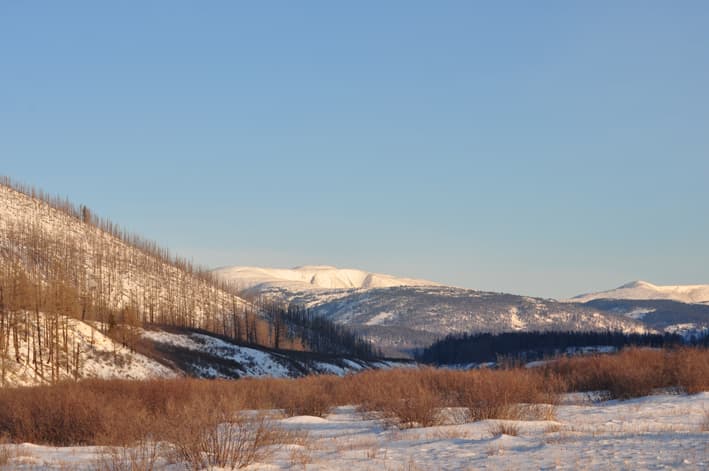
Burkhan Khaldun is a sacred mountain in Mongolia's Khentii Province, revered as the birthplace and potential tomb of Genghis Khan. It holds immense spiritual significance, considered the most sacred mountain in the country, and is integral to Mongolian national identity and nomadic traditions. The mountain is also recognized for its unique biodiversity and complex ecosystem.

Gyeryongsan
Gyeryongsan is a sacred mountain in South Korea, standing at 845 meters, known for its abundant spiritual energy. Its name translates to "chicken dragon mountain," and it holds significant religious and cultural importance, featuring ancient Buddhist temples and numerous peaks. The mountain is a popular destination, drawing about 1.4 million visitors annually to its national park.

Jirisan
Jirisan is the tallest mountain on mainland South Korea and the second-tallest overall, located within Jirisan National Park which spans three provinces. It holds significant religious importance, particularly for Buddhism, with several major temples situated on its slopes, and is also associated with Korean foundation myths. The mountain is a popular destination for hikers and pilgrims, renowned for its natural beauty and ten scenic views.