
Jirisan
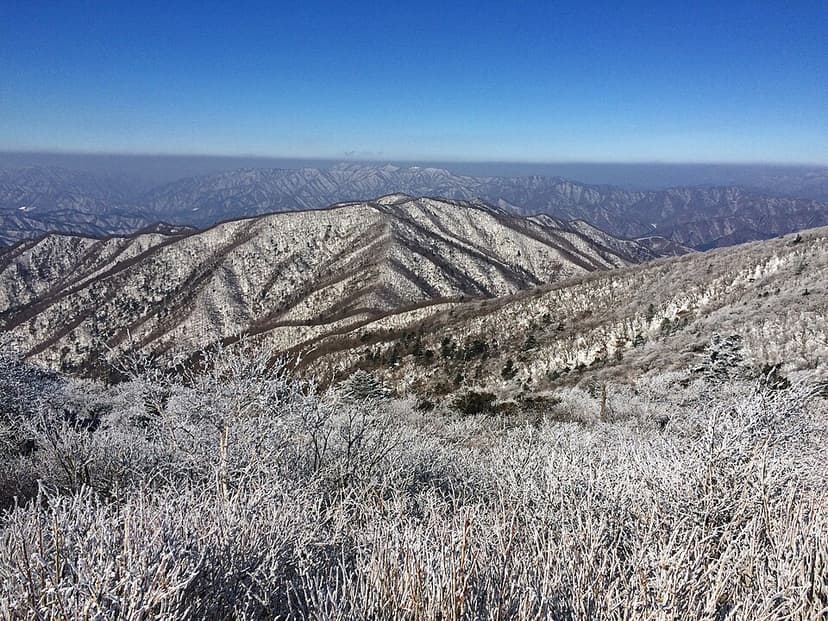
Jirisan is the tallest mountain on mainland South Korea and the second-tallest overall, located within Jirisan National Park which spans three provinces. It holds significant religious importance, particularly for Buddhism, with several major temples situated on its slopes, and is also associated with Korean foundation myths. The mountain is a popular destination for hikers and pilgrims, renowned for its natural beauty and ten scenic views.
Key Facts
- ›Jirisan is the tallest mountain in mainland South Korea and second-tallest overall, reaching an elevation of 1915 meters.
- ›It is located within Jirisan National Park, South Korea's largest national park, which extends across North and South Jeolla Provinces and South Gyeongsang Province.
- ›The mountain is a significant spiritual site for Buddhism, featuring seven major Buddhist temples, including the prominent Hwaeomsa.
- ›Jirisan is part of the Baekdu-daegan mountain range, considered the 'spine' of the Korean Peninsula.
- ›The mountain is a popular tourist destination, attracting over 280,000 visitors annually, with summer and autumn being peak seasons.
- ›Legends associated with Jirisan include the story of an 'imugi' (a serpent aspiring to become a dragon) and a sacrificed monk in Baemsagol Valley.

Jiri-San
Buddhism, Korean Folk Religion
- Associated With Korean Foundation Myths
- Site of A Legend Involving An Imugi and A Sacrificed Monk
- Historical Significance As A Site of Guerrilla Warfare During the Korean War
- Visiting Buddhist Temples
- Hiking Scenic Routes
- Observing Natural Phenomena Like Sea of Clouds and Autumn Leaves
Seosandaesa
About Jirisan
Jirisan is a majestic mountain located in the southern part of South Korea, renowned as the tallest peak on the mainland and the second-highest mountain in the country overall, after Hallasan on Jeju Island. Reaching an elevation of 1915 meters, it is the centerpiece of Jirisan National Park, South Korea's largest national park, which impressively spans the provinces of North Jeolla, South Jeolla, and South Gyeongsang.
Spiritual and Cultural Importance
The mountain holds deep spiritual significance, particularly within Buddhism, with seven major Buddhist temples nestled on its slopes, the most prominent being Hwaeomsa, known for its ancient stone artworks from the 7th to 10th centuries CE. Jirisan is also intertwined with Korean cultural heritage through sites like the Cheonghak-dong alpine valley and the Samseonggung, which celebrates a foundational Korean myth. Legends also contribute to its mystique, such as the tale of Baemsagol Valley, named after an imugi (a serpent deity) that failed to become a dragon and died there after attempting to sacrifice a monk.
A Natural and Recreational Hub
Jirisan is celebrated for its ten scenic views, attracting over 280,000 visitors annually, especially during the summer and autumn months. The national park offers a network of hiking routes, making it a prime destination for trekkers and nature enthusiasts. The mountain's ecosystem is rich, supporting a diverse array of plant life, and it has become a crucial habitat for the successful reintroduction of Asian Black Bears to South Korea.
Source: Wikipedia ↗
Frequently Asked Questions
What is the elevation of Jirisan?
Jirisan's highest peak, Cheonwangbong, is 1915 meters (6,283 feet) high. This makes it the tallest mountain on mainland South Korea.
Which provinces does Jirisan National Park cover?
Jirisan National Park spans three provinces: North Jeolla Province, South Jeolla Province, and South Gyeongsang Province. The largest portion of the park is located in South Gyeongsang Province.
What is the religious significance of Jirisan?
Jirisan is a significant site for Buddhism, hosting seven major Buddhist temples, with Hwaeomsa being the largest and most well-known. It is also associated with Korean foundation myths at sites like Samseonggung.
Are there famous peaks on Jirisan?
Yes, Jirisan has several notable peaks. The highest is Cheonwangbong, and another well-known peak is Samsinbong (Three Spirits Peak), which is a popular hiking destination.
What are some of the scenic attractions on Jirisan?
Jirisan is advertised as having ten scenic views, including 'Sunrise from Cheonwang-bong peak', 'Nogodan Sea of Clouds', and 'Piagol Autumn Leaves'. The Chilseon Valley is also a notable natural attraction.
Is Jirisan a popular hiking destination?
Jirisan is very popular for hiking, attracting over 280,000 visitors annually. The national park features numerous hiking routes, with summer and autumn being the most popular seasons for visits.
Related Sacred Mountains

Gyeryongsan
Gyeryongsan is a sacred mountain in South Korea, standing at 845 meters, known for its abundant spiritual energy. Its name translates to "chicken dragon mountain," and it holds significant religious and cultural importance, featuring ancient Buddhist temples and numerous peaks. The mountain is a popular destination, drawing about 1.4 million visitors annually to its national park.
Odaesan
Odaesan is a significant mountain cluster and national park in eastern South Korea, renowned for its connection to Korean Buddhism and its stunning natural landscapes. Named "Five Platforms Mountains" due to its five main peaks, it is considered a sacred site where the five most important cosmic Buddhas of Mahayana Buddhism are believed to teach.

Taebaeksan
Taebaeksan is a significant South Korean mountain located in the Taebaek mountain range, notable for its role in the Baekdu-daegan mountain range where it turns westward. Designated as South Korea's 22nd national park, it holds deep spiritual and cultural importance, featuring ancient Shamanist altars and the historic Manggyeongsa Temple.