
Mount Kilimanjaro
Tanzania·Africa
Mount Kilimanjaro is the highest mountain in Africa and the world's highest free-standing mountain, standing at 5,895 meters above sea level. This dormant volcano in Tanzania is a significant natural wonder, known for its glaciers, diverse ecosystems, and as a major global hiking destination. Its name's origin is debated, but local Chagga people refer to its peaks as Kipoo and Kimawenze.
Key Facts
- ›Mount Kilimanjaro is the highest mountain in Africa and the highest free-standing mountain in the world.
- ›The mountain is a large dormant stratovolcano composed of three distinct volcanic cones: Kibo, Mawenzi, and Shira.
- ›It is a major hiking and climbing destination, with seven established routes to its highest point, Uhuru Peak.
- ›Kilimanjaro hosts unique endemic species, such as the giant groundsel Dendrosenecio kilimanjari.
- ›The mountain's ice cap and glaciers are rapidly shrinking, with projections of complete disappearance by the MID-21st century.
- ›It was incorporated into Kilimanjaro National Park in 1973 and recognized as an IUGS geological heritage site in 2022.

Kilima-Ndscharo
- Home To the Chagga Kingdoms Until Their Abolition In 1963.
- Subject of Local Chagga Legends, Including Stories About Tone Provoking A God and A Mythical Cow Named Rayli.
- Potentially Known Since Antiquity, With Possible References In Classical Sources As A 'Moon Mountain' Or 'Ethiopian Mount Olympus'.
Johannes Rebmann, Hans Meyer, Julius Nyerere, Gustav Otto Richard Reusch, Walter Furtwangler, Ziegfried Koenig
About Mount Kilimanjaro
Mount Kilimanjaro is a colossal dormant volcano located in Tanzania, renowned as the highest mountain in Africa and the world's highest free-standing mountain. Its majestic presence, soaring to 5,895 meters (19,341 feet) above sea level, makes it a significant natural landmark and a globally recognized destination for hikers and climbers. The mountain's geological history is marked by volcanic activity that began over two million years ago, forming its three distinct cones: Kibo, Mawenzi, and Shira.
Geography and Geology
Kilimanjaro is a stratovolcano comprising three volcanic cones. Kibo, the highest, is dormant and features a crater rim with Uhuru Peak as its summit. Mawenzi and Shira are extinct volcanic cones. The mountain's slopes support a rich array of ecosystems, from montane forests to cloud forests, and are home to endemic species like the giant groundsel. A prominent feature is its large ice cap and glaciers, including Credner, Furtwängler, and Rebmann glaciers, which are critically endangered due to rapid melting. The International Union of Geological Sciences has recognized 'The Pleistocene Kilimanjaro volcano' as a geological heritage site due to its scientific relevance.
Human History and Cultural Significance
The southern and eastern slopes of Kilimanjaro were historically inhabited by the Chagga people, organized into various kingdoms. These communities have rich oral traditions and legends associated with the mountain. The origin of the name 'Kilimanjaro' is debated, with theories suggesting it may derive from Chagga or Swahili words alluding to its height, unclimbable nature, or whiteness. European exploration of the mountain began in the mid-19th century, with German missionary Johannes Rebmann credited as the first European to report its existence in 1848. German geologist Hans Meyer achieved the first documented ascent to the highest summit in 1899.
Climbing and Conservation
Kilimanjaro is a popular climbing destination, with seven established routes leading to Uhuru Peak. While not technically demanding, the significant altitude poses a risk of altitude sickness. The mountain was incorporated into Kilimanjaro National Park in 1973 to protect its unique environment. A pressing concern is the rapid retreat of its glaciers, a phenomenon exacerbated by global warming, with projections indicating the ice cap could disappear entirely by the mid-21st century. The forests on Kilimanjaro's lower slopes are vital water reservoirs for the surrounding regions.
Source: Wikipedia ↗
Frequently Asked Questions
What is the elevation of Mount Kilimanjaro?
The elevation of Uhuru Peak, Mount Kilimanjaro's highest point, is officially listed as 5,895 meters (19,341 feet) above sea level. However, various surveys have recorded slightly different measurements, including 5,892 m in 1999 and 5,902 m in 2008.
What is Mount Kilimanjaro made of?
Mount Kilimanjaro is a large dormant stratovolcano composed of three volcanic cones: Kibo (the highest), Mawenzi, and Shira. Mawenzi and Shira are considered extinct, while Kibo is dormant and could potentially erupt again.
What are the names of Mount Kilimanjaro's peaks?
The two main peaks of Mount Kilimanjaro are Kibo, the highest, and Mawenzi. The Chagga people refer to these peaks as Kipoo and Kimawenze, respectively. Kibo's snow is described as 'spotted', while Mawenzi's peak is noted as 'broken'.
What is the origin of the name 'Kilimanjaro'?
The origin and meaning of the name Kilimanjaro are disputed. Some theories suggest it may derive from Chagga words meaning 'unclimbable' or 'mountain of greatness,' while others propose Swahili origins related to 'mountain of caravans' or 'white mountain.'
Is Mount Kilimanjaro an active volcano?
Mount Kilimanjaro is considered a dormant volcano. While its cones Mawenzi and Shira are extinct, Kibo is dormant and is known to have gas-emitting fumaroles in its crater, indicating potential for future activity.
What is the significance of Mount Kilimanjaro's glaciers?
Kilimanjaro possesses the largest glaciers in Africa, forming a significant ice cap. However, these glaciers are rapidly shrinking due to climate change, with over 80% lost in the 20th century and projections indicating their disappearance by mid-century.
Related Sacred Mountains
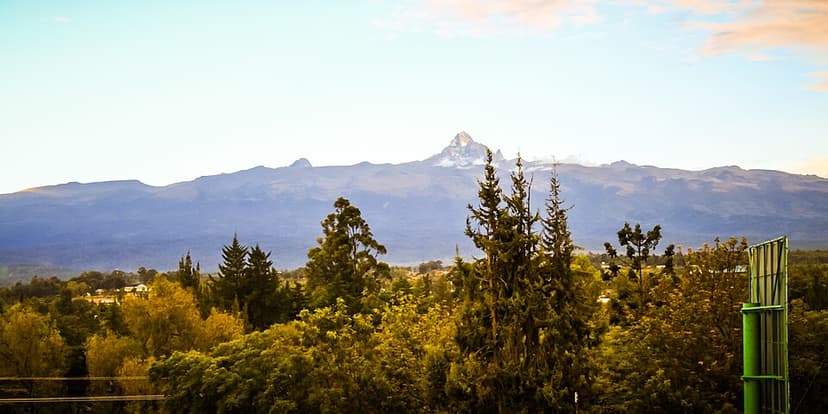
Mount Kenya
Mount Kenya is the second-highest mountain in Africa and a significant stratovolcano, revered by indigenous communities as the dwelling place of God. Its majestic peaks, glaciers, and diverse ecological zones hold deep spiritual and cultural importance for the Kikuyu, Ameru, Embu, and Maasai peoples, who have lived on its slopes for centuries. Designated as a UNESCO World Heritage Site, the mountain is a vital sanctuary for endangered species and a critical water source for the region.

Mount Sinai
Mount Sinai, also known as Jabal Musa, is a significant mountain on the Sinai Peninsula in Egypt. It is revered as the biblical Mount Sinai, the site where the prophet Moses is said to have received the Ten Commandments from God according to Judaism, Christianity, and Islam. The mountain is surrounded by higher peaks and is a popular destination for religious pilgrimage.
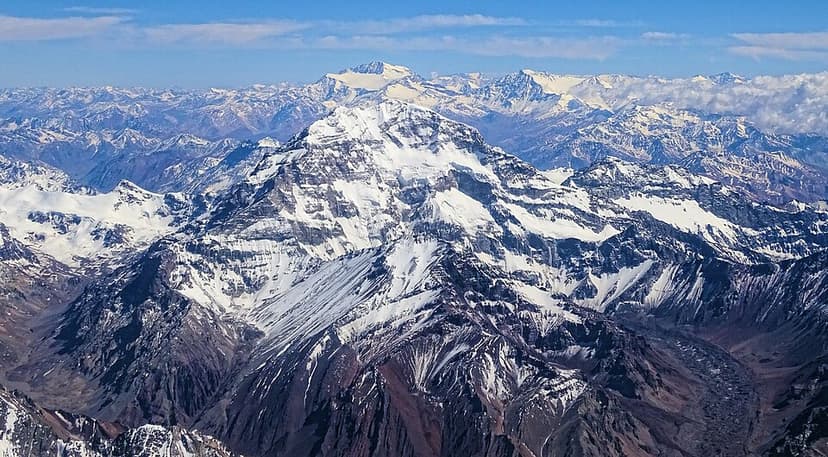
Aconcagua
Aconcagua is the highest mountain in the Americas, located in Mendoza Province, Argentina. It is also the highest peak outside of Asia and the second-most topographically prominent peak globally. Formed by tectonic activity, it was once an active stratovolcano and is now a significant challenge for mountaineers due to its extreme altitude, despite its technically straightforward normal route.