
Mount Kenya
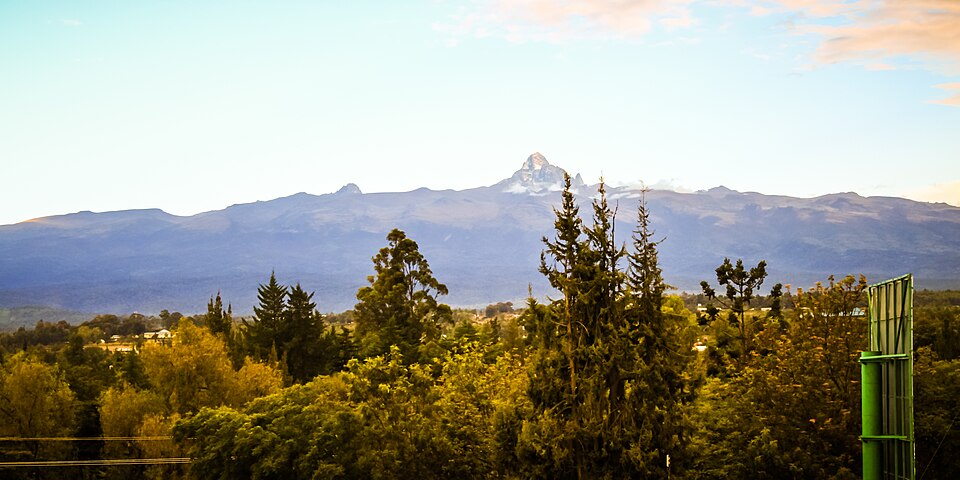
Mount Kenya is the second-highest mountain in Africa and a significant stratovolcano, revered by indigenous communities as the dwelling place of God. Its majestic peaks, glaciers, and diverse ecological zones hold deep spiritual and cultural importance for the Kikuyu, Ameru, Embu, and Maasai peoples, who have lived on its slopes for centuries. Designated as a UNESCO World Heritage Site, the mountain is a vital sanctuary for endangered species and a critical water source for the region.
Key Facts
- ›Mount Kenya is a stratovolcano formed approximately 3 million years ago.
- ›Its highest peaks are Batian (5,199 M), Nelion (5,188 M), and Point Lenana (4,985 M).
- ›The mountain is home to 11 small glaciers that are rapidly shrinking.
- ›It is a UNESCO World Heritage Site, recognized for its natural beauty and ecological significance.
- ›Mount Kenya is a crucial water catchment area for the Tana and Ewaso Nyiro North rivers.
- ›The mountain is sacred to the Kikuyu, Ameru, Embu, and Maasai peoples, who believe it is the home of God.
KĩRĩMaara, KĩRĩManyaga, KīRī-Nyaga, Ki Nyaa, Kĩ Nyaga, Kirinyaga, Ol Donyo Keri
Kikuyu Traditional Beliefs, Ameru Traditional Beliefs, Embu Traditional Beliefs, Maasai Traditional Beliefs
- Believed To Be the Dwelling Place of God .
- Considered Ngai's Throne On Earth By the Kikuyu.
- the Ancestral Home From Which Maasai Ancestors Descended.
- Sacred Site For Agriculturalists Who Utilize Its Fertile Slopes.
- Houses Traditionally Built With Doors Facing the Mountain.
GĩKũYũ
- Mount Kenya National Park Entry Fees May Apply.
- Access To Certain Areas May Be Regulated For Conservation Purposes.
About Mount Kenya
Mount Kenya, known locally by various names including Kĩrĩmaara, Kĩrĩmanyaga, Kīrī-nyaga, Ki nyaa, Kĩ nyaga, Kirinyaga, and Ol Donyo Keri, stands as the second-highest peak in Africa. This majestic stratovolcano, situated approximately 150 kilometers north-northeast of Nairobi, Kenya, and just south of the equator, is a site of profound spiritual, cultural, and ecological significance.
Spiritual and Cultural Importance
For centuries, the indigenous communities surrounding Mount Kenya – the Kikuyu, Ameru, Embu, and Maasai peoples – have held the mountain as a sacred entity. The Kikuyu believe that God, known as Ngai or Mwene Nyaga, resides on its summit, considering it His throne on Earth and the place where the patriarch Gĩkũyũ first met God. Similarly, the Embu people view the mountain as God's home, and the Maasai believe their ancestors descended from it. This deep reverence is reflected in their traditions, such as building homes with doors facing the mountain.
Geological and Ecological Significance
Mount Kenya is a volcano that became active around 3 million years ago. Its imposing structure features three main peaks: Batian (5,199 m), Nelion (5,188 m), and Point Lenana (4,985 m). While its prehistoric height may have exceeded 7,000 meters, glaciation has significantly sculpted its slopes, leaving behind numerous valleys and 11 small glaciers that are currently shrinking rapidly. The mountain's diverse altitudinal zones, from fertile farmlands at its base to the nival zone near the glaciers, support a rich array of flora and fauna, including many endemic species. Its lower slopes are covered in forests that are a vital source of water for the region.
Conservation and Recognition
Established as Mount Kenya National Park in 1949 and later designated a UNESCO World Heritage Site in 1997, the mountain and its surrounding forest reserve are managed by the Kenya Wildlife Service and the Kenya Forest Service. This designation underscores its outstanding natural beauty and critical ecological importance. The park serves as a sanctuary for endangered species and is a primary water tower for much of Kenya, directly providing water to over 2 million people. The park receives significant visitor numbers annually, drawn by its scenic grandeur and the opportunity to experience its unique ecosystems.
Source: Wikipedia ↗
Frequently Asked Questions
What is the elevation of Mount Kenya's highest peaks?
The highest peaks of Mount Kenya are Batian at 5,199 meters (17,057 ft), Nelion at 5,188 meters (17,021 ft), and Point Lenana at 4,985 meters (16,355 ft).
What is the geological origin of Mount Kenya?
Mount Kenya is a stratovolcano that was active in the Plio-Pleistocene era. Its original crater was likely over 6,000 meters high. Glaciation since its extinction has significantly eroded its slopes.
Which ethnic groups consider Mount Kenya sacred?
The Kikuyu, Ameru, Embu, and Maasai peoples, who have lived around the mountain for centuries, consider it sacred. They believe it is the dwelling place of God and an integral part of their cultural heritage.
What is the significance of Mount Kenya as a water source?
Mount Kenya is a primary water catchment area for the Tana, Kenya's largest river, and the Ewaso Nyiro North. The mountain's ecosystem provides water for over 2 million people and is crucial for hydroelectric power generation.
What are the main ecological zones on Mount Kenya?
Mount Kenya features several altitudinal ecological zones, including fertile farmland at the base, forests, African alpine bamboo, heathland and chaparral, and the Afro-alpine zone characterized by unique endemic species adapted to extreme conditions. The nival zone is the area where glaciers have recently retreated.
What is the current state of the glaciers on Mount Kenya?
The glaciers on Mount Kenya are retreating rapidly due to climate change. It is predicted that they may disappear within the next 30 years, significantly impacting the mountain's ecosystem and water resources.
Related Sacred Mountains

Mount Kilimanjaro
Mount Kilimanjaro is the highest mountain in Africa and the world's highest free-standing mountain, standing at 5,895 meters above sea level. This dormant volcano in Tanzania is a significant natural wonder, known for its glaciers, diverse ecosystems, and as a major global hiking destination. Its name's origin is debated, but local Chagga people refer to its peaks as Kipoo and Kimawenze.

Mount Sinai
Mount Sinai, also known as Jabal Musa, is a significant mountain on the Sinai Peninsula in Egypt. It is revered as the biblical Mount Sinai, the site where the prophet Moses is said to have received the Ten Commandments from God according to Judaism, Christianity, and Islam. The mountain is surrounded by higher peaks and is a popular destination for religious pilgrimage.
Emei Shan
Mount Emei, standing at 3,099 meters, is the highest of China's Four Sacred Buddhist Mountains and is revered as the bodhimaṇḍa of the Bodhisattva Samantabhadra. Its steep terrain features numerous Buddhist monasteries adapted to the landscape, and it is a significant pilgrimage site, rich in biodiversity with endemic plant and animal species.