
Mount Ecclesia
Mount Ecclesia serves as the international headquarters for the Rosicrucian Fellowship, a fraternal and service organization. Located in Oceanside, California, it is also home to The Ecclesia, a spiritual temple dedicated to healing and spreading esoteric Christian teachings. The site, dedicated in 1911, is recognized for its unique architecture and serene grounds, offering a space for spiritual practice and contemplation.
Key Facts
- ›Founded as the international headquarters for the Rosicrucian Fellowship in 1911.
- ›Features the Ecclesia, a spiritual temple dedicated to healing, completed in 1920.
- ›The site was added to the National Register of Historic Places in 1995 as the Rosicrucian Fellowship Temple.
- ›Established on 40 acres of land overlooking the San Luis Rey River Valley.
- ›The Rosicrucian Fellowship adheres to the principle of not charging for its teachings or services.
- ›Known for its distinctive architecture, preserved natural grounds, and gardens.
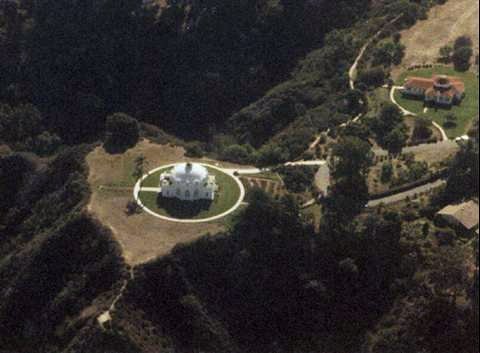
Rosicrucian Fellowship Temple
Rosicrucianism, Esoteric Christianity
- Center For the Rosicrucian Fellowship's International Operations.
- Site of A Spiritual Temple Dedicated To Healing.
- Recognized For Its Unique Architecture and Preserved Natural Environment.
- Promotes Esoteric Christian Teachings and the Concept of Spiritual Healing.
- Spiritual Healing Meetings
- Meditation and Reflection On the Grounds
- Attending Events and Programs Hosted By the Rosicrucian Fellowship
Max Heindel, Agusta Foss Heindel, the Teacher
About Mount Ecclesia
Mount Ecclesia is the grounds in Oceanside, California, that serves as the international headquarters for the Rosicrucian Fellowship (TRF). This fraternal and service organization was founded on August 8, 1909, by Max Heindel. The site is also home to The Ecclesia, a spiritual temple dedicated to healing and the dissemination of esoteric Christian teachings, also known as the deeper Esoteric Christian Mysteries.
Foundation and Vision
The establishment of Mount Ecclesia was inspired by Max Heindel's reported contact with an Elder Brother of the Rose Cross, known as "The Teacher." This spiritual guide instructed Heindel to create a permanent headquarters for the Rosicrucian Fellowship's dual mission: spreading its teachings and healing the sick through spiritual methods. In the winter solstice of 1910, Heindel received a spiritual vision of the specific location, guiding his search along the Pacific coast. After months of searching, Heindel and his wife discovered the land for sale on April 30, 1911, near the historic Franciscan Mission San Luis Rey de Francia, which had been founded in 1798.
Dedication and Construction
On May 3, 1911, the Heindels purchased the 40-acre property, and Max Heindel named it Mount Ecclesia that same evening. The dedication ceremony for the new headquarters took place on October 28, 1911, beginning with a groundbreaking ceremony that involved planting a large cross bearing the initials C.R.C. (Christian Rose Cross) and a climbing rose. The Ecclesia, the dedicated Healing Temple, was constructed beginning in 1914 and completed in 1920, though Max Heindel passed away in 1919 before its completion. His wife, Agusta Foss Heindel, continued to promote the Fellowship and beautify Oceanside until her death in 1949. The Ecclesia is architecturally a round, 12-sided building with a dome, designed as a solar temple facing east and adorned with alchemical and astrological symbols.
Spiritual Services and Activities
Spiritual healing services have been a core offering of the Rosicrucian Fellowship since June 23, 1914. The Fellowship also operated a Sanitarium for non-contagious diseases from 1938. Today, healing applications are received globally through the Fellowship's centers. Mount Ecclesia has seen the construction of various buildings over the years, including an administration building, a chapel, and a guesthouse. The Fellowship also operates a printing press, established by Max Heindel in 1912, which produces millions of books, periodicals, and other materials for the diffusion of Rosicrucian teachings.
Recognition and Philosophy
On April 7, 1995, Mount Ecclesia was added to the National Register of Historic Places as the Rosicrucian Fellowship Temple. The site is noted for its singular architecture, preserved natural grounds, and gardens, offering a unique meditative walking experience. The Rosicrucian Fellowship operates under the principle that its teachings and services should be free, with funding coming from voluntary contributions, legacies, and book sales. Mount Ecclesia aims to unite and harmonize individuals by teaching a religion that is both scientific and artistic, fostering a great Christian Brotherhood.
Source: Wikipedia ↗
Frequently Asked Questions
What is Mount Ecclesia?
Mount Ecclesia is the site of the international headquarters of the Rosicrucian Fellowship, a service organization. It is also home to a spiritual temple called The Ecclesia, which is dedicated to healing and the dissemination of esoteric Christian teachings.
Who founded Mount Ecclesia and when?
Mount Ecclesia was founded by Max Heindel, the founder of the Rosicrucian Fellowship. The dedication ceremony for the site took place on October 28, 1911.
What is the significance of The Ecclesia?
The Ecclesia is a spiritual temple built on Mount Ecclesia, designed to provide powerful means for healing. It was dedicated on December 25, 1920, and serves as a venue for spiritual healing meetings.
Is Mount Ecclesia a protected historical site?
Yes, Mount Ecclesia is recognized as a historic place. On April 7, 1995, it was added to the National Register of Historic Places under the name Rosicrucian Fellowship Temple.
What kind of activities take place at Mount Ecclesia?
Activities include spiritual healing services, the spreading of Rosicrucian teachings, and various programs offered by the Rosicrucian Fellowship. The grounds also offer opportunities for meditation and reflection.
What are the architectural features of The Ecclesia?
The Ecclesia is a 12-sided building with a dome topped by a golden globe. Its portal faces east, and the architecture incorporates elements of Greek and Roman styles, adorned with alchemical and astrological symbols, making it a solar temple.
Related Sacred Mountains
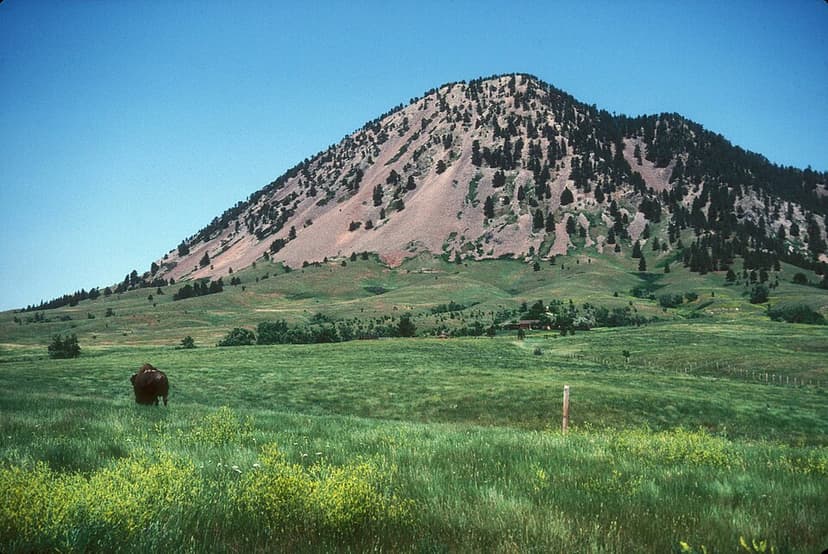
Bear Butte
Bear Butte, known to the Lakota as Matȟó Pahá and to the Cheyenne as Noahȧ-vose, is a significant geological laccolith and sacred site for Plains Indian tribes. It holds profound religious importance, particularly for the Cheyenne, who believe the Great Spirit imparted essential knowledge to the prophet Sweet Medicine here. The mountain is a place of prayer, meditation, and pilgrimage, where visitors leave offerings and participate in ceremonies.

Black Hills
The Black Hills, known to the Lakota as Pahá Sápa, are a sacred mountain range rising from the Great Plains of North America. They hold deep spiritual significance for Indigenous American tribes, particularly the Lakota, who consider the entire region "the heart of everything that is." Despite being illegally seized by the U.S. government after a gold rush, the Black Hills remain a vital cultural and spiritual center, with ongoing efforts to reclaim their ancestral lands.

Devils Tower
Devils Tower, also known as Matȟó Thípila or Bear Lodge, is a prominent laccolithic butte located in northeastern Wyoming. Renowned for its dramatic geological formation and deep cultural significance to Native American tribes, it was designated as the United States' first national monument in 1906. The tower holds profound spiritual importance for various Plains tribes, who share ancient legends explaining its origins.