
Medicine Mountain
Medicine Mountain, also known as the Medicine Wheel/Medicine Mountain National Historic Landmark, is a significant ancient stone structure located in the Bighorn National Forest, Wyoming. It serves as a sacred site for numerous Indigenous nations and is recognized for its complex astronomical alignments, making it a focal point for both spiritual ceremony and scientific inquiry.
Key Facts
- ›Constructed from local white limestone laid upon a bedrock of limestone.
- ›Features a circular rim 80 feet in diameter with 28 spokes and seven stone circles (cairns).
- ›Contains astronomical alignments that track celestial cycles, including summer solstice sunrise/sunset and the rising points of stars like Sirius, Aldebaran, and Rigel.
- ›Carbon dating of wood found in a cairn suggests a minimum age from the MID-18th century, though its original construction predates this significantly, potentially to 3200 BC based on similar structures.
- ›Located at an altitude of 9,642 feet (2,939 meters) near the summit of Medicine Mountain.
- ›Declared a National Historic Landmark in 1970 and renamed Medicine Wheel/Medicine Mountain in 2011.
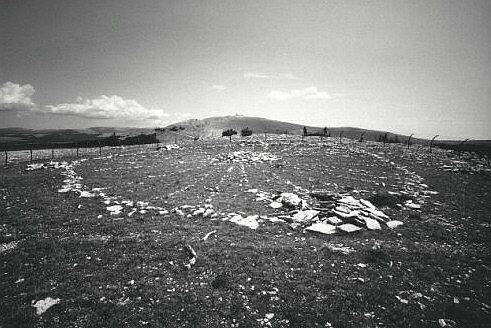
Medicine Wheel, Bighorn Medicine Wheel, AnnáShisee, Large Campsite, Hiieeinoonotii
- Indigenous North American Spiritual Traditions
- Sacred Ceremonial Site For Numerous Indigenous Nations.
- Place of Scientific Inquiry and Astronomical Observation.
- Associated With Ancient Ancestors and 'People Without Iron'.
- Connected To Crow Homeland Narratives and Visionary Leadership.
- Arapaho Traditions Link It To the 'Little People' and Vision Quests.
- Travel Via An Ancient, Deeply Cut Trail, Even In Winter When Roads Are Closed.
- Ceremonial Use By Indigenous Peoples.
No Vitals, Burnt Face, Aggretta, Paul Moss, Tom Yellowtail, John Eddy, Jack Robinson, Stephen Simms, Cut Ear
About Medicine Mountain
Medicine Mountain, formally recognized as the Medicine Wheel/Medicine Mountain National Historic Landmark, is an ancient and sacred stone structure located within the Bighorn National Forest in Wyoming. Known to the Crow people as "Annáshisee" (Large campsite), this remarkable site is a focal point for both Indigenous spiritual practices and scientific study, embodying a holistic approach where these disciplines are not seen as separate, as is common in Western science.
The cultural history of the Bighorn Mountains, where Medicine Mountain resides, extends back over ten thousand years. The stone wheel itself is constructed from local white limestone and is a complex arrangement of a circular rim, approximately 80 feet in diameter, with 28 spokes extending to a central cairn and surrounded by seven smaller stone circles, or cairns. The exact origins of the Medicine Wheel are not publicly claimed by any specific Indigenous nation; however, oral traditions from various peoples indicate it was built by "ancient ancestors" or "people without iron." The Crow nation states the Wheel was present when they first inhabited the area and that it rests within their traditional homeland.
Astronomical Significance and Use
Beyond its spiritual importance, Medicine Mountain is renowned for its sophisticated astronomical alignments. Investigations by astronomers have revealed that the cairns and spokes are precisely oriented to track celestial events. Notably, specific cairn pairs align with the sunrise and sunset of the summer solstice. Furthermore, alignments with cairn pairs correspond to the rising points of significant stars such as Sirius, Aldebaran, and Rigel. These alignments would have enabled ancient peoples to accurately track the progress of the solar year and other cosmic cycles, including the precession of the equinoxes.
The structure is believed to be capable of tracking multiple celestial phenomena, serving as a celestial grid to monitor changes over millennia. Similar complex wheels found in the Rocky Mountain region have been dated to as early as 3200 BC, suggesting Medicine Mountain is of considerable antiquity, though a piece of wood found within a cairn dates to the mid-18th century, indicating at least a minimum age. An ancient, deeply cut trail, still passable by foot even in winter, leads to the Wheel, attesting to its long-standing significance and the effort undertaken by those who sought its wisdom.
Cultural and Historical Context
The Medicine Wheel has been a sacred site for many Indigenous nations, with traditions such as the Arapaho referring to it as "Hiieeinoonotii." Stories recount its ceremonial use and its connection to visionary experiences, including the Crow elder Tom Yellowtail's narrative of Burnt Face receiving aid from the "Little People" while building a medicine wheel. The Tukudeka people, a band of the Sheepeater Shoshone, chose to live high in the Bighorn Mountains, partly to escape the heat and conflicts of the lower elevations, further underscoring the mountain's role as a refuge and sacred space. Declared a National Historic Landmark in 1970, and renamed Medicine Wheel/Medicine Mountain in 2011, the site continues to be a place of profound cultural and historical importance.
Source: Wikipedia ↗
Frequently Asked Questions
What is the Medicine Wheel/Medicine Mountain?
Medicine Mountain is an ancient stone structure, a type of medicine wheel, located in the Bighorn National Forest in Wyoming. It is a sacred site for many Indigenous peoples and is also studied for its precise astronomical alignments.
Who built the Medicine Wheel?
No Indigenous people have publicly claimed to have built the Medicine Wheel. Oral histories from several nations suggest it was built by 'ancient ancestors' or 'people without iron,' and the Crow people stated it was already present when they arrived in the area.
What is the significance of the Medicine Wheel's stone circles (cairns)?
The stone circles, or cairns, are integral to the Medicine Wheel's astronomical functions. Specific cairn pairs align with celestial events like the summer solstice sunrise and sunset, and the heliacal rising of important stars, allowing for tracking of solar and stellar cycles.
How old is the Medicine Wheel?
While a piece of wood found in one of the cairns dates to the mid-18th century, this is considered a minimum age. Similar, more complex medicine wheels in the Rocky Mountain region have been archaeologically dated to as early as 3200 BC, suggesting Medicine Mountain is of ancient origin.
What is the altitude of Medicine Mountain?
The structure of the Medicine Wheel is located at an altitude of 9,642 feet (2,939 meters) near the summit of Medicine Mountain.
What are the astronomical alignments of the Medicine Wheel?
The Medicine Wheel is astronomically complex, with alignments to the summer solstice sunrise and sunset. Certain cairn pairs are also aligned with the rising points of stars such as Sirius, Aldebaran, and Rigel, which were used to track the solar year.
Related Sacred Mountains
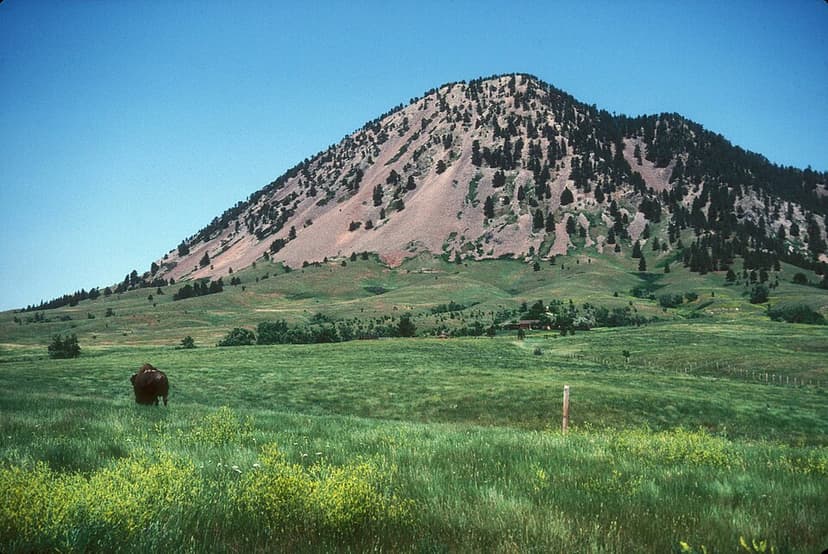
Bear Butte
Bear Butte, known to the Lakota as Matȟó Pahá and to the Cheyenne as Noahȧ-vose, is a significant geological laccolith and sacred site for Plains Indian tribes. It holds profound religious importance, particularly for the Cheyenne, who believe the Great Spirit imparted essential knowledge to the prophet Sweet Medicine here. The mountain is a place of prayer, meditation, and pilgrimage, where visitors leave offerings and participate in ceremonies.

Black Hills
The Black Hills, known to the Lakota as Pahá Sápa, are a sacred mountain range rising from the Great Plains of North America. They hold deep spiritual significance for Indigenous American tribes, particularly the Lakota, who consider the entire region "the heart of everything that is." Despite being illegally seized by the U.S. government after a gold rush, the Black Hills remain a vital cultural and spiritual center, with ongoing efforts to reclaim their ancestral lands.

Devils Tower
Devils Tower, also known as Matȟó Thípila or Bear Lodge, is a prominent laccolithic butte located in northeastern Wyoming. Renowned for its dramatic geological formation and deep cultural significance to Native American tribes, it was designated as the United States' first national monument in 1906. The tower holds profound spiritual importance for various Plains tribes, who share ancient legends explaining its origins.