
Machu Picchu
Machu Picchu is a 15th-century Inca citadel situated on a mountain ridge in southern Peru, standing as a significant symbol of the Inca civilization. Believed to have been an estate for Emperor Pachacuti, the site was likely abandoned around the time of the Spanish conquest, with modern dating placing its occupation between the early 15th and early 16th centuries. It is renowned for its classical Inca architecture, including finely crafted dry-stone walls and notable structures like the Temple of the Sun.
Key Facts
- ›Constructed around 1450, it is believed to have been an estate for the Inca Emperor Pachacuti.
- ›Modern radiocarbon dating indicates occupation between approximately 1420 and 1530.
- ›The site was abandoned roughly a century after its construction, likely due to the Spanish conquest.
- ›Notable structures include the Temple of the Sun, the Temple of the three Windows, and the Intihuatana ritual stone.
- ›It was brought to international attention in 1911 by American historian Hiram Bingham III.
- ›Designated a UNESCO World Heritage Site in 1983, it is a major archaeological site and a symbol of the Inca civilization.

Huayna Picchu, Picchu
- Iconic Symbol of the Inca Civilization
- Major Archaeological Site In the Americas
- Royal Estate of Inca Emperor Pachacuti
- Site of Significant Inca Engineering and Architecture
Pachacuti Inca Yupanqui, TúPac Inca Yupanqui, AgustíN LizáRraga, Hiram Bingham Iii
About Machu Picchu
Machu Picchu is a 15th-century Inca citadel renowned for its dramatic mountain setting and sophisticated dry-stone architecture. Perched on a mountain ridge in the Eastern Cordillera of southern Peru, it stands at an elevation of 2,430 meters (7,970 ft) above sea level, approximately 80 kilometers northwest of Cusco. It is situated above the Sacred Valley and alongside the Urubamba River, which carves a deep canyon through the subtropical mountainous terrain.
Historical Context and Significance
Often referred to as the "Lost City of the Incas," Machu Picchu is considered one of the most significant symbols of the Inca civilization and a major archaeological site in the Americas. While no contemporary written records definitively confirm its original purpose, it is widely believed to have been constructed around 1450 as an estate for the Inca emperor Pachacuti. Modern radiocarbon dating places its period of occupation between approximately 1420 and 1530. The site was likely abandoned about a century after its construction, possibly due to the disruption caused by the Spanish conquest, and it is speculated that disease introduced by Europeans may have contributed to its depopulation.
Architecture and Notable Features
The citadel exemplifies the classical Inca architectural style, characterized by meticulously crafted dry-stone walls that fit together without mortar. Among its most notable structures are the Temple of the Sun, the Temple of the Three Windows, and the Intihuatana ritual stone, a carved pillar believed to have astronomical or ceremonial significance. Agricultural activity was conducted on extensive artificial terraces, known as andenes, which were engineered to ensure drainage, soil fertility, and protection against erosion.
Rediscovery and International Attention
Although known to local populations and visited by Peruvian explorer Agustín Lizárraga in 1902, Machu Picchu was brought to international prominence in 1911 by American historian and explorer Hiram Bingham III. Bingham's expeditions and subsequent publications introduced the site to the global archaeological and historical communities. In recognition of its outstanding universal value, Machu Picchu was designated a National Historic Sanctuary by Peru in 1981 and a UNESCO World Heritage Site in 1983. It was also named one of the New Seven Wonders of the World in 2007.
Daily Life and Rituals
During its active period, it is estimated that around 750 people resided at Machu Picchu, primarily serving as support staff (yanaconas). The population was genetically diverse, with individuals of various Andean, coastal, Ecuadorian, and Amazonian ancestries living and working together. Skeletal remains suggest that many inhabitants were immigrants who brought with them dietary and environmental markers from different regions. While human sacrifice, particularly the capacocha ritual, was practiced in Inca religion, direct evidence at Machu Picchu is scarce; the archaeological record points more strongly to animal offerings, especially camelids, as common ritualistic practices, with sites like the Temple of the Condor potentially used for sacrifice.
Source: Wikipedia ↗
Frequently Asked Questions
When was Machu Picchu built?
Machu Picchu is estimated to have been built around 1450. However, modern radiocarbon dating of human remains suggests its occupation began earlier, around 1420, and continued until approximately 1530.
What was the purpose of Machu Picchu?
It is believed to have served as a royal estate for the Inca emperor Pachacuti, functioning as a seasonal royal retreat. While considered a royal estate, it was not passed down through succession and was used for about 80 years before abandonment.
Why was Machu Picchu abandoned?
Machu Picchu is believed to have been abandoned in the mid-16th century, around the time of the Spanish conquest. This abandonment was likely due to the collapse of Inca rule and potential disease following European contact.
Who rediscovered Machu Picchu?
While known locally and visited by Peruvian explorer Agustín Lizárraga in 1902, Machu Picchu was brought to international attention in 1911 by American historian Hiram Bingham III. Bingham is considered the scientific discoverer who made the site known to the wider world.
What is the meaning of the name Machu Picchu?
In the Quechua language, 'machu' means 'old' or 'old person' and 'pikchu' means 'summit' or 'peak'. Therefore, the name Machu Picchu is often translated as 'old mountain' or 'old peak'.
What are some famous structures within Machu Picchu?
Notable structures within the citadel include the Temple of the Sun, the Temple of the Three Windows, and the Intihuatana ritual stone. The site is also known for its finely crafted dry-stone walls.
Related Sacred Mountains
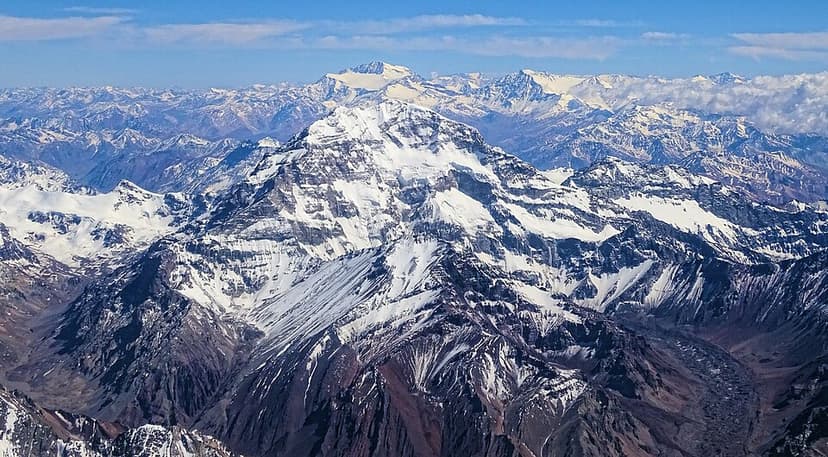
Aconcagua
Aconcagua is the highest mountain in the Americas, located in Mendoza Province, Argentina. It is also the highest peak outside of Asia and the second-most topographically prominent peak globally. Formed by tectonic activity, it was once an active stratovolcano and is now a significant challenge for mountaineers due to its extreme altitude, despite its technically straightforward normal route.

Villarrica
Villarrica, also known as Ruka Pillañ in Mapudungun, is one of Chile's most active volcanoes, recognized for its intermittent lava lake. Situated in Villarrica National Park, it is a significant stratovolcano with a history of strombolian eruptions and lahars, making it a subject of both scientific monitoring and popular tourism for guided ascents.

Mount Roraima
Mount Roraima is the highest tepui in the Pacaraima mountain chain, straddling the borders of Brazil, Guyana, and Venezuela. Known for its dramatic sheer cliffs and flat summit, it is a unique geological formation that has fostered a high degree of endemic flora and fauna due to its isolation. The mountain's name originates from the Pemon people, meaning "blue-green great," reflecting its natural beauty.