
Croagh Patrick
Ireland·Europe
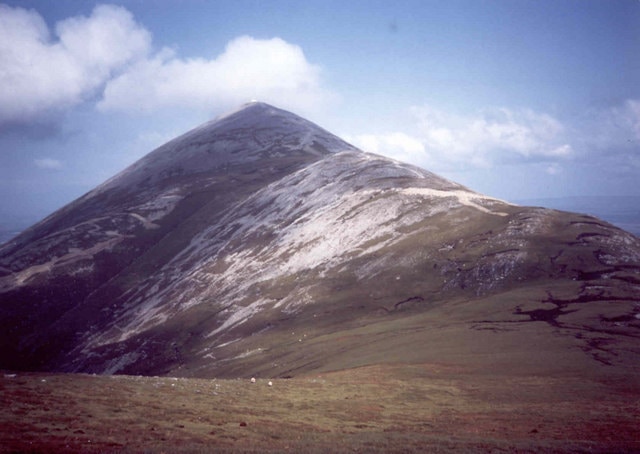
Croagh Patrick, also known as 'the Reek,' is a pyramid-shaped mountain in County Mayo, Ireland, standing 764 meters tall. It is a significant site of pilgrimage, deeply associated with Saint Patrick, who is believed to have fasted on its summit for forty days. The mountain has a long history as a holy site, with evidence of prehistoric ritualistic use and a continuous tradition of pilgrimage dating back to at least the Middle Ages.
Key Facts
- ›Height of 764 meters (2,507 ft).
- ›Associated with Saint Patrick's forty-day fast on the summit.
- ›Site of a prehistoric ritual landscape dating back to the Neolithic period.
- ›Thousands of pilgrims climb the mountain annually on Reek Sunday, the last Sunday in July.
- ›A church has stood on the summit since the 5th century, with a modern chapel built in the early 20th century.
- ›A seam of gold was discovered in the mountain's core in the 1980s, but mining was prevented due to local opposition.
Cruach PháDraig, the Reek, CruacháN Aigle, Cruach Aigle
Christianity, Prehistoric Ritual Landscape
- Site of A Prehistoric Ritual Landscape Since At Least the Neolithic.
- Associated With Saint Patrick's Forty-Day Fast.
- Focus of An Extensive Ritual Landscape During the Bronze Age.
- the Boheh Stone Near the Mountain Features Ancient Rock Art and Aligns With A Phenomenon of the Setting Sun.
- Legends of Saint Patrick Banishing Demonic Birds and A Serpent Named Corra/Caorthannach.
- Climbing the Mountain On Reek Sunday .
- Climbing Barefoot As An Act of Penance.
- Performing 'Rounding Rituals' .
- Attending Masses At the Summit Chapel.
- Following the Togher Patrick Pilgrim Path From Ballintubber Abbey.
- Historically, Climbing After Sunset, Possibly Related To the 'Rolling Sun' Phenomenon.
Saint Patrick, Moses, Aigle, Cromderg, Corra, Caorthannach
About Croagh Patrick
Croagh Patrick, known in Irish as Cruach Phádraig and colloquially as 'the Reek,' is a prominent mountain in County Mayo, Ireland, standing 764 meters (2,507 ft) above sea level. Its pyramid-shaped peak overlooks Clew Bay, rising majestically near the village of Murrisk. The mountain holds profound spiritual and historical significance, having long been revered as a holy site.
Historical and Religious Importance
The mountain's sacred status predates Christianity, with archaeological evidence suggesting it was a focus of prehistoric ritual practices, particularly during the Neolithic and Bronze Ages. It became strongly associated with Saint Patrick, the patron saint of Ireland, who is traditionally said to have spent forty days fasting on its summit, mirroring Moses on Mount Sinai. Legends recount Saint Patrick banishing demonic birds and a serpent from the mountain by ringing his bell. A testament to its enduring religious importance, a church or oratory has existed on the summit since the 5th century, with a modern chapel dedicated in 1905.
Pilgrimage and Tradition
Croagh Patrick is one of Ireland's most important pilgrimage destinations. Thousands of pilgrims ascend the mountain each year, most notably on Reek Sunday, the last Sunday in July, a custom tracing back to at least the Middle Ages. Many pilgrims undertake the climb barefoot as an act of penance, and traditionally, 'rounding rituals'—praying while walking sunwise around sacred features—were performed. Some folklorists suggest that the pilgrimage may have originated from pre-Christian rituals associated with the festival of Lughnasadh. The ancient pilgrim path, Togher Patrick, originating from Ballintubber Abbey, is still followed by some and is dotted with prehistoric monuments.
Name and Notable Features
The name 'Croagh Patrick' translates to '(Saint) Patrick's stack,' while 'the Reek' is a local Hiberno-English term. Historically, it was known as Cruachán Aigle or Cruach Aigle. The mountain is part of an east-west ridge and is the fourth-highest peak in the province of Connacht. Notably, a seam of gold was discovered within the mountain in the 1980s, but local opposition successfully prevented mining operations. The Owenwee River, on the mountain's south side, may historically refer to gold panning in the area.
Modern Challenges
While the large number of annual visitors, estimated at up to 40,000, contributes to the mountain's popularity, it has also led to significant erosion. Efforts have been made to combat this through the construction of a stone path, utilizing local stone and dry-stone building techniques to preserve the integrity of the climb.
Source: Wikipedia ↗
Frequently Asked Questions
What is the significance of Croagh Patrick?
Croagh Patrick is a holy mountain with deep religious and historical significance. It is primarily known as the site where Saint Patrick is said to have spent forty days fasting, and it has been a focus of pilgrimage since at least the Middle Ages.
What is the origin of the name Croagh Patrick?
The name 'Croagh Patrick' comes from the Irish 'Cruach Phádraig,' meaning '(Saint) Patrick's stack'. It is also locally known as 'the Reek,' a term derived from 'rick' or 'stack'. Previously, it was known by names like Cruachán Aigle or Cruach Aigle in medieval sources.
When is the best time to climb Croagh Patrick?
The most significant time for climbing Croagh Patrick is on Reek Sunday, the last Sunday in July, when thousands of pilgrims undertake the ascent. However, the mountain is climbed by many throughout the year, though erosion has made certain paths more challenging.
What are the pilgrimage traditions associated with Croagh Patrick?
Pilgrims often climb the mountain barefoot as an act of penance and participate in 'rounding rituals,' which involve praying while walking sunwise around specific features. Masses are held at the summit chapel on Reek Sunday. Some believe the pilgrimage may pre-date Christianity, originating from rituals associated with the festival of Lughnasadh.
Are there any unique geological or astronomical phenomena related to Croagh Patrick?
The mountain has a prominent pyramidal quartzite peak. Near its base, the Boheh Stone features ancient rock art, and from this stone, the setting sun appears to roll down the slope of Croagh Patrick in late April and late August, a phenomenon believed to have influenced the selection of the stone and potentially the timing of ancient climbs.
Related Sacred Mountains
Mount Tomorr
Mount Tomorr is a significant sacred mountain in Albania, revered by multiple religious traditions including Bektashism and Christianity. It is a prominent natural landmark, boasting the highest peak in central Albania and serving as a vital water-collecting area within Tomorr National Park, known for its diverse flora and fauna. Annual pilgrimages draw many visitors, making it one of the most frequented sacred sites in the country.
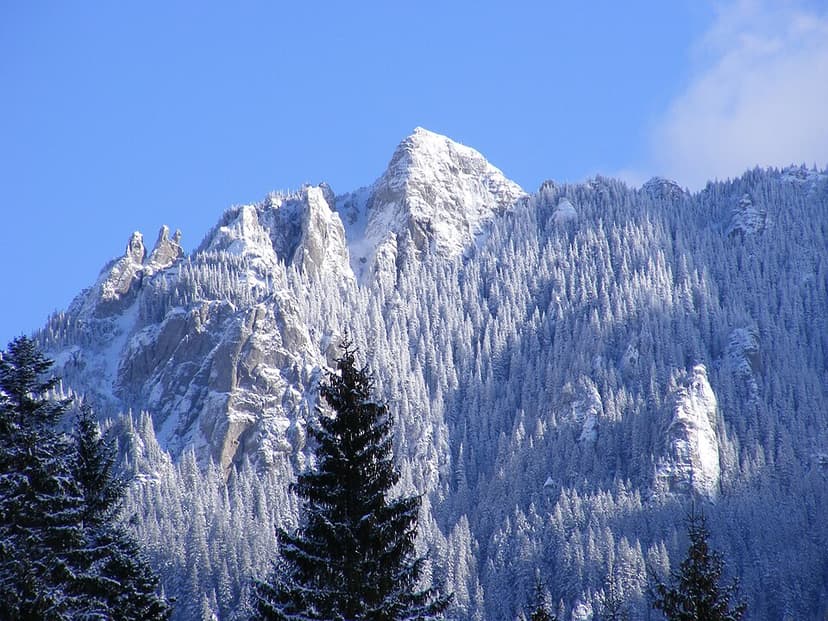
Ceahlău Massif
The Ceahlău Massif is a prominent mountain in Romania, recognized as one of the country's most famous peaks. It lies within the Eastern Carpathians and is a popular destination for hiking, offering a diverse range of flora and fauna within Ceahlău National Park.

Montserrat
Montserrat is a distinctive multi-peaked mountain range in Catalonia, Spain, renowned for its serrated appearance formed by striking pink conglomerate rock. It is a significant religious site, home to the Benedictine abbey of Santa Maria de Montserrat, which enshrines the revered Virgin of Montserrat, also known as La Moreneta. The mountain is a popular destination for pilgrims, hikers, and climbers, and was designated a National Park in 1987.