
Ceahlău Massif
Romania·Europe
The Ceahlău Massif is a prominent mountain in Romania, recognized as one of the country's most famous peaks. It lies within the Eastern Carpathians and is a popular destination for hiking, offering a diverse range of flora and fauna within Ceahlău National Park.
Key Facts
- ›Features two significant peaks: Toaca at 1904 meters and Ocolașul Mare at 1907 meters.
- ›Part of the Bistrița Mountains range, located in Neamț County, Moldavia region.
- ›Bounded by the Bistrița River and Lake Bicaz to the east, and the Bicaz River to the south.
- ›Accessible via marked hiking trails from Izvorul Muntelui in the south and Durău in the north.
- ›Ceahlău National Park, which encompasses the massif, has entry fees and regulations enforced by rangers.
- ›Known for its subarctic climate, bordering on tundra.
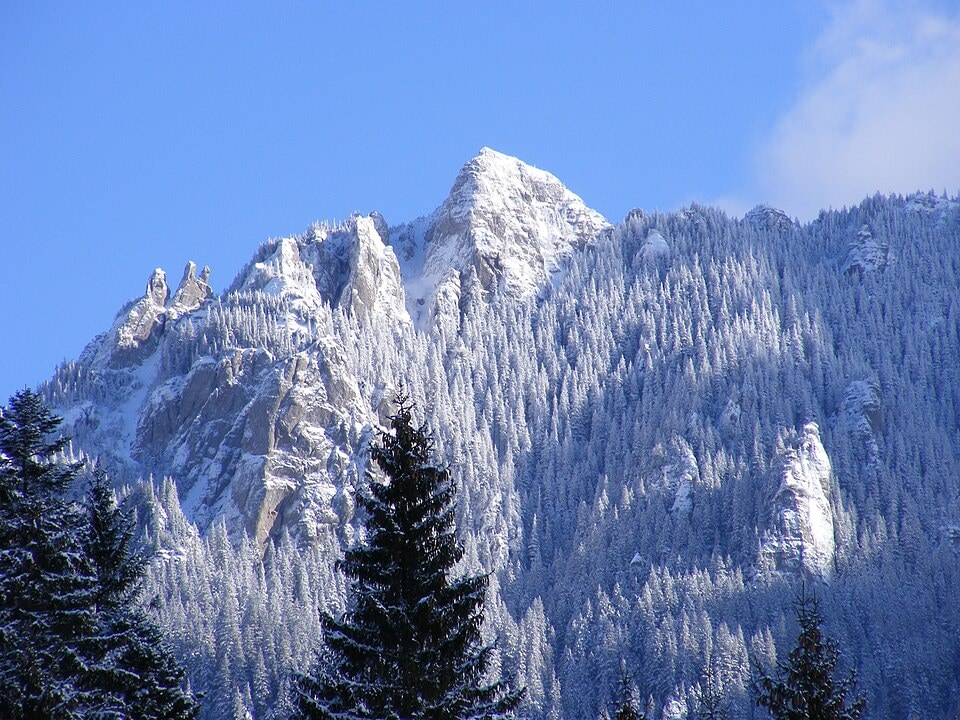
- Considered One of the Most Famous Mountains In Romania.
- the CeahlăU National Park Shelters A Rich Variety of Flora and Fauna, With Some Species Being Endemic Or Rare.
- Entry Fees Are Required For CeahlăU National Park.
- Fines Are Issued For Not Respecting Park Regulations.
About Ceahlău Massif
What is Ceahlău Massif?
The Ceahlău Massif is one of Romania's most celebrated mountains, forming a significant part of the Bistrița Mountains range within the Eastern Carpathians. Situated in Neamț County, in the Moldavia region, it is renowned for its natural beauty and its status as a popular outdoor recreation destination.
Geography and Peaks
The massif is characterized by two principal summits: Ocolașul Mare, which stands at 1,907 meters, and Toaca, reaching 1,904 meters. The natural boundaries of Ceahlău include the Bistrița River and Lake Bicaz to its east, and the Bicaz River to its south. Key access points for visitors are the village of Izvorul Muntelui, located south of the town of Bicaz, and the area of Durău to the north.
Activities and Park Regulations
Ceahlău Massif is a prime destination for hiking, with seven distinct marked trails designed for tourists. The surrounding Ceahlău National Park is a protected area that hosts a diverse array of flora and fauna, including endemic and rare species. Visitors are subject to entry fees and must adhere to park regulations, which are monitored by local rangers. A mountain rescue service (Salvamont) is also available.
Other activities include skiing at Durău, and camping is permitted only in designated locations such as Durău, near Dochia Chalet, and in Izvorul Muntelui. Several chalets and refuges offer accommodation and amenities for trekkers, including Izvorul Muntelui Chalet (757 m), Dochia Chalet (1750 m), and Fântânele Chalet (1220 m).
Climate and Notable Features
The climate of Ceahlău is classified as subarctic, with tendencies towards a tundra climate. The massif and its park are home to numerous natural attractions, such as the Duruitoarea waterfall, the Panaghia rock, the Piatra Lată din Ghedeon rock formation, and the protected area Polița cu crini.
Source: Wikipedia ↗
Frequently Asked Questions
What are the highest peaks of the Ceahlău Massif?
The two most important peaks are Ocolașul Mare, reaching an elevation of 1907 meters, and Toaca, standing at 1904 meters. These peaks are notable features of the massif.
Where is the Ceahlău Massif located?
The Ceahlău Massif is situated in Neamț County, within the Moldavia region of Romania. It is part of the Bistrița Mountains range in the Eastern Carpathians division.
What activities are available at Ceahlău Massif?
The massif is a popular hiking destination with seven marked trails. Skiing is available at Durău, and camping is permitted in designated areas like Durău and near Dochia Chalet.
What are some notable sights within the Ceahlău National Park?
Notable sights include the Duruitoarea waterfall, Panaghia rock, Piatra Lată din Ghedeon rock formation, and Dochia Rock. The Polița cu crini is a protected area within the park.
Are there facilities for visitors at Ceahlău Massif?
Yes, there are several chalets and refuges available. These include Izvorul Muntelui Chalet, Dochia Chalet located near Toaca Peak, and Fântânele Chalet near Durău.
Related Sacred Mountains
Croagh Patrick
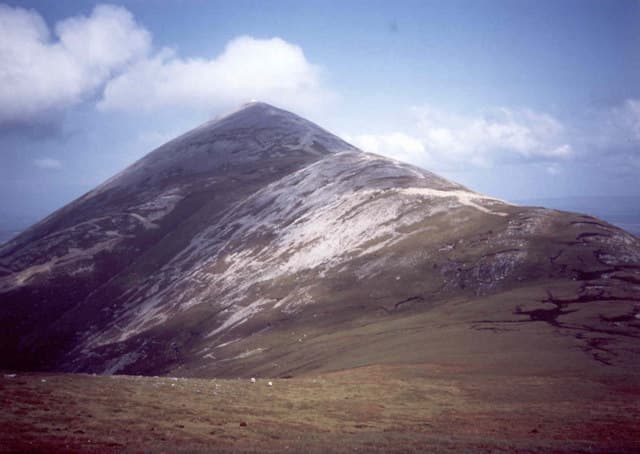
Croagh Patrick, also known as 'the Reek,' is a pyramid-shaped mountain in County Mayo, Ireland, standing 764 meters tall. It is a significant site of pilgrimage, deeply associated with Saint Patrick, who is believed to have fasted on its summit for forty days. The mountain has a long history as a holy site, with evidence of prehistoric ritualistic use and a continuous tradition of pilgrimage dating back to at least the Middle Ages.

Montserrat
Montserrat is a distinctive multi-peaked mountain range in Catalonia, Spain, renowned for its serrated appearance formed by striking pink conglomerate rock. It is a significant religious site, home to the Benedictine abbey of Santa Maria de Montserrat, which enshrines the revered Virgin of Montserrat, also known as La Moreneta. The mountain is a popular destination for pilgrims, hikers, and climbers, and was designated a National Park in 1987.

Mount Etna
Mount Etna is an active stratovolcano located on the east coast of Sicily, Italy. It is one of Europe's most active and tallest volcanoes, with a history stretching back over 500,000 years. Its fertile volcanic soils support significant agriculture, and its frequent eruptions have shaped its cultural and mythological landscape.