
Montserrat
Montserrat is a distinctive multi-peaked mountain range in Catalonia, Spain, renowned for its serrated appearance formed by striking pink conglomerate rock. It is a significant religious site, home to the Benedictine abbey of Santa Maria de Montserrat, which enshrines the revered Virgin of Montserrat, also known as La Moreneta. The mountain is a popular destination for pilgrims, hikers, and climbers, and was designated a National Park in 1987.
Key Facts
- ›Montserrat's name translates to 'serrated mountain' in Catalan, describing its unique jagged visual aspect.
- ›The mountain is geologically composed of conglomerate rock, primarily limestone, cemented by calcite, which has resulted in karst landforms.
- ›The highest summit is Sant Jeroni, reaching 1,236 meters (4,055 feet) above sea-level.
- ›It is the location of the Santa Maria de Montserrat abbey, a Benedictine monastery housing the sanctuary of the Virgin of Montserrat.
- ›Montserrat was designated as a National Park in 1987.
- ›The mountain is part of the GR footpath 172 and features popular climbing routes like the Cavall Bernat.

La Moreneta
- Home To the Benedictine Abbey of Santa Maria De Montserrat.
- Sanctuary of the Virgin of Montserrat , A Significant Marian Devotion.
- Its Unique Geological Formations Have Inspired Its Name and Appearance.
- Visiting the Benedictine Abbey of Santa Maria De Montserrat.
- Paying Homage To the Virgin of Montserrat Statue.
- Hiking and Exploring the Mountain's Trails.
Virgin of Montserrat
About Montserrat
Montserrat is a striking multi-peaked mountain range situated near Barcelona in Catalonia, Spain, forming part of the Catalan Pre-Coastal Range. Its name, derived from Catalan, translates to "serrated mountain," a fitting description for its peculiar aspect characterized by numerous rock formations visible from afar. The mountain is composed of a distinctive pink conglomerate, a sedimentary rock that has resisted erosion, contributing to its prominent mountainous nature.
Religious and Spiritual Significance
The paramount spiritual importance of Montserrat lies in its role as the site of the Benedictine abbey, Santa Maria de Montserrat. This abbey is home to the sanctuary of the Virgin of Montserrat, a revered icon also known by the affectionate Catalan nickname La Moreneta, meaning "the little tan/dark one." The presence of this sanctuary has made Montserrat a significant pilgrimage destination for centuries.
Geology and Natural Features
Geologically, Montserrat is formed from conglomerate deposited in a fan delta during the middle Eocene epoch. The rock is predominantly limestone cemented by calcite, a composition that has led to the development of typical karst landforms, including cave systems and karst towers. The highest summit is Sant Jeroni, reaching an elevation of 1,236 meters (4,055 feet) above sea-level. The mountain is also recognized for its climbing potential, with features like Cavall Bernat being popular among climbers.
Conservation and Access
In recognition of its unique geological and natural attributes, Montserrat was designated as a National Park in 1987. The mountain is crisscrossed by hiking trails, including sections of the GR footpath 172, making it accessible for recreational activities. Visitors can reach various points of interest, including the monastery and higher summits, via hiking trails that connect from different access points, including funicular services.
Historical Naming Influence
The fame of the Virgin of Montserrat and the mountain's distinctive name have extended beyond Catalonia. In 1493, Christopher Columbus named the Caribbean island of Montserrat after the Virgin, and similarly, Spanish expeditions later charted islands and geographical features using variations of its name, attesting to its historical resonance.
Source: Wikipedia ↗
Frequently Asked Questions
What is Montserrat and where is it located?
Montserrat is a multi-peaked mountain range situated near Barcelona in Catalonia, Spain. It is part of the Catalan Pre-Coastal Range and is known for its visually striking serrated appearance.
What is the highest point of Montserrat?
The highest summit of Montserrat is called Sant Jeroni, which stands at 1,236 meters (4,055 feet) above sea-level. It is accessible via hiking trails.
What is the geological composition of Montserrat?
Montserrat is formed of conglomerate rock, specifically a form of sedimentary rock composed of limestone and cemented by calcite. This composition has led to the formation of karst landforms.
What is the religious significance of Montserrat?
Montserrat is a major religious site due to the Benedictine abbey of Santa Maria de Montserrat, which hosts the sanctuary of the Virgin of Montserrat. This revered statue is also locally known as La Moreneta.
Is Montserrat a protected area?
Yes, Montserrat was designated as a National Park in 1987, recognizing its natural beauty and ecological importance.
What kind of activities can be done at Montserrat?
Montserrat is popular for hiking and climbing. The highest peak, Sant Jeroni, is accessible by trails, and prominent rock features like Cavall Bernat are popular with climbers.
Related Sacred Mountains

Teide
Teide is an active stratovolcano on the Spanish island of Tenerife, serving as the highest point in Spain and the highest island peak in the Atlantic Ocean. With its summit reaching 3,715 meters (12,188 ft) and a total height of 7,500 meters (24,600 ft) from the ocean floor, it is recognized as the third-tallest volcano globally. Teide is a sacred mountain for the indigenous Guanches, who believed it housed evil spirits and held up the sky, and is now a central feature of Teide National Park, a UNESCO World Heritage Site attracting millions of visitors annually.

Mount Makiling
Mount Makiling is an inactive stratovolcano in the Philippines, revered as the home of the diwata Maria Makiling. Sacred to pilgrims, it serves as a vital forest reserve administered by the University of the Philippines Los Baños and was the nation's first national park. Its cultural significance is deeply intertwined with local folklore and traditions.
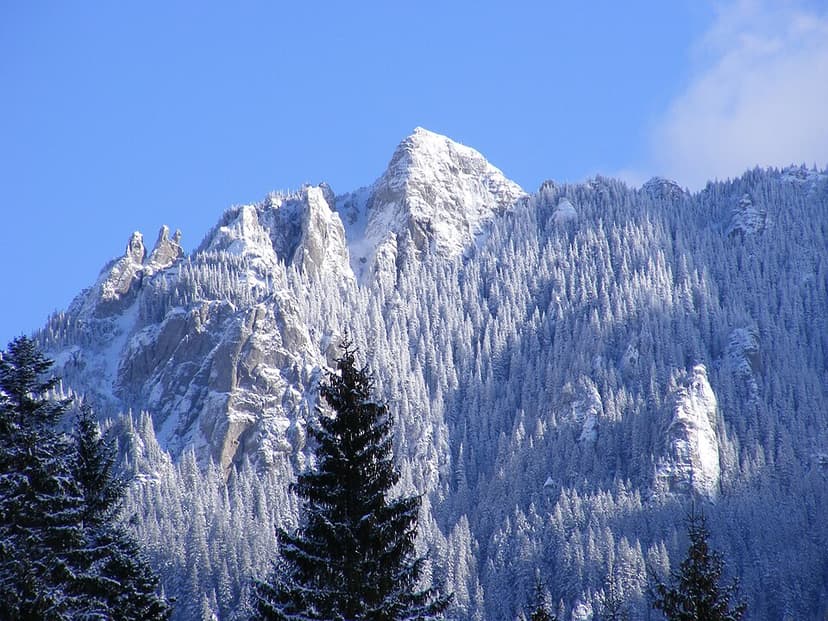
Ceahlău Massif
The Ceahlău Massif is a prominent mountain in Romania, recognized as one of the country's most famous peaks. It lies within the Eastern Carpathians and is a popular destination for hiking, offering a diverse range of flora and fauna within Ceahlău National Park.