
Lucius of Cyrene
Male·1st century·Modern Libya·Church of Antioch
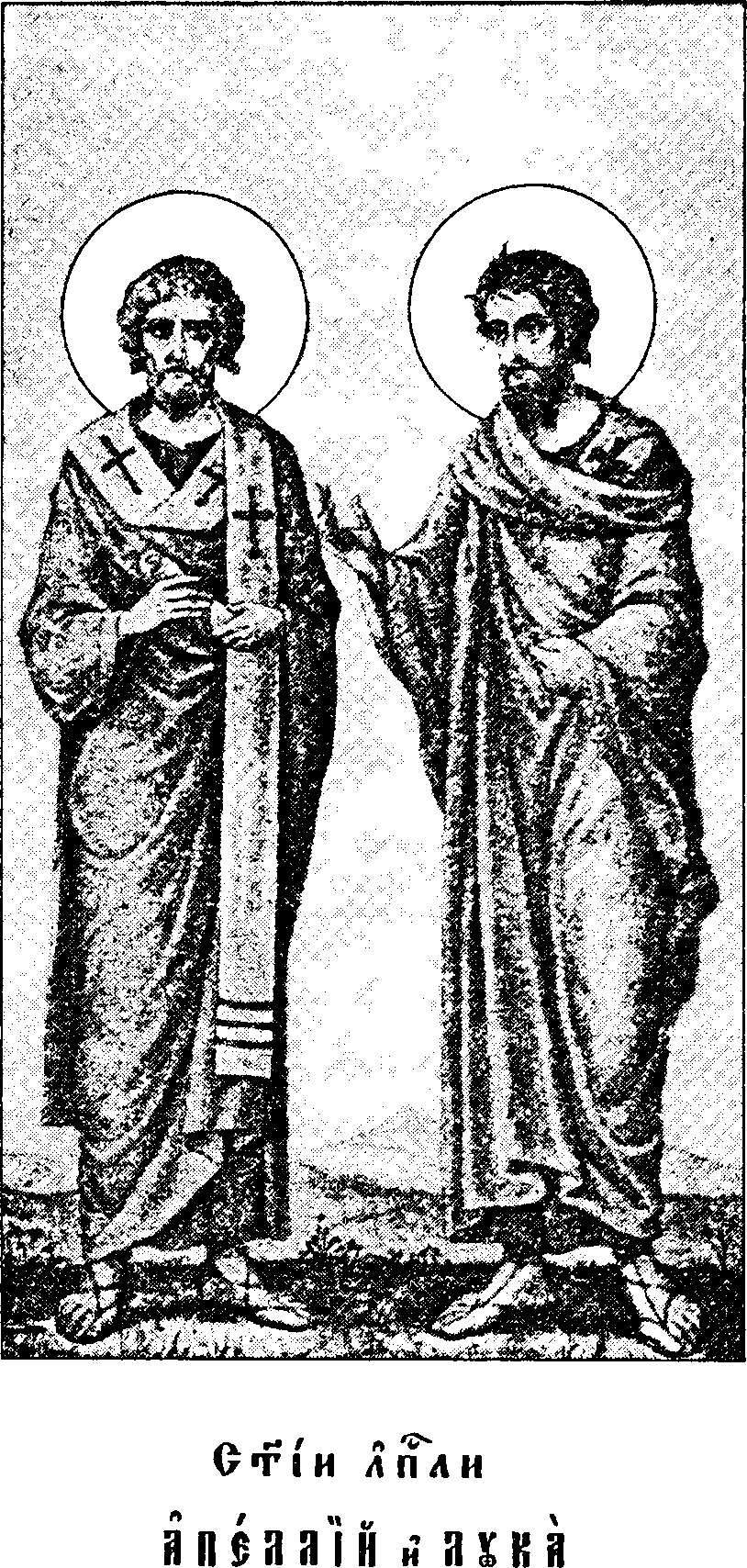
Lucius of Cyrene, also known as Luke and Lucius of Laodicea, is recognized in early Christian tradition as a significant figure in the founding of the Church in Antioch. According to the Acts of the Apostles, he was among the prophets and teachers in Antioch, involved in the commissioning of Barnabas and Paul for missionary work. He is also considered by some traditions to be one of the Seventy Disciples and a bishop.
Key Facts
- ›Listed as a prophet and teacher in the church at Antioch in the Acts of the Apostles.
- ›Mentioned in Antioch following the account of King Herod's death.
- ›Inferred as a founder of the Antiochene church by those who traveled there and spoke to Greeks.
- ›Considered by some traditions as one of the Seventy Disciples.
- ›Venerated as a saint in the Eastern Orthodox and Roman Catholic Churches.
- ›Commemorated on April 22 and September 10 in the Eastern Orthodox Church, and January 4 with the Seventy Disciples.
Acts of the Apostles
Luke, Lucius of Laodicea
Barnabas, Saul, Simeon Niger, Manaen
Saint
Prophet, Teacher
About Lucius of Cyrene
Lucius of Cyrene, also known by the names Luke and Lucius of Laodicea, is an early Christian figure prominently mentioned in the Acts of the Apostles. According to biblical accounts, he was a prophet and teacher within the nascent Christian community in Antioch. His presence in Antioch is noted in the context of significant events, including the death of King Herod.
Role in the Church of Antioch
The Acts of the Apostles lists Lucius of Cyrene among other notable figures such as Barnabas, Simeon Niger, Manaen, and Saul (later known as Paul) in the church at Antioch. This grouping highlights his position as a spiritual leader and instructor. The text further indicates that this council of prophets and teachers was instrumental in the decision-making processes of the early church, including the commissioning of Barnabas and Paul for their extensive missionary journeys.
Founding and Ministry
Lucius is recognized by inference as one of the founders of the church in Antioch. This is suggested by the earlier narrative in Acts, which describes individuals from Cyprus and Cyrene who traveled to Antioch and began spreading the gospel to non-Jewish people. While the text does not explicitly state Lucius was among this initial group, his subsequent presence and leadership role in Antioch support this conclusion. Some traditions also associate him with episcopal leadership, considering him either one of the first bishops of Laodicea or the first bishop of Cyrene.
Veneration
Lucius of Cyrene is venerated as a saint in both the Eastern Orthodox Church and the Roman Catholic Church. In the Eastern Orthodox tradition, he is commemorated on April 22 and September 10, often alongside other saints. He is also remembered on January 4 as one of the Seventy Disciples, a group of Jesus' followers mentioned in the Gospel of Luke. The Roman Martyrology lists his feast day as May 6.
Biblical References and Scholarly Discussion
The primary scriptural reference for Lucius of Cyrene is found in Acts 13:1. Additionally, a figure named Lucius is mentioned in Romans 16:21. While there is no definitive proof that this Lucius is the same individual as Lucius of Cyrene, the early Christian scholar Origen identified the Lucius in Romans with the evangelist Luke in his commentaries.
Source: Wikipedia ↗
Frequently Asked Questions
Who was Lucius of Cyrene?
Lucius of Cyrene, also known as Luke and Lucius of Laodicea, was an early Christian figure. He is mentioned in the Acts of the Apostles as a prophet and teacher in the church at Antioch.
What role did Lucius of Cyrene play in the early church?
According to the Acts of the Apostles, Lucius was part of the group of prophets and teachers in Antioch who prayed and fasted, leading to the commissioning of Barnabas and Paul for missionary journeys. He is also inferred to be a founder of the Antiochene church.
Is Lucius of Cyrene considered one of the Seventy Disciples?
Eastern Orthodox tradition regards him as one of the Seventy Disciples. He is commemorated on January 4 with the other Seventy Disciples.
Is Lucius of Cyrene venerated as a saint?
Yes, Lucius is venerated as a saint in both the Eastern Orthodox Church and the Roman Catholic Church. His feast days are observed on different dates in these traditions.
Where is Lucius of Cyrene mentioned in the Bible?
Lucius of Cyrene is mentioned by name in the Acts of the Apostles, chapter 13, as a prophet and teacher in the church at Antioch. There is also a Lucius mentioned in Romans 16:21, though it is not certain if it is the same person.
Related Prophets

Manaen
Manaen was a first-century teacher and prophet in the Christian Church at Antioch, known for his upbringing with Herod Antipas. He is recognized in the Acts of the Apostles for his role in sending Paul and Barnabas on their first missionary journey and is likely one of the founders of the Church of Antioch. Manaen is venerated in both the Eastern Orthodox and Roman Catholic Churches.
Job
Job was the first Patriarch of Moscow and all Rus', serving from 1589 to 1605. Initially a metropolitan, his status was elevated by the Patriarch of Constantinople, establishing a patriarchate in Moscow. He played a significant role in Russian church and state affairs, particularly during the Time of Troubles, and was later canonized by the Russian Orthodox Church.
Simeon Niger
Simon Niger was a prophet and teacher in the early Christian church at Antioch, as recorded in the Book of Acts. His epithet "Niger" suggests a possible dark complexion or African heritage, as "niger" is the Latin word for black. He is recognized as one of the foundational figures in the Antiochian church, contributing to its early leadership and spiritual guidance.