
Abu'l-Fida Mosque
Hama·Syria·14th century·Original states (referring to mausoleum and minaret)
The Abu'l-Fida Mosque, also known as Jami' al-Hayyat or the "Mosque of the Serpents," is a significant religious and historical complex located in Hama, Syria, on the banks of the Orontes River. It comprises a mosque dating from the Mamluk era and a mausoleum erected in 1327 CE during the Ayyubid era by al-Mu’ayyid Isma’il. The mosque is colloquially named for its distinctive windows, each featuring a central pillar carved in the shape of intertwined snakes.
Key Facts
- ›The mausoleum was erected in 1327 CE by al-Mu’ayyid Isma’IL.
- ›The mosque itself dates from the Mamluk era.
- ›The complex includes a small central courtyard (sahn) with two of its original four gates still standing.
- ›The mausoleum is constructed of limestone with a domed brick roof, completed in the Ayyubid style.
- ›The attached minaret is made of contrasting black basalt and limestone.
- ›The mosque is known colloquially as Jami’ al-Hayyat, or the “Mosque of the Serpents,” due to its window carvings.

Jami’ al-Hayyat, Mosque of the Serpents
Ayyubid, Mamluk
- Mausoleum of Al-Mu’Ayyid
- Minaret with black basalt and limestone construction
- Windows with carved intertwined snakes
Limestone, Brick, Black Basalt
Religious, Historical, Architectural
About Abu'l-Fida Mosque
The Abu'l-Fida Mosque, also known by its colloquial name Jami’ al-Hayyat or the “Mosque of the Serpents,” is a historical mosque and mausoleum complex situated in Hama, Syria. Located on the picturesque banks of the Orontes River, the complex holds significance from both the Ayyubid and Mamluk eras.
Historical Context and Construction
The mausoleum, a key component of the complex, was commissioned and erected by al-Mu’ayyid Isma’il in 1327 CE, during the Ayyubid period. The mosque itself, however, dates from the subsequent Mamluk era. Adjacent to the mosque complex, historical accounts mention a large walled garden, now largely extant.
Architectural Features
The complex is organized around a small central courtyard, known as a sahn, of which two of the original four gates remain. The north gate, dating from the Ayyubid period, provides access to the courtyard and the Mausoleum of al-Mu’ayyid. This mausoleum is characterized by its limestone construction and a domed brick roof, reflecting the Ayyubid architectural style. Contrasting with the mausoleum's materials, an attached limestone minaret was completed using black basalt and limestone, showcasing a distinct stylistic choice.
Unique Design Elements
The mosque's haram, or sacred space, is positioned to the south of the sahn and faces the River Orontes. Most of the surviving structures of the mosque date to the Mamluk period. A particularly distinctive feature of the mosque are its two windows, each adorned with a central pillar intricately carved in the shape of intertwined snakes. This unique motif is the origin of its popular name, Jami’ al-Hayyat, or the “Mosque of the Serpents.” Both the mausoleum and the minaret are noted to be in their original states.
Source: Wikipedia ↗
Frequently Asked Questions
What is the Abu'l-Fida Mosque?
The Abu'l-Fida Mosque is a mosque and mausoleum complex located in Hama, Syria. It is situated on the banks of the Orontes River and is a significant historical and religious site.
When was the Abu'l-Fida Mosque built?
The mausoleum within the complex was erected in 1327 CE during the Ayyubid era. The mosque itself dates from the later Mamluk era.
What is the architectural style of the Abu'l-Fida Mosque?
The mausoleum was completed in the Ayyubid style, made of limestone with a domed brick roof. The attached minaret features contrasting black basalt and limestone.
Why is the mosque sometimes called the 'Mosque of the Serpents'?
The mosque is colloquially known as Jami’ al-Hayyat, or the “Mosque of the Serpents,” because its two windows are decorated with a central pillar carved in the shape of intertwined snakes.
What are the surviving features of the mosque complex?
The complex includes a small central courtyard with two of its original four gates extant. The haram, or sacred space, of the mosque, with its south-facing façade overlooking the River Orontes, also survives, as do the mausoleum and the minaret.
Related Mosques

Abu al-Hasan Mosque
The Abu al-Hasan Mosque is a historic neighborhood mosque located in the medina of Fez, Morocco. Commissioned by the Marinid sultan Abu al-Hasan in 1341, it underwent significant renovations under the Alawi sultan Moulay Slimane between 1792 and 1822. The mosque is noted for its distinctive architecture, including a horseshoe arch entrance, a unique prayer hall layout, and a minaret with intricate decorative motifs.

17th of Ramadan Mosque
The 17th of Ramadan Mosque is a significant historical landmark located in Baghdad, Iraq, dating back to the royal era. Initially named the "Mosque of the Martyr" and later the "14th of Ramadan Mosque," its current name commemorates the Battle of Badr. The mosque is noted for its beautiful Islamic architecture, including calligraphy by Hashem Muhammad al-Baghdadi, and serves as an active worship site for both Sunni and Shi'a Muslims.
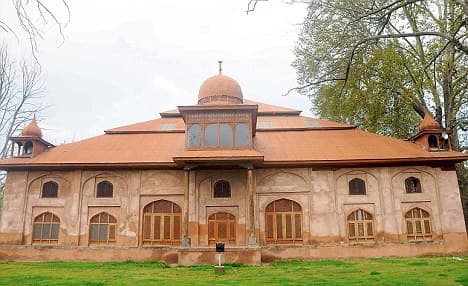
Aali Mosque
The Aali Mosque is a historic congregational mosque located in Srinagar, Jammu and Kashmir, India, within the Eidgah Shah-i-Hamadan complex. It is recognized as one of the largest mosques in the Kashmir Valley, known for its traditional Kashmiri wooden architecture. The mosque's history is marked by multiple periods of construction, destruction, and renovation, reflecting influences from various dynasties and eras.