
Aali Mosque
Srinagar·India·Undergoing restoration
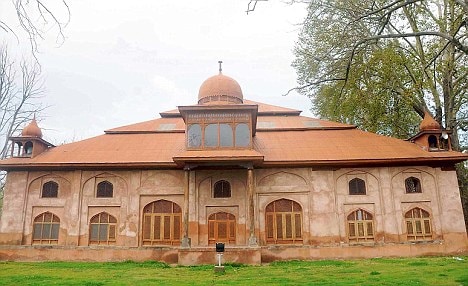
The Aali Mosque is a historic congregational mosque located in Srinagar, Jammu and Kashmir, India, within the Eidgah Shah-i-Hamadan complex. It is recognized as one of the largest mosques in the Kashmir Valley, known for its traditional Kashmiri wooden architecture. The mosque's history is marked by multiple periods of construction, destruction, and renovation, reflecting influences from various dynasties and eras.
Key Facts
- ›Traditionally believed to have been built in 1395 CE by Sultan Ali Shah Miri.
- ›Another tradition attributes its construction or significant rebuilding to 1471 CE during the reign of Sultan Hasan Shah Miri.
- ›Features a large hypostyle prayer hall supported by approximately 151 deodar wooden columns.
- ›The main prayer hall measures roughly 61.2 by 20.5 meters.
- ›Considered a prime example of Kashmiri wooden vernacular architecture.
- ›Undergoing restoration work in the 2020s.
Kashmiri Wooden Vernacular Architecture, Central Asian Influences, Persian Influences
Approximately 151 Deodar Wooden Columns, Hypostyle Prayer Hall, Pinjrakari, Six-Stepped Pulpit Made of Devri Stone, Intricately Crafted Interior Woodwork, Vas-Talav Design
Deodar Wood, Stone, Stucco, Cement Concrete
Religious, Historical, Architectural, Cultural
About Aali Mosque
The Aali Mosque is a historically significant congregational mosque located within the Eidgah Shah-i-Hamadan complex in Srinagar, Jammu and Kashmir, India. It stands as one of the largest mosques in the Kashmir Valley and is renowned for its distinctive traditional Kashmiri wooden architecture. The mosque's history is a complex layering of construction, destruction, and renovation, reflecting the diverse influences of various ruling dynasties and eras in Kashmir.
History and Construction
Traditional Kashmiri chronicles suggest the mosque was established in 1395 CE by Sultan Ali Shah Miri, who named it after himself. An alternative historical tradition attributes its construction, or a significant rebuilding phase, to 1471 CE during the reign of Sultan Hasan Shah Miri. This latter tradition often associates the mosque with the Persian Sufi saint Mir Sayyid Ali Hamadani, after whom the Eidgah complex is named. Over the centuries, the mosque has experienced multiple instances of damage and subsequent reconstruction, with architectural elements added during the Mughal and Afghan periods altering its original form. Extensive repairs were documented during the Mughal era, followed by rebuilding under Afghan rule.
Architecture and Features
The Aali Mosque is celebrated as a prime surviving example of Kashmiri wooden vernacular architecture, showcasing a blend of indigenous building practices and stylistic elements from Central Asia and Iran. It is built on a modular grid plan and supported by approximately 151 deodar wooden columns, each standing on carved stone pedestals. The main prayer hall is a spacious hypostyle hall measuring about 61.2 by 20.5 meters, covering an area of approximately 1,844 square meters. Notable architectural features include intricate pinjrakari (wooden latticework), a six-stepped pulpit constructed from Devri stone, traditional Kashmiri roofing styles, and detailed interior woodwork. Historically, the interior ceiling featured a vas-talav design, a coffered wooden ceiling. The mosque could historically accommodate around 2,500 worshippers.
Architectural Evolution and Conservation
The mosque's appearance has evolved significantly over time due to successive modifications. During the Mughal period, ornamental stone bases were added to the columns, and stucco decoration with recessed arches enhanced the exterior. More recent interventions in the 2020s, including new roofing elements and pavilions, have been carried out under the supervision of conservation authorities. However, these recent restoration works have also prompted concerns from heritage organizations regarding the use of materials such as cement concrete and alterations to the historic roof and ceiling styles, which are seen as potentially impacting the mosque's authenticity. Government officials maintain that these measures are necessary for structural preservation and addressing moisture damage.
Source: Wikipedia ↗
Frequently Asked Questions
When was the Aali Mosque originally built?
The origins of the Aali Mosque are subject to differing historical traditions. Kashmiri chronicles suggest it was built in 1395 CE by Sultan Ali Shah Miri. Another tradition attributes its construction or a major rebuilding phase to 1471 CE during the reign of Sultan Hasan Shah Miri.
What is the architectural style of the Aali Mosque?
The Aali Mosque is considered a fine example of Kashmiri wooden vernacular architecture, blending indigenous building traditions with influences from Central Asia and Iran. It features a modular grid plan, deodar wooden columns, pinjrakari (wooden latticework), and a hypostyle prayer hall.
What are the dimensions of the Aali Mosque's prayer hall?
The main prayer hall of the Aali Mosque measures approximately 61.2 meters (201 ft) in length and 20.5 meters (67 ft) in width. It is arranged as a hypostyle hall and is supported by numerous wooden columns.
Has the Aali Mosque undergone renovations or restorations?
Yes, the Aali Mosque has undergone several episodes of destruction, reconstruction, and renovation over the centuries, with additions from the Mughal and Afghan eras. In the 2020s, it has been undergoing restoration work, which has also raised some conservation concerns.
What is the capacity of the Aali Mosque?
The structure of the Aali Mosque could historically accommodate approximately 2,500 worshippers within its prayer hall.
Related Mosques
Aasfi Masjid
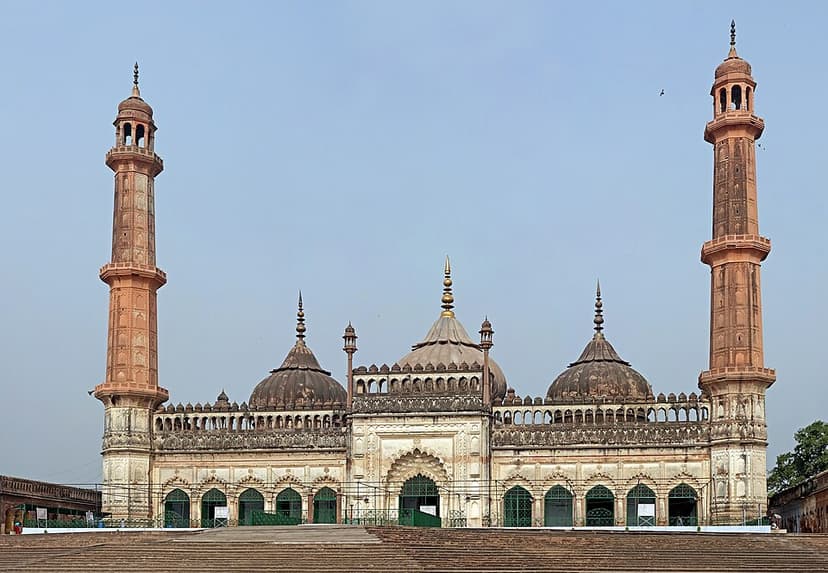
The Bara Imambara, also known as Asafi Imambara, is a prominent imambara and mosque complex located in Lucknow, India. Commissioned by Asaf-ud-Daula, the Nawab of Awadh, and completed in 1784, it was built to provide employment during a famine and is noted for its grand scale and unique architectural features, including a large central hall and a complex labyrinth.

17th of Ramadan Mosque
The 17th of Ramadan Mosque is a significant historical landmark located in Baghdad, Iraq, dating back to the royal era. Initially named the "Mosque of the Martyr" and later the "14th of Ramadan Mosque," its current name commemorates the Battle of Badr. The mosque is noted for its beautiful Islamic architecture, including calligraphy by Hashem Muhammad al-Baghdadi, and serves as an active worship site for both Sunni and Shi'a Muslims.

Abbasi Mosque
The Abbasi Mosque, also known as Derawar Mosque and Jamia Masjid-e-Abbasi, is a significant mosque located near Derawar Fort in the Cholistan Desert of Pakistan. Commissioned by Nawab Bahawal Khan in 1849, it was designed to resemble the Shah Jahani Masjid in Delhi and is notable for its polished marble construction and capacity to hold 10,000 worshippers.