
17th of Ramadan Mosque
The 17th of Ramadan Mosque is a significant historical landmark located in Baghdad, Iraq, dating back to the royal era. Initially named the "Mosque of the Martyr" and later the "14th of Ramadan Mosque," its current name commemorates the Battle of Badr. The mosque is noted for its beautiful Islamic architecture, including calligraphy by Hashem Muhammad al-Baghdadi, and serves as an active worship site for both Sunni and Shi'a Muslims.
Key Facts
- ›Foundation stone laid during the reign of King Ghazi of Iraq.
- ›Work completed on July 14, 1959, by Abd al-Karim Qasim.
- ›Officially opened for prayers on December 6, 1963.
- ›Features calligraphy and paintings by master calligrapher Hashem Muhammad al-Baghdadi.
- ›Total area of the mosque is 5,000 square meters.
- ›The large chapel can accommodate over 2,500 worshippers.

Jami' Sabata'sh Ramaḍān, Mosque of the Martyr, Republic Mosque, 14th of Ramadan Mosque
Islamic
- Calligraphy and paintings by Hashem Muhammad al-Baghdadi
- Adjacent to al-Firdos Square
Historical Landmark, Religious Site, Cultural Landmark
About 17th of Ramadan Mosque
The 17th of Ramadan Mosque: A Baghdad Landmark
The 17th of Ramadan Mosque is a prominent religious and historical site located in the al-Rusafa district of Baghdad, Iraq. Situated in the eastern Karrada district, opposite al-Firdos Square and in front of the Ishtar Hotel, it dates from the royal era of Iraq and is recognized as an important historical landmark within a significant urban square.
History and Naming
The foundation stone for the mosque was laid during the reign of King Ghazi of Iraq. While construction work was completed on July 14, 1959, by Abd al-Karim Qasim, the mosque did not officially begin holding prayers until December 6, 1963, during the era of Abd al-Salam Arif. The mosque has a history of bearing multiple names. It was initially intended to be named "al-Alawiyyah Mosque," then was called the "Republic Mosque" after the July 14 Revolution. Abd al-Karim Qasim later wished to rename it "Mosque of the Martyr." Following the 1963 Ramadan Ba'ath Revolution, it was renamed the "14th of Ramadan Mosque." Its current name, "17th of Ramadan Mosque," was adopted to commemorate the Battle of Badr, particularly after the US invasion of Iraq and the subsequent removal of a statue from the adjacent square.
Architectural Significance and Facilities
The mosque is celebrated for its beautiful Islamic construction and style, considered one of Baghdad's ancient urban landmarks. Its total area spans 5,000 square meters. The main chapel is expansive, capable of accommodating over 2,500 worshippers, and includes a separate chapel for women. Additional facilities comprise an administrative room, a garden surrounding the sanctuary, a residence for the imam and preacher, and a hall for religious events and mourning councils. The mosque also houses the "Ahl al-Qur’an Center," dedicated to studying and memorizing the Quran.
A significant artistic contribution to the mosque is the calligraphy and painting by Hashem Muhammad al-Baghdadi, an esteemed Iraqi master calligrapher. These inscriptions, oriented towards the qibla and overlooking the mosque's gardens, are frequently regarded as among his most important works.
Contemporary Role
The 17th of Ramadan Mosque remains an active place of worship, with Friday prayers regularly attended by both Sunni and Shi'a Muslims. The mosque and its surrounding square have become symbolic, representing both the end of a past era and the dawn of a new one in Iraq, though also reflecting the subsequent period of chaos.
Source: Wikipedia ↗
Frequently Asked Questions
What is the history behind the name "17th of Ramadan Mosque"?
The mosque has had several names throughout its history. It was renamed to its current name to commemorate the Battle of Badr, following the US invasion of Iraq and the removal of a statue of Saddam Hussein from the adjacent square.
When was the 17th of Ramadan Mosque originally founded?
The foundation stone was laid during the reign of King Ghazi of Iraq, and work was completed on July 14, 1959. However, prayers did not commence until December 6, 1963.
What are the notable architectural features of the mosque?
The mosque is distinguished by its beautiful Islamic construction and style. It features calligraphy and paintings by the renowned Iraqi master calligrapher Hashem Muhammad al-Baghdadi, considered one of his greatest works.
What is the capacity of the main prayer hall?
The mosque contains a large chapel that can accommodate more than 2,500 worshippers. There is also a separate chapel for women.
Is the 17th of Ramadan Mosque still an active place of worship?
Yes, the mosque remains active. Friday prayers are held there, serving both Sunni and Shi'a Muslims.
Related Mosques

Abu Hanifa Mosque
The Abu Hanifa Mosque, also known as the Grand Imam Mosque, is a prominent Sunni mosque and shrine located in Baghdad, Iraq. It is built around the tomb of Abu Hanifa al-Nu'man, the founder of the Hanafi school of Islamic jurisprudence. The mosque complex has a long and complex history, marked by numerous reconstructions, expansions, and periods of destruction and rebuilding due to political and sectarian conflicts.
Aberdeen Mosque and Islamic Centre
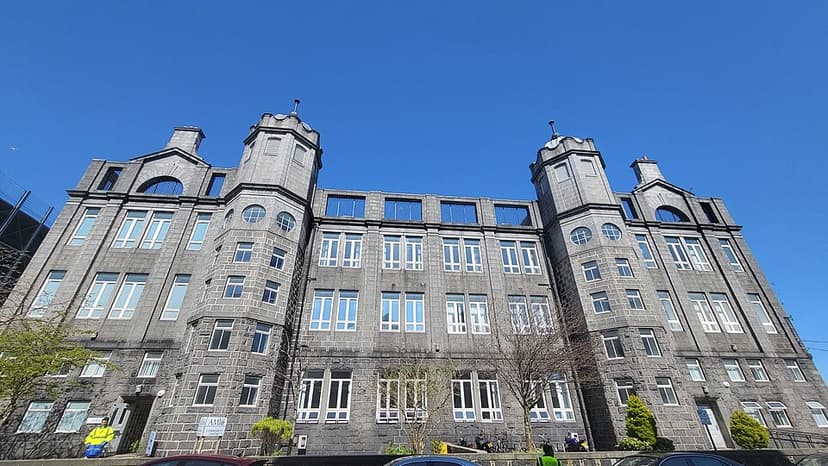
The Aberdeen Mosque and Islamic Centre (AMIC) is the largest mosque and Islamic center in the North East of Scotland, operating across two sites in Aberdeen. Founded in 1978 by university students and local business people, it serves as a registered charitable organization for congregational prayers, religious services, and community outreach. AMIC plays a role in fostering understanding between Muslim and non-Muslim communities through open days and social projects.

Abu Dulaf Mosque
The Abu Dulaf Mosque is an ancient historic Sunni mosque located north of Samarra, Iraq, commissioned by the 10th Abbasid Caliph Al-Mutawakkil in 859 CE. Alongside the Great Mosque of Samarra, it is recognized as a unique example of Abbasid Islamic architecture, notable for its immense size and distinctive spiral minaret. The mosque, though partially preserved with some damage, is situated within the Samarra Archaeological City UNESCO World Heritage Site.