
Abu Haggag Mosque
Luxor·Egypt·Restored (following 2007 fire and 2009 restoration)
The Abu Haggag Mosque, located in Luxor, Egypt, is a significant religious site built during the Ayyubid era. It is notable for being integrated into the ancient Luxor Temple complex, which has been in continuous religious use for over 3,400 years. The mosque houses the tomb of Sheikh Yusuf Abu al-Haggag and is the focal point of an annual Mawlid celebration that blends Islamic traditions with echoes of Pharaonic rituals.
Key Facts
- ›Built during the Ayyubid era, specifically the reign of As-Salih Najm al-Din Ayyub.
- ›Located within the court of Ramesses II at Luxor Temple.
- ›The site has seen continuous religious use since the 14th century BCE, transitioning from ancient Egyptian worship to a Coptic basilica, and then to a mosque in 640 CE.
- ›Contains the tomb of Sheikh Yusuf Abu al-Haggag, after whom it is named.
- ›Features two minarets constructed from mud brick, among the oldest components of the current mosque structure.
- ›Underwent significant restoration in 2009 following a fire in 2007.

Integration Into Luxor Temple Complex, Tomb of Sheikh Yusuf Abu Al-Haggag, Two Mud Brick Minarets, Annual Mawlid Celebration
Mud Brick
Religious, Historical, Cultural
About Abu Haggag Mosque
The Abu Haggag Mosque is an important religious and historical site located in Luxor, Egypt. It is named after Sheikh Yusuf Abu al-Haggag, whose tomb is housed within the mosque. A remarkable aspect of the Abu Haggag Mosque is its integration into the ancient Luxor Temple complex. This unique placement signifies that the site has been a center for continuous religious worship for over 3,400 years, a lineage stretching back to ancient Egyptian times, through its conversion into a Coptic basilica, and eventually to its establishment as a mosque in 640 CE.
History and Architecture
The mosque was constructed during the Ayyubid era, specifically under the rule of As-Salih Najm al-Din Ayyub, on the foundations of a former basilica within Luxor Temple. The mosque features two minarets made of mud brick, which are considered among its oldest architectural elements. The older of the two minarets is characterized by a three-story design, with a square base and cylindrical upper levels. The tomb of Sheikh Yusuf Abu al-Haggag is situated beneath the mosque's dome, with its ceiling featuring a unique design that transitions from irregular dimensions to a circular shape.
Continuous Use and Restoration
The site occupied by the Abu Haggag Mosque and Luxor Temple is recognized as one of the world's oldest continuously used religious locations. This extensive history of devotion underscores its enduring spiritual significance. The mosque has undergone significant preservation and restoration efforts, most notably in 2009. This two-year project, costing E£7 million, was overseen by the Supreme Council of Antiquities and aimed to enhance the prayer area, reinforce the dome, and repair ceilings, especially after a fire in June 2007. During these restoration works, ancient Egyptian inscriptions from the era of Pharaoh Ramesses II were also discovered.
Mawlid Celebration
The Abu Haggag Mosque serves as the central venue for the annual Mawlid celebration, honoring the birthday of Sheikh Yusuf Abu al-Haggag. This vibrant festival, which culminates 15 days before Ramadan, draws large crowds of pilgrims and local residents. The celebration is rich with tradition, featuring a procession of boats that symbolize el-Haggag’s journey to Egypt, alongside activities such as horse races, Sufi music performances, and stick fights. The festivities often display a fascinating blend of Islamic devotion and ancient rituals, drawing parallels to Pharaonic ceremonies like the Opet festival, reflecting a deep connection to the region's historical spiritual practices.
Source: Wikipedia ↗
Frequently Asked Questions
When was the Abu Haggag Mosque built?
The Abu Haggag Mosque was constructed during the Ayyubid era of Egypt, specifically during the reign of As-Salih Najm al-Din Ayyub. It was built on the site of a demolished basilica within the Luxor Temple premises.
What is the significance of the Abu Haggag Mosque's location?
The mosque is uniquely integrated into the ancient Luxor Temple, a site that has been in continuous religious use for over 3,400 years. This makes the Luxor Temple complex, in part, one of the oldest continuously used religious sites in the world.
Who is buried in the Abu Haggag Mosque?
The mosque contains the tomb of Sheikh Yusuf Abu al-Haggag, a revered figure after whom the mosque is named. His tomb is located beneath the mosque's dome.
What is the Mawlid celebration at Abu Haggag Mosque?
The annual Mawlid celebration honors the birthday of Sheikh Yusuf Abu al-Haggag. This festival attracts many pilgrims and features a procession of boats, traditional performances, and religious chanting, bearing resemblances to ancient Pharaonic rituals like the Opet festival.
What architectural features does the Abu Haggag Mosque have?
The mosque has two minarets made of mud brick, which are among its oldest features. The older minaret has a three-story structure with a square base and cylindrical upper sections. The tomb chamber of Sheikh Yusuf Abu al-Haggag is situated under a dome.
Has the mosque undergone any recent renovations?
Yes, the mosque underwent restoration efforts in 2009, which lasted for two years and cost E£7 million. These repairs were supervised by the Supreme Council of Antiquities and addressed damage from a fire in 2007, including expanding the prayer area and strengthening the dome.
Related Mosques

17th of Ramadan Mosque
The 17th of Ramadan Mosque is a significant historical landmark located in Baghdad, Iraq, dating back to the royal era. Initially named the "Mosque of the Martyr" and later the "14th of Ramadan Mosque," its current name commemorates the Battle of Badr. The mosque is noted for its beautiful Islamic architecture, including calligraphy by Hashem Muhammad al-Baghdadi, and serves as an active worship site for both Sunni and Shi'a Muslims.
Aali Mosque
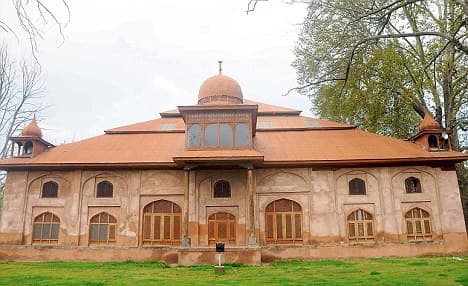
The Aali Mosque is a historic congregational mosque located in Srinagar, Jammu and Kashmir, India, within the Eidgah Shah-i-Hamadan complex. It is recognized as one of the largest mosques in the Kashmir Valley, known for its traditional Kashmiri wooden architecture. The mosque's history is marked by multiple periods of construction, destruction, and renovation, reflecting influences from various dynasties and eras.
Aasfi Masjid
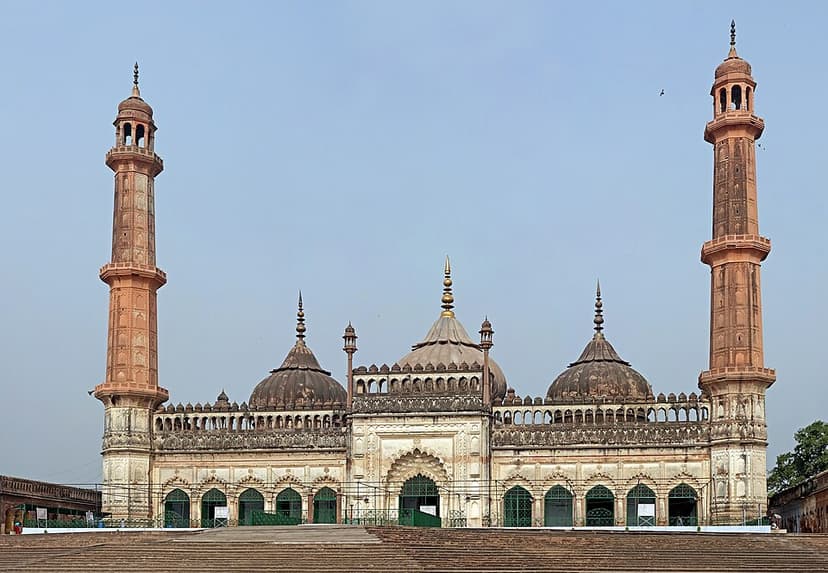
The Bara Imambara, also known as Asafi Imambara, is a prominent imambara and mosque complex located in Lucknow, India. Commissioned by Asaf-ud-Daula, the Nawab of Awadh, and completed in 1784, it was built to provide employment during a famine and is noted for its grand scale and unique architectural features, including a large central hall and a complex labyrinth.