
Abidin Mosque
Kuala Terengganu·Malaysia·18th century
The Abidin Mosque, also known as the White Mosque or the Big Mosque, is the historic former state royal mosque of Terengganu, Malaysia. Constructed by Sultan Zainal Abidin II between 1793 and 1808, it has undergone numerous renovations and expansions throughout its history, reflecting evolving architectural styles and increased capacity. The mosque holds significant historical and cultural importance as a former royal center and is located near the Terengganu Royal Mausoleum.
Key Facts
- ›Built by Sultan Zainal Abidin II between 1793 and 1808.
- ›Originally constructed with wood, later replaced with bricks in 1852.
- ›Underwent significant renovations and expansions in 1881, 1901, and 1972.
- ›Features calligraphic carvings, prayer inscriptions, and arabesques.
- ›Located in Kuala Terengganu, Terengganu, Malaysia.
- ›The old Royal Mausoleum is situated nearby.
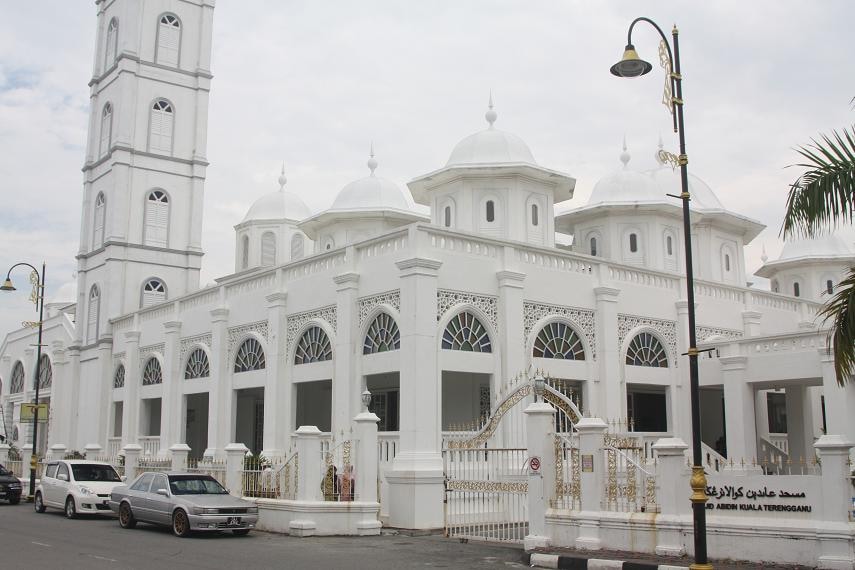
White Mosque, Big Mosque
Calligraphic Carvings of Quranic Verses, Uniquely Carved Mimbar, Proximity To the Royal Mausoleum
Wood, Brick, Stone
Religious, Historical, Cultural, Architectural
About Abidin Mosque
The Abidin Mosque, known historically as the White Mosque or the Big Mosque, stands as the former state royal mosque of Terengganu, Malaysia. Its construction was initiated by Sultan Zainal Abidin II, with the foundational work commencing in 1793 and concluding in 1808. This significant religious and historical edifice is located in Kuala Terengganu, the capital city of Terengganu.
History and Development
The mosque's architectural journey reflects periods of change and expansion. Initially built with wooden materials, it was later reconstructed with bricks during the reign of Sultan Umar around 1852. Further enhancements were made in 1881, when Sultan Ahmad II ibni Yang Dipertua Muda Tengku Mahmud commissioned a new dome. The mosque underwent a substantial renovation and enlargement in 1901 under Sultan Zainal Abidin III to accommodate a growing congregation. This phase also saw the erection of circular stone pillars and the construction of three minarets.
A significant transformation occurred in 1972 during the tenure of Al-Sultan Ismail Nasiruddin Shah. The mosque's size was doubled, new domes were added, and a tall minaret was erected. Decorative elements, including intricate calligraphic carvings of Quranic verses, prayers, and arabesques, were incorporated into the mosque's entrance doors and grills. The current, distinctively carved mimbar was crafted by Mister Abdul Kadir.
Significance and Surroundings
Adjacent to the Abidin Mosque lies the old Royal Mausoleum, serving as the final resting place for numerous members of the Terengganu royal family, including several Sultans and their consorts. This proximity underscores the mosque's historical role as a central point for royal and religious life in the state. The mosque continues to be a site of worship and a testament to the rich heritage of Terengganu.
Source: Wikipedia ↗
Frequently Asked Questions
Who built the Abidin Mosque?
The Abidin Mosque was built by the late Sultan Zainal Abidin II of Terengganu. Construction began in 1793 and concluded in 1808.
What were the original and later construction materials of the mosque?
The mosque was initially built using wood. During the reign of Sultan Umar around 1852, it was rebuilt using bricks.
When did the mosque undergo major renovations?
The mosque has seen several renovations. Notable ones include a new dome added in 1881, an enlargement in 1901, and a significant expansion doubling its size in 1972.
What is the significance of the Abidin Mosque?
The Abidin Mosque served as the old state royal mosque of Terengganu. It holds historical and cultural importance and is located adjacent to the Terengganu Royal Mausoleum, where many members of the royal family are interred.
Are there any special decorative features inside or outside the mosque?
Yes, the mosque features decorative elements such as calligraphic carvings of Quranic verses, prayers, and arabesques. These are found on the entrance doors and grills. The mimbar (pulpit) is also uniquely carved.
Related Mosques
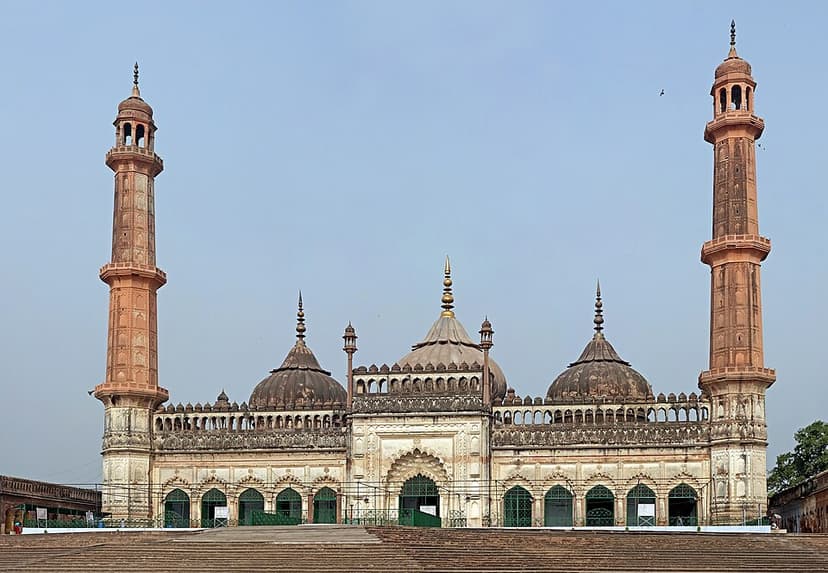
Aasfi Masjid
The Bara Imambara, also known as Asafi Imambara, is a prominent imambara and mosque complex located in Lucknow, India. Commissioned by Asaf-ud-Daula, the Nawab of Awadh, and completed in 1784, it was built to provide employment during a famine and is noted for its grand scale and unique architectural features, including a large central hall and a complex labyrinth.

17th of Ramadan Mosque
The 17th of Ramadan Mosque is a significant historical landmark located in Baghdad, Iraq, dating back to the royal era. Initially named the "Mosque of the Martyr" and later the "14th of Ramadan Mosque," its current name commemorates the Battle of Badr. The mosque is noted for its beautiful Islamic architecture, including calligraphy by Hashem Muhammad al-Baghdadi, and serves as an active worship site for both Sunni and Shi'a Muslims.
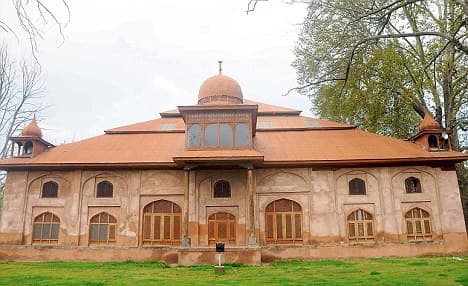
Aali Mosque
The Aali Mosque is a historic congregational mosque located in Srinagar, Jammu and Kashmir, India, within the Eidgah Shah-i-Hamadan complex. It is recognized as one of the largest mosques in the Kashmir Valley, known for its traditional Kashmiri wooden architecture. The mosque's history is marked by multiple periods of construction, destruction, and renovation, reflecting influences from various dynasties and eras.