
Žitomislić Monastery
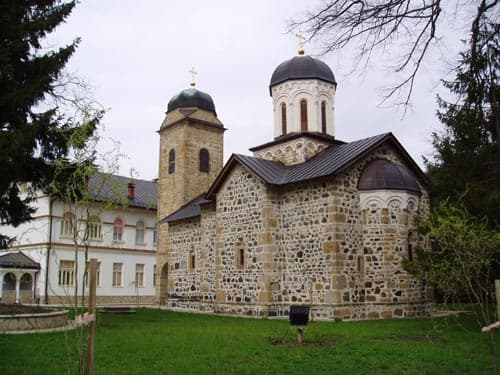
Žitomislić Monastery is a Serbian Orthodox monastery located near Mostar, Bosnia and Herzegovina, dedicated to the Annunciation. Founded in 1556 by the Miloradović-Hrabren family on the ruins of an older church, it developed into a significant religious and cultural center with a renowned scriptorium and substantial landholdings. Despite periods of destruction and reconstruction, including severe damage during World War II and the Bosnian War, the monastery has been meticulously rebuilt and continues to function as an active monastic community.
Key Facts
- ›Founded in 1556 by the Miloradović-Hrabren family on the site of an older church.
- ›Took over forty years to complete, with monks first recorded in 1606.
- ›Housed a scriptorium of considerable activity and renown.
- ›The entire brotherhood was arrested and killed by Croatian fascists in 1941.
- ›Destroyed during the Bosnian War in 1992, with reconstruction beginning in 2002.
- ›Reconstruction in 2002 meticulously followed its prior architecture.

Highly Artistic Iconostasis, Renowned Scriptorium, Extensive Landholdings
Simeon Miljković
Granted Permit To Build In 1556, Monks First Referenced In 1606, Brotherhood Arrested and Killed In 1941, Destroyed During the Bosnian War In 1992, Reconstruction Began In 2002, Holy Assembly of Bishops Session In 2005
About Žitomislić Monastery
Žitomislić Monastery is a significant Serbian Orthodox religious site located near Mostar in Bosnia and Herzegovina, dedicated to the Annunciation. Its establishment dates back to 1556 when the Miloradović-Hrabren family obtained permission from the Ottoman Empire to construct the monastery on the foundations of an older church. The construction was a lengthy process, spanning over forty years, with the presence of monks being recorded as early as 1606.
Historically, Žitomislić Monastery was a thriving spiritual and cultural hub. It was known for its highly artistic iconostasis and housed a scriptorium that achieved considerable renown for its activity during its active period. The monastery also possessed large landholdings, which were cultivated by the monks themselves, contributing to its self-sufficiency and prosperity. In the early 19th century, improvements were made under prior Simeon Miljković, including the addition of guest quarters, local water supply, and a new vineyard, alongside the establishment of a seminary in 1858.
The monastery has endured periods of immense hardship and destruction. In 1941, during World War II, the entire monastic brotherhood was arrested by the Croatian fascist Ustasha, tortured, and killed. The monastery complex was subsequently plundered and destroyed, with only the church itself remaining. Later, during the Bosnian War in 1992, Žitomislić was again targeted and destroyed by the Croatian Defence Council. The library, containing numerous old manuscripts and Ottoman documents, was plundered, and the buildings, including the cemetery, were dynamited and bulldozed. Following this extensive devastation, reconstruction efforts officially began in 2002, focusing on meticulously recreating the monastery's original architecture from the remnants. The fully restored monastery hosted a regular session of the Holy Assembly of Bishops of the Serbian Orthodox Church in 2005, marking its resurgence.
Source: Wikipedia ↗
Frequently Asked Questions
When was Žitomislić Monastery founded?
The monastery was founded in 1556. The Miloradović-Hrabren family received permission from the Ottoman Empire to build it on the ruins of an older church. Its construction took over forty years to complete.
What is Žitomislić Monastery dedicated to?
Žitomislić Monastery is dedicated to the Annunciation. This dedication is central to its identity as a Serbian Orthodox monastic institution.
What happened to the monks during World War II?
In 1941, the entire brotherhood of Žitomislić Monastery was arrested by the Croatian fascist Ustasha. They were tortured and killed, with some being thrown alive into a cave-pit.
What was the extent of the damage during the Bosnian War?
During the Bosnian War in 1992, the monastery was destroyed by the Croatian Defence Council. The library, treasury, buildings, and cemetery were dynamited and bulldozed to the ground.
When did reconstruction begin at Žitomislić Monastery?
Reconstruction of Žitomislić Monastery officially began in 2002. The process involved meticulously reconstructing its prior architecture from the fallen stones.
What significant cultural activities took place at Žitomislić Monastery?
Historically, Žitomislić Monastery boasted a highly artistic iconostasis and housed a scriptorium of considerable activity and renown in its time. It was also supported by large landholdings worked by the monks.
Related Monasteries

Gomionica Monastery
Gomionica Monastery is a Serbian Orthodox monastery dedicated to the Presentation of Mary, situated in Kmećani, Bosnia and Herzegovina. It serves as the spiritual heart of the Zmijanje region and boasts a history dating back to before 1536. The monastery has undergone numerous refurbishments and endured significant damage during World War II, but remains a cultural monument with a rich treasury of icons and manuscripts.
Ozren Monastery
Ozren Monastery is a Serbian Orthodox monastery dedicated to Saint Nicholas, located near Petrovo in Bosnia and Herzegovina. While folk tradition attributes its founding to King Dragutin in the late 13th century, historical evidence suggests it was likely established in the latter half of the 16th century. It serves as the spiritual center for the Mount Ozren region and houses 17th-century frescoes and notable icons, including a Pietà by Emmanuel Lambardos.

Moštanica Monastery
Moštanica Monastery is a Serbian Orthodox female monastery situated in the Kozara mountain region of Bosnia and Herzegovina, dedicated to Archangel Michael. Founded in the early 16th century, it has endured significant destruction throughout its history, being rebuilt seven times between 1556 and 1993. The monastery is recognized as a protected cultural heritage monument and is ecclesiastically part of the Eparchy of Banja Luka.