
Ozren Monastery
Ozren Monastery is a Serbian Orthodox monastery dedicated to Saint Nicholas, located near Petrovo in Bosnia and Herzegovina. While folk tradition attributes its founding to King Dragutin in the late 13th century, historical evidence suggests it was likely established in the latter half of the 16th century. It serves as the spiritual center for the Mount Ozren region and houses 17th-century frescoes and notable icons, including a Pietà by Emmanuel Lambardos.
Key Facts
- ›Dedicated to Saint Nicholas.
- ›Likely founded in the second half of the 16th century.
- ›Folk tradition states it was founded by King Dragutin.
- ›Features 17th-century frescoes and icons.
- ›Designated a National Monument of Bosnia and Herzegovina in 2003.
- ›The bell tower was constructed in 1872.
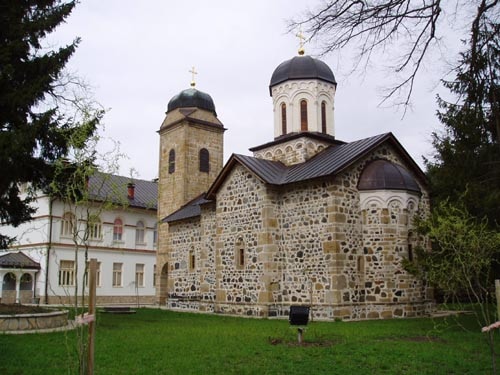
17th-Century Frescoes, Pietà Icon By Emmanuel Lambardos, Bell Tower, Spiritual Center of Mount Ozren Region
Manastir Ozren
Patriarch Makarije Sokolović, King Dragutin
Great Turkish War Causing Disrepair
About Ozren Monastery
Ozren Monastery, known in Serbian as Manastir Ozren, is a significant Serbian Orthodox monastic complex dedicated to Saint Nicholas. Situated approximately six kilometers from the town of Petrovo in northern Republika Srpska, Bosnia and Herzegovina, it holds a prominent place as the spiritual heart of the Mount Ozren region.
Historical Context and Founding
The precise founding date of Ozren Monastery is subject to historical interpretation and folk tradition. While popular legend attributes its establishment to King Dragutin, a prominent figure of the Serbian Nemanjić dynasty who reigned in the area from 1284 to 1316, more concrete historical evidence suggests a later origin. Scholarly consensus points to its probable foundation in the second half of the 16th century, during the tenure of Serbian Patriarch Makarije Sokolović. This era saw the Serbian Orthodox Church actively seeking and receiving permission from the Ottoman Sultan to undertake the reconstruction and building of churches and monasteries.
Artistic and Architectural Significance
The monastery church is adorned with frescoes painted in the early 17th century, showcasing the artistic styles of the period. Following the destructive Great Turkish War (1683–1699), the monastery suffered significant disrepair. A substantial renovation of the church commenced in 1842, following Ottoman authorization. The construction of a distinct bell tower outside the main church structure was completed in 1872. Further refurbishment of the church took place in 1920 and again in 1996, ensuring its preservation.
Among its valuable icons, the monastery houses a notable Pietà, a 17th-century work by Emmanuel Lambardos, a celebrated painter associated with the Cretan School. This icon is a testament to the monastery's historical artistic connections and its role as a repository of religious art.
Recognition and Current Status
In recognition of its historical and cultural importance, Ozren Monastery was designated as a National Monument of Bosnia and Herzegovina in 2003. It continues to function as an active monastic community and remains a vital spiritual and cultural center for the surrounding region. The monastery is accessible to the public, allowing visitors to experience its historical ambiance and religious significance.
Source: Wikipedia ↗
Frequently Asked Questions
When was Ozren Monastery founded?
While folk tradition suggests it was founded by King Dragutin between 1284 and 1316, historical evidence points to a probable founding in the second half of the 16th century. This period aligns with Patriarch Makarije Sokolović receiving permission from the Ottoman sultan to build churches and monasteries.
What is the religious tradition of Ozren Monastery?
Ozren Monastery is a Serbian Orthodox monastery, adhering to the Eastern Orthodox tradition.
What are the notable artistic features of the monastery?
The monastery church contains frescoes painted in the early 17th century. It also houses important icons, including a 17th-century Pietà attributed to Emmanuel Lambardos, a painter from the Cretan School.
Has Ozren Monastery undergone significant renovations?
Yes, the monastery fell into disrepair after the Great Turkish War. Renovation of the church began in 1842, and it was further refurbished in 1920 and 1996. The bell tower was added in 1872.
What is the current status of Ozren Monastery?
Ozren Monastery is an active religious site and a designated National Monument of Bosnia and Herzegovina. It continues to be the spiritual center of the Mount Ozren area.
Related Monasteries

Gomionica Monastery
Gomionica Monastery is a Serbian Orthodox monastery dedicated to the Presentation of Mary, situated in Kmećani, Bosnia and Herzegovina. It serves as the spiritual heart of the Zmijanje region and boasts a history dating back to before 1536. The monastery has undergone numerous refurbishments and endured significant damage during World War II, but remains a cultural monument with a rich treasury of icons and manuscripts.

Žitomislić Monastery
Žitomislić Monastery is a Serbian Orthodox monastery located near Mostar, Bosnia and Herzegovina, dedicated to the Annunciation. Founded in 1556 by the Miloradović-Hrabren family on the ruins of an older church, it developed into a significant religious and cultural center with a renowned scriptorium and substantial landholdings. Despite periods of destruction and reconstruction, including severe damage during World War II and the Bosnian War, the monastery has been meticulously rebuilt and continues to function as an active monastic community.

Moštanica Monastery
Moštanica Monastery is a Serbian Orthodox female monastery situated in the Kozara mountain region of Bosnia and Herzegovina, dedicated to Archangel Michael. Founded in the early 16th century, it has endured significant destruction throughout its history, being rebuilt seven times between 1556 and 1993. The monastery is recognized as a protected cultural heritage monument and is ecclesiastically part of the Eparchy of Banja Luka.