
Yeaveley Preceptory
Yeaveley Preceptory, also known as Stydd Preceptory, was a medieval establishment of the Knights Hospitaller located in Derbyshire, England. Founded in 1190, it served to generate revenue for the Knights' crusades. The preceptory, initially a Benedictine hermitage, grew into a fortified estate with fishponds and later acquired lands from the dissolved Knights Templar. Despite its religious purpose, it faced accusations of fraud and abusing privileges in the 13th and 14th centuries. It was ultimately suppressed in 1543 during the Dissolution of the Monasteries.
Key Facts
- ›Founded in 1190 when Ralph Foun gifted the Benedictine Hermitage at Yeaveley to the Knights Hospitaller.
- ›Served as a preceptory of the Knights Hospitaller to raise funds for crusades.
- ›Known by various names including Stydd Preceptory, Yeaveley Bailiwick, and Yeaveley and Barrow Preceptory.
- ›Accused of fraud and abusing privileges, such as using false measures for selling bread and beer, in the 13th and 14th centuries.
- ›Suppressed in 1543 and its property confiscated.
- ›Remains of the preceptory's chapel are protected as a Grade I listed building.

Gothic
Moated Site, Fishponds, Remains of A 13th-Century Chapel, Stydd Hall
Stydd Preceptory, Yeaveley Bailiwick, Yeaveley and Barrow Preceptory
Ralph Foun, Robert, Son of Richard, King Henry Iii, William Brix, Sir Ambrose Cove, Charles Blount, 5th Baron Mountjoy, Oliver Foun, William Montgomery, Margery De Carun, Robert De Bakepuze, John, Ascuit Musard, Walter Abitot, William Meynell
- Gift of Benedictine Hermitage By Ralph Foun
- Grant of Free Warren By King Henry Iii
- Gained Dedication To Saint Mary and Saint John the Baptist
- Accusations of Fraud and Abuse of Privileges
- Suppressed During the Dissolution of the Monasteries
About Yeaveley Preceptory
Yeaveley Preceptory, also referred to as Stydd Preceptory, was a significant establishment of the Knights Hospitaller in Derbyshire, England. Founded in 1190, its primary purpose was to generate revenue to support the Knights' military campaigns, particularly their crusades to Jerusalem in the 12th and 13th centuries. The preceptory evolved from a Benedictine hermitage gifted by Ralph Foun, which included lands, waters, woods, and mills surrounding the village of Yeaveley.
History and Development
The preceptory was fortified and strategically located about a mile west of Yeaveley village, protected by a moat fed by a stream. Adjacent fishponds ensured a consistent food supply. Over time, Yeaveley Preceptory expanded its holdings, notably acquiring lands from the dissolved Knights Templar. In 1251, King Henry III granted the Hospitallers free warren over the manor of Yeaveley, and by 1268, the preceptory was formally dedicated to Saint Mary and Saint John the Baptist. The estate accumulated considerable wealth through patronage and local benefaction.
However, the preceptory also faced criticism. During the 13th and 14th centuries, it gained a reputation for fraud and the abuse of its privileges. This included manipulating weights and measures for trade and extending exemptions from tolls to its tenants, which led to unpopularity and complaints from the royal borough of Ashbourne. By 1338, it was described as a bailiwick, generating a substantial income primarily from rents and offerings.
Dissolution and Legacy
Following its formal annexation with Barrow Camera prior to 1433, Yeaveley Preceptory continued to be a vital part of the Hospitallers' operations. By the time of King Henry VIII's reign, it reported an annual income of over £100. Despite claims in the 1535 Valor Ecclesiasticus that its income was entirely consumed by hospitality, alms, and religious services, the preceptory was ultimately suppressed during the Dissolution of the Monasteries. In 1543, it was confiscated and granted to Charles Blount, 5th Baron Mountjoy.
Today, the remains of Yeaveley Preceptory are protected as a Grade I listed building, consisting primarily of part of its early 13th-century chapel. The site also includes the moated enclosure, which is a scheduled monument. The 17th-century Stydd Hall, built on the preceptory's grounds, is a Grade II* listed building, incorporating some of the original foundations and stonework. The preceptory benefited from numerous benefactors, including the Foun family, William Montgomery, Margery de Carun, and Robert de Bakepuze, whose generosity helped shape its development and spiritual life.
Source: Wikipedia ↗
Frequently Asked Questions
When was Yeaveley Preceptory founded?
Yeaveley Preceptory was founded in 1190. This occurred after Ralph Foun gifted the existing Benedictine Hermitage at Yeaveley, along with surrounding lands and resources, to the Knights Hospitaller.
What was the purpose of Yeaveley Preceptory?
Preceptories like Yeaveley were established by the Knights Hospitaller primarily to generate revenue. This income was intended to fund the Knights' participation in the crusades to Jerusalem during the 12th and 13th centuries.
What remains of Yeaveley Preceptory today?
Today, only a portion of the preceptory's chapel still stands, dating from the early 13th century. These ruins are designated as a Grade I listed building. Foundations and stonework from the domestic buildings have also been incorporated into the later Stydd Hall.
Was Yeaveley Preceptory always known by that name?
No, Yeaveley Preceptory was known by several names throughout its history. These included Stydd Preceptory, Yeaveley Bailiwick, and Yeaveley and Barrow Preceptory.
What historical issues did Yeaveley Preceptory face?
During the 13th and 14th centuries, the preceptory gained a reputation for fraud and the abuse of its privileges. This included issues with weights and measures and extending toll exemptions to tenants, which caused local resentment.
What happened to Yeaveley Preceptory?
Yeaveley Preceptory was suppressed during the Dissolution of the Monasteries. Its property and lands were confiscated in 1543 and granted to Charles Blount, 5th Baron Mountjoy.
Related Monasteries

Ankerwycke Priory
Ankerwycke Priory was a small and relatively poor Benedictine nunnery established around 1160 in Buckinghamshire, England. Dedicated to St. Mary Magdalene, it held lands across several counties. Dissolved in 1536, its revenues were transferred to Bisham Abbey, and the priory site later saw the construction of a manor house. Today, only a small section of ruins remains, situated in Berkshire.
Buildwas Abbey
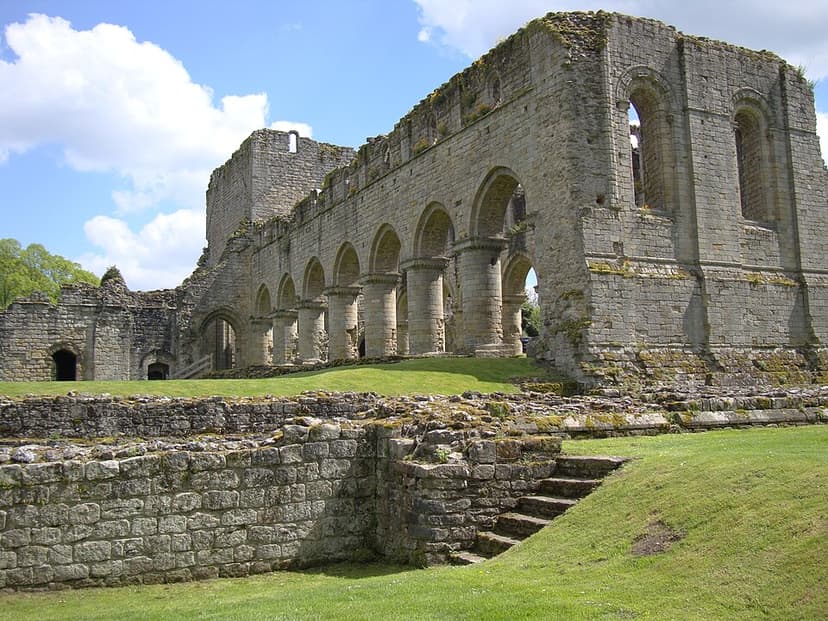
Buildwas Abbey was a significant Cistercian monastery in Shropshire, England, founded in 1135. It experienced periods of substantial growth and wealth, becoming a center of learning with a notable library. Despite facing challenges from economic crises and conflict, it played a role in royal administration, particularly concerning Ireland and Wales, before its suppression in 1536. Today, substantial remains of the abbey church and monastic buildings are maintained by English Heritage.

Byland Abbey
Byland Abbey was a Savigniac and later Cistercian monastic institution founded in 1135 in North Yorkshire, England. Despite an unstable early history with multiple relocations, it eventually settled at its final site near Coxwold. Once established, it became a significant religious and economic center, renowned for its sheep rearing and wool exports, and boasting a church described as one of the finest 12th-century structures in Europe. Though dissolved in 1538, extensive ruins remain, including the west front of the church with its notable rose window, and the site is maintained by English Heritage.