
Wetheral Priory
Christian·United Kingdom·heritage site, open to visitors·12th century
Wetheral Priory Gatehouse is a well-preserved 15th-century stone fortification that once served as the entrance to Wetheral Priory, a Benedictine institution founded in the early 12th century. Despite the priory's dissolution in 1538, the gatehouse survived and has undergone various uses, including as a vicarage and hayloft, before its current status as a protected monument managed by English Heritage and open to the public. It is considered the finest medieval gatehouse in Cumbria.
Key Facts
- ›The gatehouse was likely built in the 15th century, forming the entrance to the outer courtyard of Wetheral Priory.
- ›Wetheral Priory was a small Benedictine institution founded at the beginning of the 12th century.
- ›The priory was granted a special right of sanctuary for criminals by Henry I.
- ›The gatehouse and a stretch of wall are the only surviving structures from the priory after its dissolution in 1538.
- ›The gatehouse has served as a vicarage and a hayloft before becoming a public heritage site.
- ›English Heritage describes it as 'the finest medieval gatehouse in Cumbria'.

Medieval
Crenellated Gatehouse, Three Storeys With Domestic Chambers, Barrel Vaulted Entrance Passageway, Barrel Vaulted Cellar, Surviving Medieval Wall Section
Ranulf Le Meschin, Henry I, Thomas Cromwell, Ralf Hartley
Founding of Wetheral Priory, Grant of Sanctuary Rights By Henry I, Dissolution of the Monasteries, Surrender of the Priory To the Crown, Conversion To A Vicarage, Transfer To State Guardianship
About Wetheral Priory
Wetheral Priory Gatehouse
Wetheral Priory Gatehouse stands as a significant surviving remnant of a 12th-century Benedictine priory in Wetheral, Cumbria. Constructed in the 15th century, this imposing stone structure served as the main entrance to the priory's outer courtyard, symbolizing its authority and providing a degree of fortification in a historically sensitive border region. While the priory itself was dissolved in 1538, the gatehouse, along with a nearby section of wall, endured.
History and Significance
Founded by Ranulf le Meschin at the dawn of the 12th century, Wetheral Priory was affiliated with St Mary's Abbey in York. It held a unique distinction, granted by Henry I, of offering sanctuary to criminals who could reach its church and ring its bell. The priory declined by the 16th century, leading to its surrender to the Crown during the dissolution of the monasteries under Henry VIII. The gatehouse, however, proved remarkably resilient. It was repurposed as the local vicarage throughout the 16th and 17th centuries and later served as a hayloft. Its survival is attributed to its robust construction and strategic importance.
Architecture and Preservation
Considered "the finest medieval gatehouse in Cumbria" by English Heritage, the gatehouse is a three-storey building constructed from coursed red sandstone. It features a barrel-vaulted entrance passageway and a porters' lodge on the ground floor, with two domestic chambers on the upper floors, complete with fireplaces and garderobes. The building is topped with battlements, echoing its defensive origins. The roof timbers date from between 1512 and 1536, suggesting a likely construction or significant alteration around 1540, possibly coinciding with its conversion to a vicarage. A 23-metre medieval wall, likely the former east wall of the chapter house, also remains to the northeast of the gatehouse.
Modern Status
In 1978, the Wetheral Priory Gatehouse passed into state guardianship and is now managed by English Heritage. It is protected under UK law as a Grade I listed building and is open to the public, offering visitors a tangible connection to the medieval monastic history of Cumbria and the architectural prowess of its time.
Source: Wikipedia ↗
Frequently Asked Questions
When was Wetheral Priory founded?
Wetheral Priory was founded at the start of the 12th century, following the Norman invasion of Cumbria.
What is the Wetheral Priory Gatehouse made of and how many floors does it have?
The gatehouse is constructed of coursed red sandstone and is a three-storey building. It features battlements at the top.
What happened to Wetheral Priory after its dissolution?
The priory was dissolved in 1538. While most of the priory fell into disrepair, the gatehouse survived and was later used as a vicarage and a hayloft before becoming a heritage site.
What was the purpose of the Wetheral Priory Gatehouse?
The gatehouse controlled access to the priory's outer courtyard, symbolizing its power and status. In the 15th century, it also served a defensive purpose due to the ongoing dangers along the Anglo-Scottish border.
Who manages Wetheral Priory Gatehouse today?
The gatehouse is now in the care of English Heritage and is open to the public for visits.
Related Monasteries

Bentley Priory
Bentley Priory began as a medieval priory for Augustinian Canons in Middlesex, though no remnants of the original structure survive. The current stately home, designed by Sir John Soane, was built in the late 18th century and expanded over the following decades. It later served as the final residence for Queen Adelaide, a hotel, and a girls' school before becoming the crucial headquarters for RAF Fighter Command during World War II. Today, parts of the building house a museum dedicated to its wartime role, while the grounds function as a nature reserve.
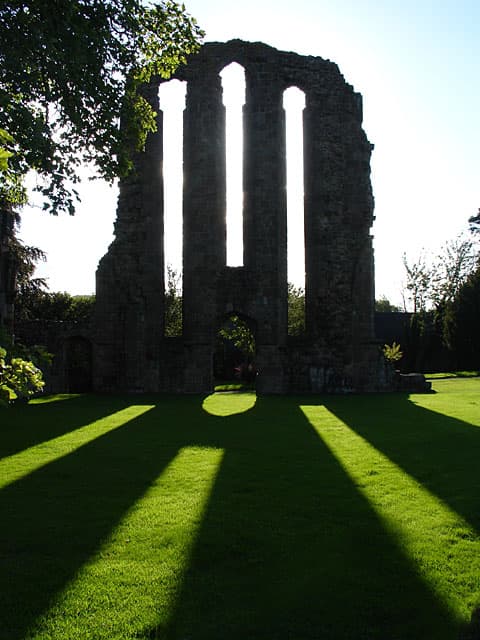
Croxden Abbey
Croxden Abbey was a Cistercian monastery located in Staffordshire, United Kingdom, founded in the 12th century by Bertram III de Verdun. It was a daughter house of the abbey in Aunay-sur-Odon, Normandy, and initially prospered through sheep farming, becoming a significant wool supplier. The abbey faced decline due to financial strains and disputes, eventually being dissolved in 1538 under the Suppression of Religious Houses Act.
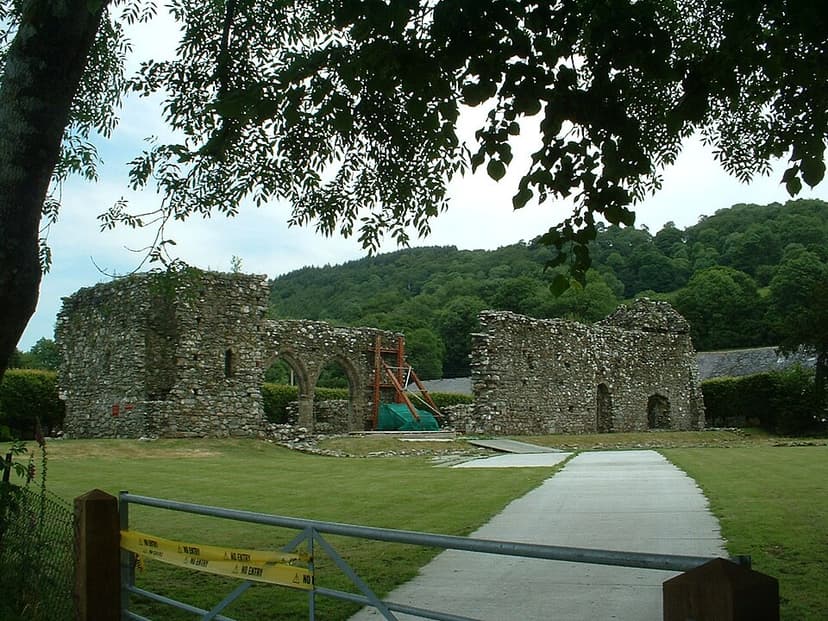
Cymer Abbey
Cymer Abbey was a ruined Cistercian monastery founded in 1189 near Llanelltyd, Gwynedd, Wales, and dedicated to the Virgin Mary. Despite royal patronage and land grants, the abbey struggled financially due to limited arable land and fishing rights, exacerbated by Welsh Wars and climate change. Dissolved in 1536-37, its remains are now managed by Cadw and are open to the public.