
Bentley Priory
Christian·United Kingdom·Museum and Nature Reserve·12th century
Bentley Priory began as a medieval priory for Augustinian Canons in Middlesex, though no remnants of the original structure survive. The current stately home, designed by Sir John Soane, was built in the late 18th century and expanded over the following decades. It later served as the final residence for Queen Adelaide, a hotel, and a girls' school before becoming the crucial headquarters for RAF Fighter Command during World War II. Today, parts of the building house a museum dedicated to its wartime role, while the grounds function as a nature reserve.
Key Facts
- ›Originally a medieval Augustinian priory, founded possibly in 1171.
- ›Current mansion house designed by Sir John Soane, with significant extensions in the late 18th and 19th centuries.
- ›Final home of Dowager Queen Adelaide before her death in 1849.
- ›Served as the headquarters for RAF Fighter Command during World War II, playing a key role in the Battle of Britain.
- ›Now houses the Bentley Priory Museum, commemorating its RAF history.
- ›The grounds are designated as the Bentley Priory Nature Reserve.

Georgian, Victorian
Bentley Priory Museum, Bentley Priory Nature Reserve, Stately Home Architecture, Deer Park
Bentley Priory
- Sir John Soane
- James Duberley
- John Hamilton, 1st Marquess of Abercorn
- Dowager Queen Adelaide
- Sir John Kelk
- Frederick Gordon
- Sir Hugh Dowding, Baron Dowding of Bentley Priory
- Charles Iii
- Possible Founding In 1171.
- Became A Cell of St. Gregory's Priory, Canterbury By 1301.
- Dissolution of St. Gregory's In 1536, Leading To Changes In Ownership.
- Construction of the Current Mansion House By Sir John Soane Starting In 1775.
- Extensive Alterations and Extensions For John Hamilton, 1st Marquess of Abercorn In 1788.
- Residence of Dowager Queen Adelaide From 1848 Until Her Death In 1849.
- Acquisition By the Royal Air Force In 1926.
- Headquarters of Raf Fighter Command During World War Ii.
- Closure of Raf Bentley Priory In 2008.
- Opening of the Bentley Priory Museum In 2013.
About Bentley Priory
Bentley Priory is a historic estate located in Stanmore, on the northern edge of Greater London. Its origins trace back to a medieval priory of Augustinian Canons, though no physical remains of this early religious house exist today. The prominent stately home that defines the site was primarily designed by the renowned architect Sir John Soane, beginning in 1775, and was subsequently enlarged by various owners throughout the 18th and 19th centuries.
Historical Significance
The priory holds notable historical associations. It was the final residence of Dowager Queen Adelaide, widow of King William IV, who lived there from 1848 until her death in 1849. Following her passing, Bentley Priory transitioned through several uses, including serving as a hotel and a girls' school. Its most significant 20th-century role began in 1926 when it was acquired by the Air Ministry and became the crucial headquarters for RAF Fighter Command during World War II, playing a pivotal part in the defence of Britain.
Modern Use
After its service with the Royal Air Force concluded in 2008, Bentley Priory was sold to developers. A portion of the historic building has been preserved and transformed into the Bentley Priory Museum, dedicated to commemorating the bravery and service of those who were stationed there, particularly during the Battle of Britain. The surrounding grounds are now managed as the Bentley Priory Nature Reserve, a protected area of natural beauty.
Source: Wikipedia ↗
Frequently Asked Questions
What was Bentley Priory before it became a stately home?
Bentley Priory was originally a medieval priory of Augustinian Canons. Little is known about the exact location of this original priory, but it is believed to have stood near Priory House on Clamp Hill.
Who designed the current Bentley Priory mansion?
The current mansion house at Bentley Priory was designed by the prominent 18th-century architect Sir John Soane. He first designed it in 1775 for James Duberley and later made significant extensions in 1788 for John Hamilton, 1st Marquess of Abercorn.
What was Bentley Priory's role during World War II?
During the Second World War, Bentley Priory was the headquarters of RAF Fighter Command. This role made it a site of historic significance, particularly during the Battle of Britain.
What is Bentley Priory used for today?
Today, Bentley Priory is home to the Bentley Priory Museum, which commemorates its role in the RAF, especially during the Battle of Britain. The surrounding grounds have been preserved as the Bentley Priory Nature Reserve.
Was Bentley Priory ever a hotel or a school?
Yes, after serving as the final home for Dowager Queen Adelaide, Bentley Priory was converted into a hotel by Frederick Gordon of Gordon Hotels. Later, it was reopened as a girls' school before being acquired by the Royal Air Force.
Related Monasteries
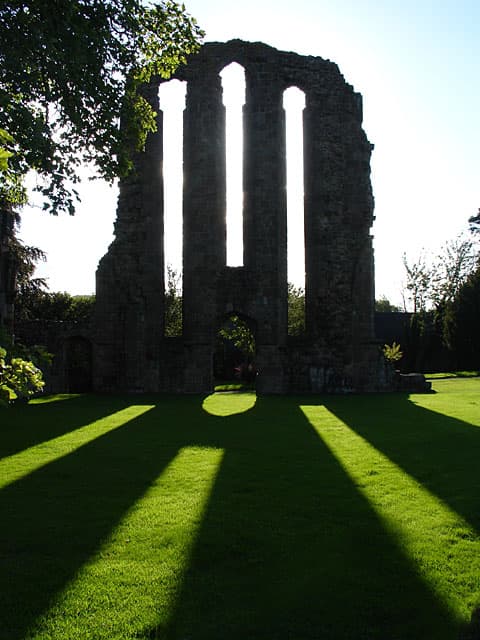
Croxden Abbey
Croxden Abbey was a Cistercian monastery located in Staffordshire, United Kingdom, founded in the 12th century by Bertram III de Verdun. It was a daughter house of the abbey in Aunay-sur-Odon, Normandy, and initially prospered through sheep farming, becoming a significant wool supplier. The abbey faced decline due to financial strains and disputes, eventually being dissolved in 1538 under the Suppression of Religious Houses Act.
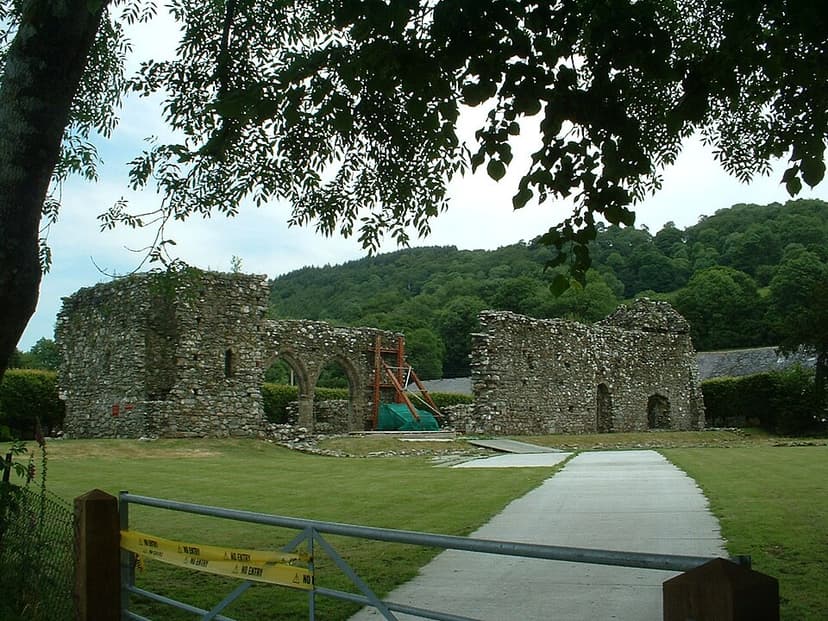
Cymer Abbey
Cymer Abbey was a ruined Cistercian monastery founded in 1189 near Llanelltyd, Gwynedd, Wales, and dedicated to the Virgin Mary. Despite royal patronage and land grants, the abbey struggled financially due to limited arable land and fishing rights, exacerbated by Welsh Wars and climate change. Dissolved in 1536-37, its remains are now managed by Cadw and are open to the public.
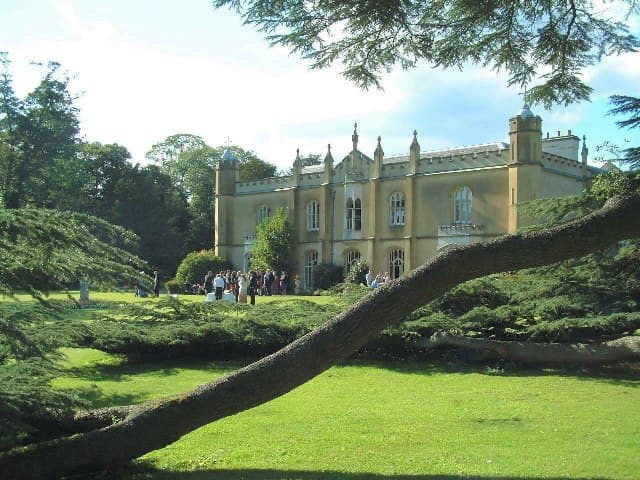
Missenden Abbey
Missenden Abbey was an Arrouasian (Augustinian) monastery founded in 1133 and dissolved in 1538. After its dissolution, a country house was built on the site, which has undergone significant alterations and rebuilding, most notably after a fire in 1985. Today, the site functions as a conference center and venue for events.