
Wechselburg Priory
Wechselburg Priory, originally founded as an abbey in 1168, has a complex history marked by dissolution and re-establishment. After being secularized and later used as a castle, it was refounded as a Benedictine priory in 1993. The priory is notable for its Romanesque basilica, which houses a significant medieval rood screen.
Key Facts
- ›Founded in 1168 by Dedo V of Wettin.
- ›Transferred to the Teutonic Order in 1278.
- ›Secularized and dissolved in 1570.
- ›Re-founded as a Benedictine priory in 1993 by monks from Ettal Abbey.
- ›The Romanesque basilica features a famous medieval rood screen.

Romanesque, Baroque
Romanesque Basilica of the Holy Cross, Medieval Rood Screen
Kloster Wechselburg
Dedo V of Wettin, Maurice, Elector of Saxony
Secularization In 1543, Dissolution In 1570, Re-Foundation In 1993
About Wechselburg Priory
Wechselburg Priory, historically known as Wechselburg Abbey (Kloster Wechselburg), is a Benedictine monastery located in Wechselburg, Saxony, Germany. Its history is characterized by a first foundation in the 12th century, followed by dissolution and a significant re-foundation in the late 20th century.
First Foundation and History
The monastery was initially founded by Dedo V of Wettin and dedicated in 1168. Over the centuries, it underwent several changes in ownership and administration. In 1278, Henry the Illustrious, Margrave of Meissen, gifted it to the Teutonic Order. By 1543, it had come into the possession of Maurice, Elector of Saxony, and was eventually dissolved in 1570. Following the Thirty Years' War, the site was redeveloped by the lords of Schönburg, who built a Baroque castle, Schloss Wechselburg, on the foundations of the former abbey. This castle remained a Schönburg family residence until 1945.
Second Foundation and Current Status
After World War II, the former abbey church was repurposed as the local parish church and a site of pilgrimage. In 1993, Benedictine monks from Ettal Abbey re-established Wechselburg as a priory. Although the monastic community is currently small, its members are actively involved in running a youth and family center, providing pastoral care, and managing the ongoing pilgrimages. Due to its affiliation with Ettal Abbey, Wechselburg Priory is the sole non-Bavarian member of the Bavarian Congregation of the Benedictine Confederation.
Architectural Significance
The surviving Romanesque basilica of the Holy Cross serves as the current parish church and is a significant architectural feature of the site. It is particularly renowned for its large and elaborately carved medieval rood screen, a notable example of Gothic artistry within the Romanesque structure.
Source: Wikipedia ↗
Frequently Asked Questions
When was Wechselburg Priory first founded?
Wechselburg Priory was first founded as an abbey in 1168 by Dedo V of Wettin. It was dedicated in that year.
What happened to Wechselburg Priory after its initial dissolution?
After its dissolution in 1570, the site of the abbey was used by the lords of Schönburg to build a Baroque castle, known as Schloss Wechselburg, on its foundations. This castle remained in their family until 1945.
When was Wechselburg Priory re-established?
Wechselburg Priory was re-founded in 1993 by Benedictine monks from Ettal Abbey. The current community is small but active.
What is the most famous feature of the basilica at Wechselburg?
The Romanesque basilica of the Holy Cross, which serves as the parish church, is particularly famous for its huge and intricately carved medieval rood screen.
What activities does the re-founded priory engage in?
The Benedictine monks at Wechselburg Priory run a youth and family center, are involved in pastoral care, and manage pilgrimages. They are also part of the Bavarian Congregation of the Benedictine Confederation.
Related Monasteries
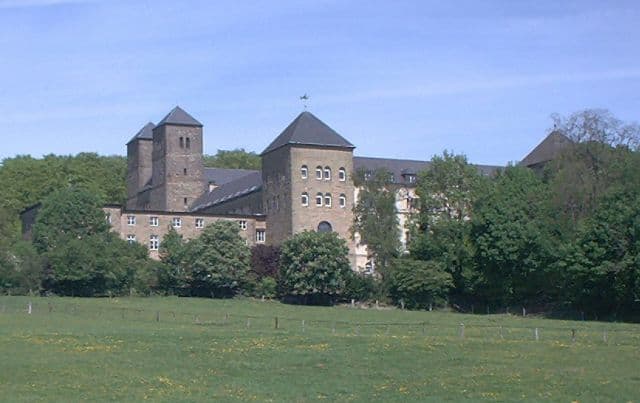
Gerleve Abbey
Gerleve Abbey is a Benedictine monastery founded in 1899 near Coesfeld and Billerbeck in Westphalia, Germany. Initially established by monks from Beuron Archabbey, it grew significantly, becoming a center for the "liturgical movement" in northwest Germany and a hub for theological and scholarly pursuits. The abbey faced expulsion by the National Socialists during World War II but was re-established and continues its tradition of prayer, work, and pastoral care, including retreat houses and educational programs.
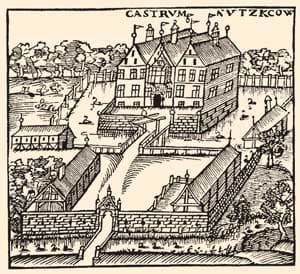
Nütschau Priory
Nütschau Priory, also known as St Ansgar's Priory, is a Benedictine monastery located in Travenbrück, Germany. Founded after World War II as a refuge for displaced persons, it evolved from a retreat house to an independent priory in 1975. It is noted as the northernmost Benedictine monastery in Germany and serves as a training and youth house, also offering shelter to pilgrims.

Herstelle Abbey
Herstelle Abbey, also known as the Abbey of the Holy Cross, is a Benedictine monastery for nuns located in Herstelle, North Rhine-Westphalia, Germany. Founded in 1899 on the grounds of a former Minorite convent, it was elevated to abbey status in 1924 and joined the Beuronese Congregation. The community is known for its traditional monastic duties, including hospitality, and its engagement in handicraft work.