
Nütschau Priory
Nütschau Priory, also known as St Ansgar's Priory, is a Benedictine monastery located in Travenbrück, Germany. Founded after World War II as a refuge for displaced persons, it evolved from a retreat house to an independent priory in 1975. It is noted as the northernmost Benedictine monastery in Germany and serves as a training and youth house, also offering shelter to pilgrims.
Key Facts
- ›The monastery originated after World War II as a refuge for displaced Catholics.
- ›It was developed by and staffed from Gerleve Abbey, becoming a priory in 1960.
- ›Nütschau Priory became an independent monastery in 1975.
- ›It is the northernmost Benedictine monastery in Germany.
- ›The priory offers shelter to pilgrims on the 'Way of St. James' and the 'Monk's Path'.
- ›As of 2022, it housed nineteen monks and is part of the Beuronese Congregation.
Gothic
Northernmost Benedictine Monastery In Germany, Training House, Youth House, Pilgrim Shelter
St Ansgar's Priory, Kloster NüTschau, Priorat Sankt Ansgar
Hermann Wilhelm Berning, Pius Buddenborg, Amandus Eilermann, Gaudentius Sauermann, Antonius Terstiege, Leo Overmeyer
Acquisition of NüTschau Manor House, Establishment of St Ansgar's House, Elevation To Priory Status, Construction of Priory Church, Became An Independent Monastery
About Nütschau Priory
Nütschau Priory, also known by its German names Kloster Nütschau or Priorat Sankt Ansgar, and more recently as St Ansgar's Priory, is a Benedictine monastery located in Travenbrück, near Bad Oldesloe, in the Stormarn region of Schleswig-Holstein, Germany. It holds distinction as the northernmost Benedictine monastery within Germany.
History and Development
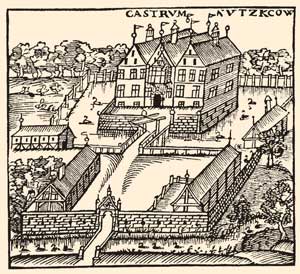
The monastery's origins are rooted in the aftermath of World War II, serving initially as a sanctuary for displaced persons, particularly Catholics from former German territories. The Benedictine community acquired the former Nütschau manor house in 1951. Under the guidance of Gerleve Abbey, it was developed and staffed, opening as St Ansgar's House in 1954, primarily functioning as a retreat center. The community's status was elevated to a priory under Gerleve in November 1960. A significant milestone was reached in 1975 when Nütschau became an independent monastery, expanding to include a training house and a youth house. The priory church, dedicated to St. Ansgar, was constructed in 1974.
Current Operations and Significance
As of 2022, Nütschau Priory was home to nineteen monks and is affiliated with the Beuronese Congregation. The monastery continues its mission by offering guided tours of its grounds and manor house by appointment. It also provides essential overnight accommodation for pilgrims traveling on the 'Way of St. James' and the 'Monk's Path', underscoring its role in spiritual hospitality and community support.
Source: Wikipedia ↗
Frequently Asked Questions
When was Nütschau Priory founded?
The origins of Nütschau Priory date back to the post-World War II era, with the acquisition of the former Nütschau manor house in 1951. It was established as St Ansgar's House and officially raised to the status of a priory in 1960, becoming an independent monastery in 1975.
What is the religious tradition of Nütschau Priory?
Nütschau Priory belongs to the Benedictine Order. It is part of the Beuronese Congregation.
Where is Nütschau Priory located?
Nütschau Priory is situated in Travenbrück, near Bad Oldesloe, within the Stormarn district of Schleswig-Holstein, Germany.
What are Nütschau Priory's notable features?
It is recognized as the northernmost Benedictine monastery in Germany. The priory includes a training house and a youth house, and it provides overnight shelter for pilgrims on specific routes.
Is Nütschau Priory open to the public?
Guided tours of the grounds and the manor house are available by appointment, suggesting that parts of the priory are accessible to the public under specific conditions.
Related Monasteries

Herstelle Abbey
Herstelle Abbey, also known as the Abbey of the Holy Cross, is a Benedictine monastery for nuns located in Herstelle, North Rhine-Westphalia, Germany. Founded in 1899 on the grounds of a former Minorite convent, it was elevated to abbey status in 1924 and joined the Beuronese Congregation. The community is known for its traditional monastic duties, including hospitality, and its engagement in handicraft work.

Königsmünster Abbey
Königsmünster Abbey is a Benedictine monastery located in Meschede, Germany, founded in 1928 by monks from three Bavarian abbeys. The abbey's name, meaning "monastery of the King" (Christ), reflects its spiritual dedication. It played a role in continuing the traditions of the dissolved Grafschaft Abbey and experienced confiscation and expulsion of monks by the National Socialists in 1941, before its church was consecrated in 1964 and it became an independent priory.

Varensell Abbey
Varensell Abbey is a Benedictine monastery of nuns located near Rietberg, Germany, founded in 1902. It was established by the Benedictine Sisters of Perpetual Adoration and later adopted a way of life aligned with the Beuronese Congregation, which it joined in 1982. The community was granted abbey status in 1948 and engages in theological work and handicrafts alongside traditional monastic duties.