
Königsmünster Abbey
Königsmünster Abbey is a Benedictine monastery located in Meschede, Germany, founded in 1928 by monks from three Bavarian abbeys. The abbey's name, meaning "monastery of the King" (Christ), reflects its spiritual dedication. It played a role in continuing the traditions of the dissolved Grafschaft Abbey and experienced confiscation and expulsion of monks by the National Socialists in 1941, before its church was consecrated in 1964 and it became an independent priory.
Key Facts
- ›Founded in 1928 from three abbeys in Bavaria.
- ›The name Königsmünster translates to 'monastery of the King' (Christ).
- ›Confiscated by National Socialists in 1941, with monks expelled.
- ›The abbey church was consecrated in 1964.
- ›Operates a gymnasium (secondary school) where some monks teach.
- ›Engages in mission work as part of the Congregation of Saint Ottilien.

- Retreat Houses
- Metalworks Shop Producing Jewelry and Liturgical Equipment
- Gymnasium Der Benediktiner
Linus Leberle, Alban Buckel, Franz Schneider
- Founded In 1928
- Became An Independent Conventual Priory In 1932
- Confiscated By National Socialists and Monks Expelled In 1941
- Abbey Church Consecrated In 1964
About Königsmünster Abbey
Königsmünster Abbey is a Benedictine monastery situated in Meschede, Germany, and is part of the Benedictine Congregation of Saint Ottilien. Founded in 1928, the abbey was established by monks from three Bavarian abbeys, following a contract with the city of Meschede that involved taking over a local school and receiving financial support for construction.
History and Development
The abbey's design was the result of a competition won by Franz Schneider, who envisioned a symmetrical building centered around a church. The name Königsmünster itself signifies 'monastery of the King,' referring to Christ. The monks adopted traditions from the Sauerland's Grafschaft Abbey, which had been dissolved in 1804, even incorporating its antlers into their own coat of arms. The institution became an independent conventual priory in 1932, with Linus Leberle serving as its first prior. A significant disruption occurred in 1941 when the National Socialists confiscated the monastery and expelled its inhabitants. The current abbey church was constructed in the early 1960s and consecrated in 1964.
Modern Operations and Apostolates
As a member of the Congregation of Saint Ottilien, Königsmünster Abbey primarily focuses on mission work. In addition to this core apostolate, the abbey operates two retreat houses to support spiritual reflection and renewal. The monastery also houses a metalworks shop that produces various items, including jewelry and liturgical equipment such as altars, crosses, and candlesticks, contributing to both its self-sufficiency and its service to the wider church.
Educational Contributions
Königsmünster Abbey is closely linked to a gymnasium, a secondary school known as the 'Gymnasium der Benediktiner.' Several monks from the abbey contribute to the educational life of this institution, teaching subjects such as religion and others, further integrating the monastic community with the local educational landscape.
Source: Wikipedia ↗
Frequently Asked Questions
When was Königsmünster Abbey founded?
Königsmünster Abbey was founded in 1928. It was established by monks from three different abbeys located in Bavaria.
What is the meaning of the name Königsmünster?
The name Königsmünster translates to 'monastery of the King'. This refers to Jesus Christ as the King to whom the monastery is dedicated.
Did Königsmünster Abbey face any challenges during the Nazi era?
Yes, during the National Socialist regime, the monastery was confiscated in 1941, and the monks were expelled. However, the abbey has since been re-established.
What is the primary apostolate of the monks at Königsmünster Abbey?
As members of the Congregation of Saint Ottilien, the monks' primary apostolate is mission work. The abbey also supports this through running two retreat houses.
Does Königsmünster Abbey have any educational institutions associated with it?
Yes, Königsmünster Abbey is associated with a gymnasium, a type of secondary school, known as the 'Gymnasium der Benediktiner'. Some monks from the abbey teach at this school.
Related Monasteries

Herstelle Abbey
Herstelle Abbey, also known as the Abbey of the Holy Cross, is a Benedictine monastery for nuns located in Herstelle, North Rhine-Westphalia, Germany. Founded in 1899 on the grounds of a former Minorite convent, it was elevated to abbey status in 1924 and joined the Beuronese Congregation. The community is known for its traditional monastic duties, including hospitality, and its engagement in handicraft work.
Nütschau Priory
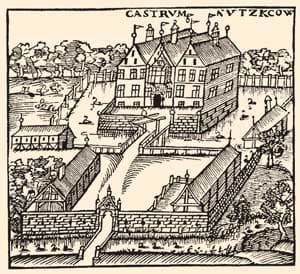
Nütschau Priory, also known as St Ansgar's Priory, is a Benedictine monastery located in Travenbrück, Germany. Founded after World War II as a refuge for displaced persons, it evolved from a retreat house to an independent priory in 1975. It is noted as the northernmost Benedictine monastery in Germany and serves as a training and youth house, also offering shelter to pilgrims.

Varensell Abbey
Varensell Abbey is a Benedictine monastery of nuns located near Rietberg, Germany, founded in 1902. It was established by the Benedictine Sisters of Perpetual Adoration and later adopted a way of life aligned with the Beuronese Congregation, which it joined in 1982. The community was granted abbey status in 1948 and engages in theological work and handicrafts alongside traditional monastic duties.