
Vysokopetrovsky Monastery
Russian Orthodox·Russia·active and museum·14th century
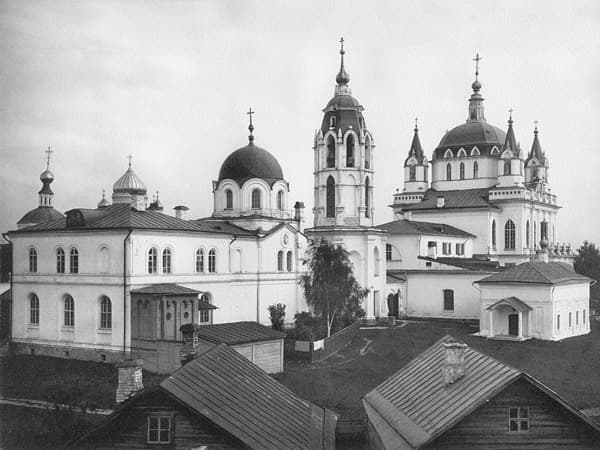
Vysokopetrovsky Monastery is a historic Russian Orthodox monastery located in Moscow, renowned for its Naryshkin Baroque architecture. Founded in the 1320s by Saint Peter of Moscow, it later became a prominent family burial site for the Naryshkin boyars. Despite its closure by Soviet authorities in 1929, parts of the monastery were returned to the Russian Orthodox Church in 1992 and are now shared with the Moscow Literature Museum.
Key Facts
- ›Believed to be founded around the 1320s by Saint Peter of Moscow.
- ›Gave its name to Petrovka Street in Moscow.
- ›Reconstructed in the Naryshkin Baroque style by the Naryshkin boyars in the late 17th century.
- ›The katholikon was built in 1514–1517 by Aloisio the New, not 1692 as previously thought.
- ›Closed by Soviet authorities in 1929 and reopened to the Russian Orthodox Church in 1992.
- ›Currently shares its buildings with the Moscow Literature Museum.

Naryshkin Baroque
- Katholikon
- Church of Our Lady of Bogolyubovo
- Church of St. Sergius of Radonezh
- Church of St. Pachomius the Great
- Church of the Tolga Icon of the Mother of God
- Church of the Intercession Above the Monastery Gates
- Church of Our Lady of Kazan
High Monastery of St. Peter
Saint Peter of Moscow, Archimandrite Bartholomew Remov, Peter the Great, Aloisio the New, Dmitry Ukhtomsky, Ivan Fyodorovich Michurin
- Foundation By Saint Peter of Moscow
- Reconstruction By Naryshkin Boyars
- Construction of Katholikon By Aloisio the New
- Closure By Soviet Authorities
- Suppression of Secret Monastic Life
- Return of Buildings To Russian Orthodox Church
About Vysokopetrovsky Monastery
Vysokopetrovsky Monastery, also known as the High Monastery of St. Peter, is a significant Russian Orthodox monastery situated in Moscow's Bely Gorod area. Perched on a hill overlooking Petrovka Street, its history dates back to the 1320s, with its founding attributed to Saint Peter of Moscow, the first metropolitan to establish his see in the city. The monastery's prominent location and historical connections have made it a landmark, lending its name to the adjacent Petrovka Street.
Historical Development and Architecture
The late 17th century marked a period of significant architectural transformation for Vysokopetrovsky Monastery. The influential Naryshkin boyars, maternal relatives of Peter the Great, made the monastery their family burial site and commissioned its reconstruction in the Naryshkin Baroque style, a distinctive architectural idiom associated with their family. While the katholikon, or main cathedral, was long believed to be from 1692, later studies in the 1970s revealed it was actually built between 1514 and 1517 by the architect Aloisio the New. Additional subsidiary structures were added in the mid-18th century, potentially designed by architects like Dmitry Ukhtomsky or Ivan Fyodorovich Michurin.
Soviet Era and Modern Status
Vysokopetrovsky Monastery faced a period of suppression when it was closed by Soviet authorities in 1929. Despite this closure, Archimandrite Bartholomew Remov facilitated the continuation of monastic life in secret at the Nativity Church at Putinki. This clandestine spiritual activity persisted until it was discovered, leading to arrests in 1935. The monastery's revival began in 1992 when several of its buildings were returned to the Russian Orthodox Church. Today, the site serves a dual purpose, with its buildings shared between the Russian Orthodox Church and the Moscow Literature Museum, reflecting its enduring historical, religious, and cultural importance.
Source: Wikipedia ↗
Frequently Asked Questions
When was Vysokopetrovsky Monastery founded?
The monastery is believed to have been founded around the 1320s. This founding is attributed to Saint Peter of Moscow, who was the first Russian metropolitan to establish his see in Moscow.
What architectural style is Vysokopetrovsky Monastery known for?
Vysokopetrovsky Monastery is particularly noted for its Naryshkin Baroque style. This architectural period is strongly associated with the Naryshkin boyars, who commissioned a significant reconstruction of the monastery in the late 17th century.
What happened to the monastery during the Soviet era?
The monastery was closed down by Soviet authorities in 1929. Efforts were made to continue monastic life in secret, but these were discovered and suppressed by 1935.
Is Vysokopetrovsky Monastery still an active religious site?
Yes, parts of Vysokopetrovsky Monastery were returned to the Russian Orthodox Church in 1992. It now houses an active religious community.
Who were the Naryshkin boyars and what is their connection to the monastery?
The Naryshkin boyars were maternal relatives of Peter the Great. They transformed the monastery into their family burial place in the late 17th century and had it reconstructed in the Naryshkin Baroque style, significantly shaping its appearance.
What is the current status of the buildings at Vysokopetrovsky Monastery?
As of 2005, the buildings of the monastery are shared between the Russian Orthodox Church and the Moscow Literature Museum, indicating a dual function for the site.
Related Monasteries
Conception Convent
The Conception Convent, also known as the Zachatyevsky Monastery, is a Russian Orthodox convent located on the Moskva River in Moscow. Originally believed to occupy the site of the oldest nunnery in Moscow, it was reestablished in 1995 after being closed by the Bolsheviks in 1918 and undergoing significant damage and repurposing during the Soviet era. Its reconstruction has seen the rebuilding of its katholikon in a Russian Revival style.

Kirillo-Belozersky Monastery
The Kirillo-Belozersky Monastery, also known as White Lake St. Cyril's Monastery, is a historic Russian Orthodox male monastery situated on the shores of Lake Siverskoye. Founded in 1397 by St. Cyril of Beloozero, it grew to become one of the largest and most fortified monasteries in the Russian North, serving as both a spiritual center and a strategic fortress. Throughout its history, it was a significant landowner, a political prison, and a repository of valuable religious and cultural artifacts.

Savvino-Storozhevsky Monastery
The Savvino-Storozhevsky Monastery is a significant Russian Orthodox monastery located in Zvenigorod, west of Moscow. Founded in 1398 by Prince Yuri of Zvenigorod at the request of Saint Savva, it served as a spiritual center and a defensive outpost. The monastery later became a favored suburban residence for Tsar Alexis and continued to be visited by Russian royalty for blessings before coronations, solidifying its importance as a major religious and historical landmark.