
Vestervig Abbey
Vestervig Abbey, established around 1059, is one of Denmark's most ancient religious sites. Originally a wattle and clay church built by missionary Saint Thøger, it grew into an Augustinian abbey and became a significant pilgrimage destination due to its sacred spring and Thøger's reputation as a healer. The abbey church, later becoming the Vestervig parish church, still houses bells from its monastic past.
Key Facts
- ›Founded around 1059, making it one of Denmark's oldest religious houses.
- ›Associated with Saint Thøger, a Thuringian missionary and healer, who settled there around 1030.
- ›Famous for a sacred spring believed to have restorative properties.
- ›Became the seat of the Bishop of Vestervig in 1059.
- ›Dissolved in 1536 during the Danish Reformation and became crown property.
- ›The abbey church survived a fire in 1703 and became the parish church for Vestervig.

Brick Gothic
Sacred Spring, Two Bells From the Abbey Era, St. ThøGer's Relics
Vestervig Church
Saint ThøGer, Olaf Ii of Norway, King Svend Estridsen
Dissolution In 1536, Fire In 1703
About Vestervig Abbey
Vestervig Abbey, also known as Vestervig Church, stands as one of Denmark's most ancient religious houses, with its establishment dated to approximately 1059. Situated in Vestervig, Thisted, on the Vendsyssel-Thy peninsula, it holds significant historical and religious importance, particularly due to its association with Saint Thøger.
History and Significance
The origins of religious activity at Vestervig trace back to around 1030 when Saint Thøger, a Thuringian missionary, settled in the area. He built the first wattle and clay church and is credited with establishing Christianity in Thy. A pivotal element of Vestervig's early history is a sacred spring that emerged where Thøger slept, which became a focal point for pilgrims seeking cures. Following Thøger's death in 1067, he was declared a local saint, and his veneration further solidified the site's pilgrimage status.
In 1059, Vestervig became the seat of a new diocese, the Bishopric of Vestervig, with Saint Thøger as its patron saint. Later, no later than 1140, Augustinian Canons established themselves at Vestervig. These canons, likely immigrants from England, were instrumental in the development of the abbey. They were priests dedicated to a simple life of poverty, chastity, and obedience, engaged in teaching, aiding the poor and sick, and preaching. The Augustinians constructed a new church in the 13th century using red brick, a common building material of the era.
Reformation and Later History
The abbey met its end in 1536 with the dissolution of monasteries following Denmark's official adoption of Lutheranism. The monks dispersed, and the abbey's properties became crown land. A devastating fire in 1703 destroyed most of the abbey buildings, with legend attributing the cause to a curse placed by a sea captain whose ship had been salvaged by the abbey's owner. The abbey church, however, survived and, after the destruction of St. Thøger's Church in 1752, it became the parish church for Vestervig. The church still houses two bells dating from the abbey period, cast in the 15th and 16th centuries.
Source: Wikipedia ↗
Frequently Asked Questions
When was Vestervig Abbey founded?
Vestervig Abbey was established around 1059, making it one of the oldest religious houses in Denmark. The initial Christian settlement by Saint Thøger began earlier, around 1030.
Who was Saint Thøger and what is his connection to Vestervig Abbey?
Saint Thøger was a Thuringian missionary and healer who settled at Vestervig around 1030. He built the first church there and his reputation as a healer, along with a miraculous spring, contributed to the site's importance as a pilgrimage destination.
What happened to Vestervig Abbey after the Reformation?
Following the Danish Reformation, Vestervig Abbey was dissolved in 1536 and became crown property. Most of the abbey buildings were later destroyed by a fire in 1703, though the church survived.
Is the abbey church still standing and in use?
Yes, the former abbey church, also known as Vestervig Church, still stands and serves as the parish church for the town of Vestervig. It retains two bells from the abbey's monastic era.
What is the significance of the spring at Vestervig Abbey?
A spring began running where Saint Thøger, after sleeping on the ground, had his head. This spring was considered miraculous and attracted pilgrims seeking healing, contributing to the site's religious significance.
Related Monasteries
Dunfermline Abbey
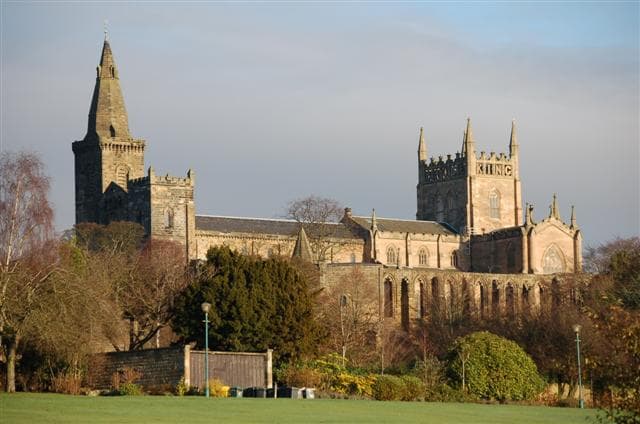
Dunfermline Abbey, a medieval Benedictine monastery in Scotland, was founded in 1128 by King David I. Though largely sacked and permitted to fall into disrepair during the Scottish Reformation in the 16th century, parts of the original structure and its infrastructure, such as the refectory, still remain. The nave continued in use as a parish church and was later incorporated into a new edifice built on the site of the ancient chancel and transepts.
Kalvø Abbey
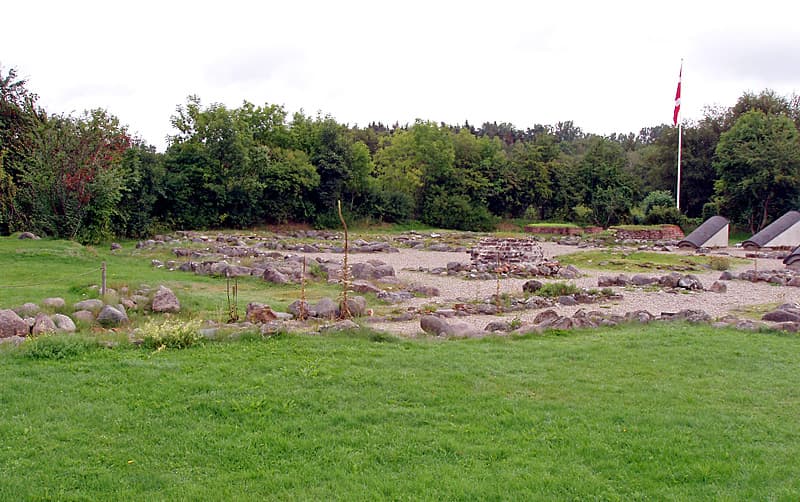
Øm Abbey was a significant Cistercian monastery in Denmark, founded in 1172 and operating until its dissolution in 1536 following the Reformation. Situated in central Jutland between two lakes, it was known for its extensive landholdings and a well-recognized hospital. Today, the site is managed by a museum that preserves its monastic heritage, with visible ruins of the church and chapter hall.

Ringsted Abbey
Ringsted Abbey was one of the earliest and most significant Benedictine monasteries in Denmark, established in the late 11th century. It gained immense importance as the burial site of Knud Lavard and later became a prominent pilgrimage destination and a resting place for Danish royalty. Despite surviving the Reformation, the abbey and its properties were eventually secularized, with only its church remaining today.