
Dunfermline Abbey
Dunfermline Abbey, a medieval Benedictine monastery in Scotland, was founded in 1128 by King David I. Though largely sacked and permitted to fall into disrepair during the Scottish Reformation in the 16th century, parts of the original structure and its infrastructure, such as the refectory, still remain. The nave continued in use as a parish church and was later incorporated into a new edifice built on the site of the ancient chancel and transepts.
Key Facts
- ›Founded in 1128 by King David I of Scotland as a Benedictine monastery.
- ›Became a significant pilgrimage destination due to the cult of Saint Margaret.
- ›Suffered extensive damage and sacking during the Scottish Reformation in 1560.
- ›The nave served as a parish church until the 19th century and is now a vestibule.
- ›It is a resting place for numerous Scottish royals, including Saint Margaret and Robert the Bruce.
- ›Parts of the original abbey infrastructure, including the refectory, still exist.
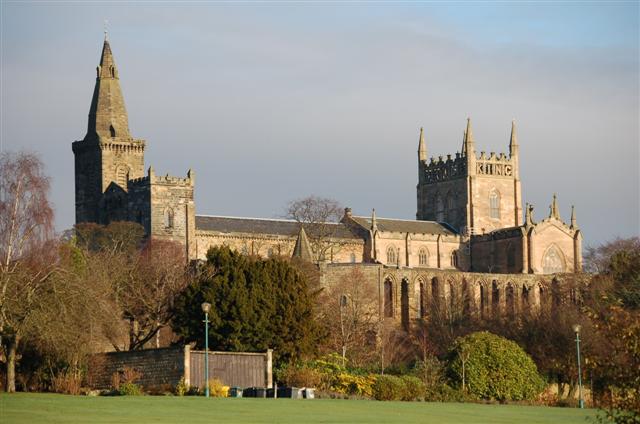
Romanesque, Perpendicular
Refectory, Gatehouse, Royal Burials, Shrine of Saint Margaret
King David I, Saint Margaret, Malcolm Iii, Robert the Bruce, Robert Henryson
- Sacked During the Scottish Reformation
- Edward I of England Held Court and Subsequently Burned Buildings
About Dunfermline Abbey
Dunfermline Abbey is a significant historical and religious site located in Dunfermline, Scotland. Originally founded in 1128 by King David I as a large medieval Benedictine monastery dedicated to the Holy Trinity and St. Margaret, it was built upon an earlier priory established during the reign of his father, Malcolm III, and Queen Margaret. The abbey quickly rose to prominence, controlling extensive lands and becoming a vital center for religious life and royal burials.
History and Significance
During its medieval zenith, Dunfermline Abbey was a powerful institution, holding significant influence and wealth. It was a crucial pilgrimage site, housing the reliquary shrine and cult of Saint Margaret, from which the abbey later claimed its foundation. The abbey church itself was a magnificent example of Romanesque architecture, with a nave that still stands as a testament to its former glory. However, the abbey faced severe disruption during the Scottish Reformation. In 1560, it was sacked, and many of its buildings were permitted to fall into disrepair. Despite this, parts of the abbey church, particularly the nave, continued in use and were repaired. The refectory and gatehouse are among the surviving structures from the original monastic complex.
Notable Burials and Legacy
Dunfermline Abbey holds a special place in Scottish history as a royal necropolis, second only to Iona Abbey in the number of Scotland's royal dead interred within its grounds. Among the most notable figures buried here are Saint Margaret, Malcolm III, and Robert the Bruce, whose bones were reinterred in the abbey after the discovery of his skeleton in 1818. The abbey also has associations with notable figures like the Northern Renaissance poet Robert Henryson. Today, the current Church of Scotland parish church on the site continues to be known as Dunfermline Abbey, preserving the legacy of this once-great monastic center.
Source: Wikipedia ↗
Frequently Asked Questions
When was Dunfermline Abbey founded?
Dunfermline Abbey was founded in 1128 by King David I of Scotland. However, the monastic establishment was based on an earlier priory dating back to the reign of his father, Malcolm III, and his queen, Saint Margaret.
What happened to Dunfermline Abbey during the Scottish Reformation?
During the Scottish Reformation, the abbey church was subjected to a 'cleansing' in September 1559 and was sacked in March 1560. By 1563, the choir and feretory chapel were roofless, and the nave was also extensively damaged, becoming a danger to enter.
What parts of the original Dunfermline Abbey still remain?
Several parts of the abbey infrastructure still exist, notably the vast refectory and rooms over the gatehouse. The nave, which served as the parish church, was repaired and now forms the vestibule of a new church built on the site of the ancient chancel and transepts.
Who is buried at Dunfermline Abbey?
Dunfermline Abbey is the burial site for many Scottish royals, including Saint Margaret, Malcolm III, and Robert the Bruce. Numerous other notable figures, such as Edgar of Scotland, Alexander I, David I, and Alexander III, are also interred there.
Is Dunfermline Abbey still a functioning monastery?
The current building on the site of the old abbey church's choir is a parish church of the Church of Scotland, still bearing the name Dunfermline Abbey. It no longer functions as a medieval Benedictine monastery.
Related Monasteries

Vestervig Abbey
Vestervig Abbey, established around 1059, is one of Denmark's most ancient religious sites. Originally a wattle and clay church built by missionary Saint Thøger, it grew into an Augustinian abbey and became a significant pilgrimage destination due to its sacred spring and Thøger's reputation as a healer. The abbey church, later becoming the Vestervig parish church, still houses bells from its monastic past.
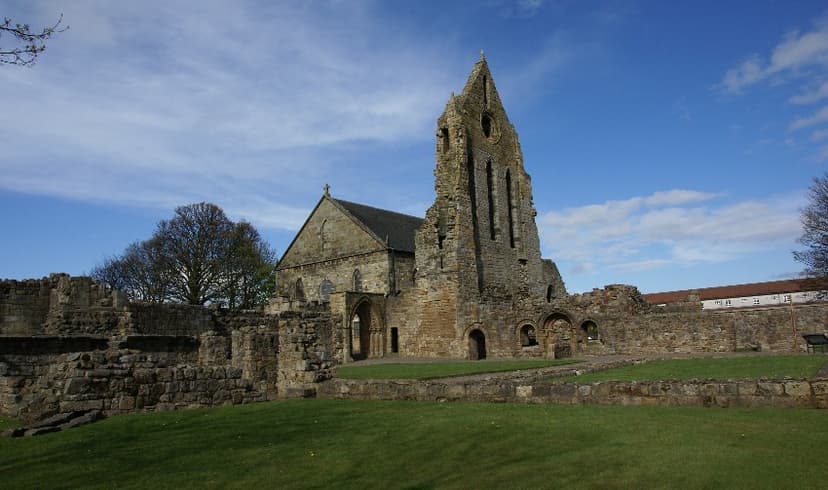
Kilwinning Abbey
Kilwinning Abbey was a Tironensian Benedictine monastic community established between 1162 and 1188 in what is now North Ayrshire, Scotland. Dedicated to Saint Winning and the Virgin Mary, it played a significant role in the region, with its abbots holding baronial rights. Despite suffering destruction and plundering during the Reformation, parts of the abbey survive as ruins and a local tourist attraction, with its rebuilt tower housing a museum.
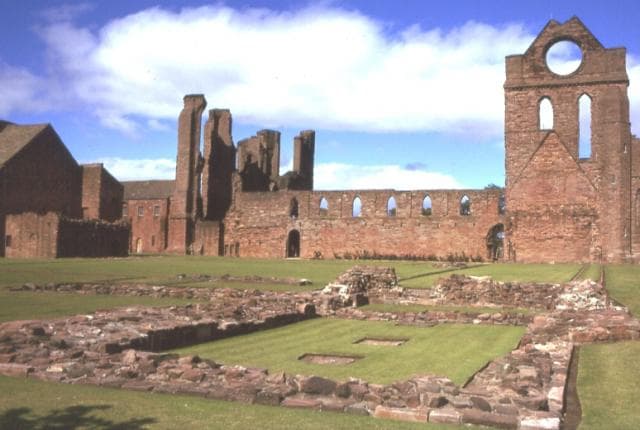
Arbroath Abbey
Arbroath Abbey, a ruined Cistercian monastery located in Arbroath, Scotland, was founded in 1178 by King William the Lion. It is renowned as the site where the Declaration of Scottish Independence was likely drafted in 1320. The Abbey, once the wealthiest in Scotland, is now managed by Historic Environment Scotland and is a popular tourist attraction, notable for its distinctive red sandstone ruins.