
Kilwinning Abbey
Kilwinning Abbey was a Tironensian Benedictine monastic community established between 1162 and 1188 in what is now North Ayrshire, Scotland. Dedicated to Saint Winning and the Virgin Mary, it played a significant role in the region, with its abbots holding baronial rights. Despite suffering destruction and plundering during the Reformation, parts of the abbey survive as ruins and a local tourist attraction, with its rebuilt tower housing a museum.
Key Facts
- ›Founded between 1162 and 1188 as a Tironensian Benedictine monastery.
- ›Dedicated to Saint Winning and the Virgin Mary.
- ›Its abbots held baronial rights, including 'pit and gallows'.
- ›Suffered significant damage and plundering during the Scottish Reformation.
- ›Parts of the abbey were used as a quarry for local construction projects.
- ›The rebuilt tower now houses a museum and is a tourist attraction.

Romanesque
- Rebuilt Tower Housing A Museum
- Ruined Abbey Buildings
- Site of Former Monastic Community With Baronial Rights
- Two Separate Western Towers
Saint Winning, Richard De Morville, King William of Scotland, King William the Lion, King Robert Ii, King Robert Iii, King James Iv, William Bunsh, John Foreman, James Beaton, Alexander Hamilton, Gavin Hamilton, Hugh, 3rd Earl of Eglinton, Alexander Cunninghame, William Melville, Hugh, 5th Earl of Eglinton, John Knox, George Wishart, Alexander, Earl of Glencairn
- Founding of the Abbey
- Granting of Baronial Rights By King Robert Ii
- Visit By King James Iv
- Plundering of the Abbey By Earls of Glencairn and Angus
- Damage By George Wishart's Supporters
- Raid On the Abbey By Earl of Glencairn During the Reformation
- Assault On the Abbey By Alexander, Earl of Glencairn
- Destruction of Records
- Secularisation and Protestantisation In the 16th Century
- Sale of Lands and Rights To the Earls of Eglinton
- Demolition of Abbey Buildings For Construction Elsewhere
- Rebuilding of the Parish Church Using Abbey Stones
About Kilwinning Abbey
Kilwinning Abbey stands as a significant ruined monastic site located in the heart of Kilwinning, North Ayrshire, Scotland. Established as a Tironensian Benedictine community, its origins trace back to the period between 1162 and 1188, with monks arriving from Kelso Abbey. The abbey was dedicated to Saint Winning and the Virgin Mary, and its abbots held considerable temporal power as ecclesiastical barons, possessing rights over their lands.
Historical Context and Significance
The abbey's history is marked by its remote location in the west of Scotland, which has contributed to the scarcity of surviving records. Despite this, royal patronage is evident, with charters granted by Kings Robert II, Robert III, and James IV, the latter visiting the abbey in 1507. The abbots' authority extended to holding baronial courts, underscoring the abbey's important regional role and wealth derived from numerous parish churches and lands.
Decline and Legacy
The abbey's fortunes significantly changed with the advent of the Scottish Reformation. It faced periods of destruction and plunder, notably in 1559 when its contents were burned, and in 1562 when it was assaulted. By the late 16th century, the abbey had been largely secularised, with its lands and titles eventually passing to the Earls of Eglinton. The substantial ruins that remain, including a rebuilt tower that now houses a museum, serve as a testament to its former grandeur and a focal point for local heritage and tourism.
Source: Wikipedia ↗
Frequently Asked Questions
When was Kilwinning Abbey founded?
Kilwinning Abbey was founded sometime between 1162 and 1188. It was established by monks coming from Kelso Abbey as part of the Tironensian Benedictine order.
Who was Kilwinning Abbey dedicated to?
The abbey was dedicated to Saint Winning and the Virgin Mary. Saint Winning is the subject of several legends associated with the abbey and the local River Garnock.
What happened to Kilwinning Abbey during the Reformation?
During the Reformation, Kilwinning Abbey was subjected to raids and plundering. Pictures, statues, and books were destroyed, and parts of the building were vandalized. The loss of revenues also contributed to its eventual ruin.
What is the current state of Kilwinning Abbey?
Kilwinning Abbey is now largely a ruin. However, some parts of the structure survive, and the rebuilt tower serves as a museum that is open for public access, making it a local tourist attraction.
What architectural features were notable about Kilwinning Abbey?
Archaeological evidence suggests the abbey had a nave and transept that were broader than those of other Scottish abbeys. Uniquely, it featured two separate western towers standing on massive supporting piers, rather than arising directly from the building.
Did any notable figures hold positions at Kilwinning Abbey?
Yes, the abbey had a succession of abbots and later commendators. Notable figures associated with its administration include Rainer (abbot from 1190), William Bunsh (abbot killed at the Battle of Flodden), and Gavin Hamilton (the last Roman Catholic abbot).
Related Monasteries
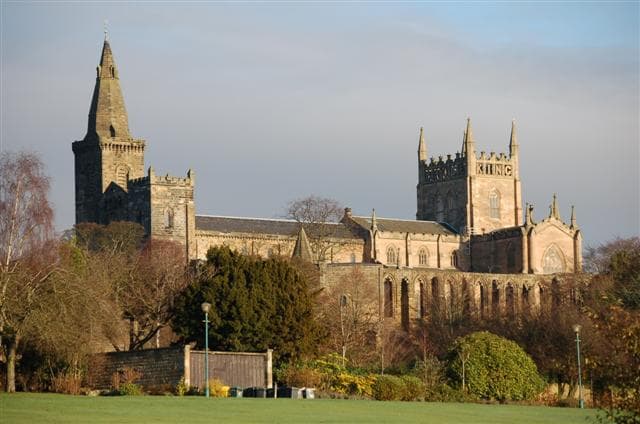
Dunfermline Abbey
Dunfermline Abbey, a medieval Benedictine monastery in Scotland, was founded in 1128 by King David I. Though largely sacked and permitted to fall into disrepair during the Scottish Reformation in the 16th century, parts of the original structure and its infrastructure, such as the refectory, still remain. The nave continued in use as a parish church and was later incorporated into a new edifice built on the site of the ancient chancel and transepts.
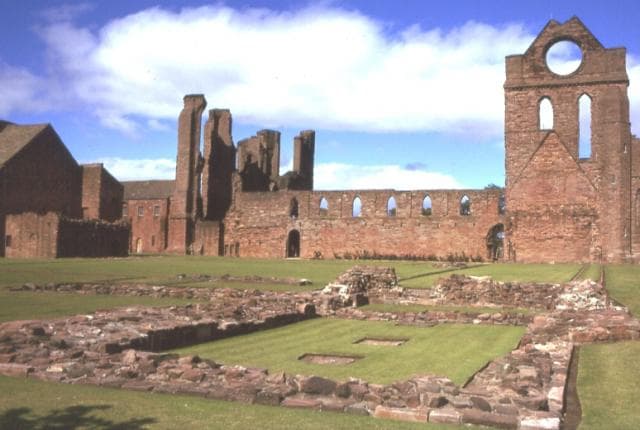
Arbroath Abbey
Arbroath Abbey, a ruined Cistercian monastery located in Arbroath, Scotland, was founded in 1178 by King William the Lion. It is renowned as the site where the Declaration of Scottish Independence was likely drafted in 1320. The Abbey, once the wealthiest in Scotland, is now managed by Historic Environment Scotland and is a popular tourist attraction, notable for its distinctive red sandstone ruins.
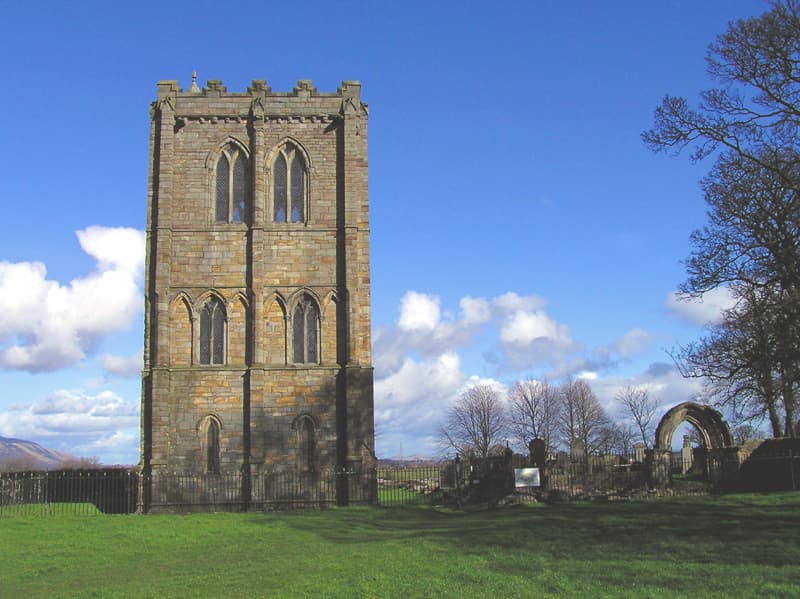
Cambuskenneth Abbey
Cambuskenneth Abbey, established around 1140 by King David I of Scotland, was a significant provostry of Canons Regular and the only Scottish house of the French Arrouaise Order. Situated by a meander of the River Forth near Stirling, it played a crucial role in Scottish public life, hosting parliaments and royal events, and was the burial site for King James III and Queen Margaret of Denmark. Although largely reduced to its foundations today, its 13th-century bell tower remains intact, and the site is managed by Historic Scotland and open to visitors.