
Ringsted Abbey
Benedictine·Denmark·ruins (church only)·11th century
Ringsted Abbey was one of the earliest and most significant Benedictine monasteries in Denmark, established in the late 11th century. It gained immense importance as the burial site of Knud Lavard and later became a prominent pilgrimage destination and a resting place for Danish royalty. Despite surviving the Reformation, the abbey and its properties were eventually secularized, with only its church remaining today.
Key Facts
- ›Founded as a Benedictine priory in the late 11th century, with its first church completed by 1081 or 1082.
- ›Became a major pilgrimage site after the canonization of Knud Lavard in 1170, whose remains were moved to the priory church.
- ›Served as a royal burial site for descendants of King Valdemar I from 1182 to 1341.
- ›The abbey church, St. Bendt's Church, is the oldest brick church in Scandinavia and the only remaining structure from the original complex.
- ›The abbot held a permanent seat on the State Council, signifying the abbey's significant political influence.
- ›Despite the Danish Reformation, Ringsted initially remained open under Lutheran direction before its properties reverted to the crown.

Romanesque, Gothic
- St. Bendt's Church
- Burial Site of Knud Lavard
- Royal Burial Site For Descendants of Valdemar I
Ringsted Kloster
King Sven Estridsen, Svend Norbagge, Knud Lavard, King Erik Emune, Pope Innocent Ii, King Valdemar I of Denmark, King Valdemar Sejr, Queen Dagmar, Lave Beck
- Establishment of A Benedictine Priory
- Canonization of Knud Lavard
- Burial of Knud Lavard's Remains In the Priory Church
- Expansion and Dedication of the Abbey Church
- Royal Burials From 1182 To 1341
- Abbot's Membership In the State Council
- Damaging Fires
- Danish Reformation
- Transformation Into A Manor House
- Fire Destroying the Complex Except For St. Bendt's Church
About Ringsted Abbey
Ringsted Abbey, also known as Ringsted Kloster, was a highly significant Benedictine monastery in Denmark, playing a crucial role in the country's religious and political landscape from its inception in the late 11th century until the Danish Reformation. Its origins trace back to a royal priory established by King Sven Estridsen, with the first church completed around 1081 or 1082 and dedicated to the Virgin Mary. The monastery's influence grew exponentially with its association with Knud Lavard, a Danish prince who was murdered nearby in 1131. Following his canonization in 1170, Knud Lavard's remains were relocated to the priory church, transforming it into a major pilgrimage destination.
History and Influence
The priory was refounded in 1135 by King Erik Emune and received papal recognition in 1138. The abbey church, which eventually became known as St. Bendt's Church, is a remarkable structure, recognized as the oldest brick church in Scandinavia. Its importance was further cemented by becoming the burial site for many descendants of King Valdemar I, including King Valdemar Sejr and Queen Dagmar, from 1182 until 1341. By the mid-13th century, Ringsted Priory had attained abbey status and wielded considerable power, with its abbot holding a permanent position on the Danish State Council, on par with bishops.
The abbey enjoyed consistent royal patronage and the support of powerful noble families and bishops, accumulating extensive landholdings. It also secured papal protections, enabling it to hold services even during periods of interdict. Despite suffering damaging fires in 1241 and 1300, it was efficiently rebuilt.
Post-Reformation Era
Following Denmark's adoption of Lutheranism in 1536, Ringsted Abbey received special consideration. While other monastic houses were dissolved, Ringsted remained operational, albeit under Lutheran supervision. The monks eventually dispersed, and the abbey's properties reverted to the crown. Sadly, the monastery's archives were destroyed during this period. In 1592, the abbey was granted to Lave Beck, who converted it into a manor house. By the 17th century, the outbuildings had deteriorated and were demolished. A fire in 1806 destroyed the entire complex, leaving only St. Bendt's Church as a testament to its former grandeur.
Source: Wikipedia ↗
Frequently Asked Questions
When was Ringsted Abbey founded?
A Benedictine priory was established by King Sven Estridsen before his death in 1076, with the first priory church completed by 1081 or 1082. The priory was later refounded in 1135.
What is the significance of Knud Lavard to Ringsted Abbey?
Ringsted Abbey owed much of its importance to being the resting place of Knud Lavard, who was murdered nearby in 1131 and canonized in 1170. His remains were moved to the priory church, making it a significant pilgrimage site.
What is the architectural style of the remaining church?
The surviving church, St. Bendt's Church, is noted as the oldest brick church in Scandinavia. It succeeded an earlier travertine church.
What happened to Ringsted Abbey after the Reformation?
After the Reformation in 1536, Ringsted Abbey was initially allowed to remain open under Lutheran direction. However, its monks eventually left, and its properties reverted to the crown, later being transformed into a manor house.
Is any part of Ringsted Abbey still standing?
Yes, St. Bendt's Church (Sankt Bendts Kirke) is the only building left of the original Ringsted Abbey complex. It served as the monastery church for centuries and is now a parish church.
Related Monasteries
Voer Abbey
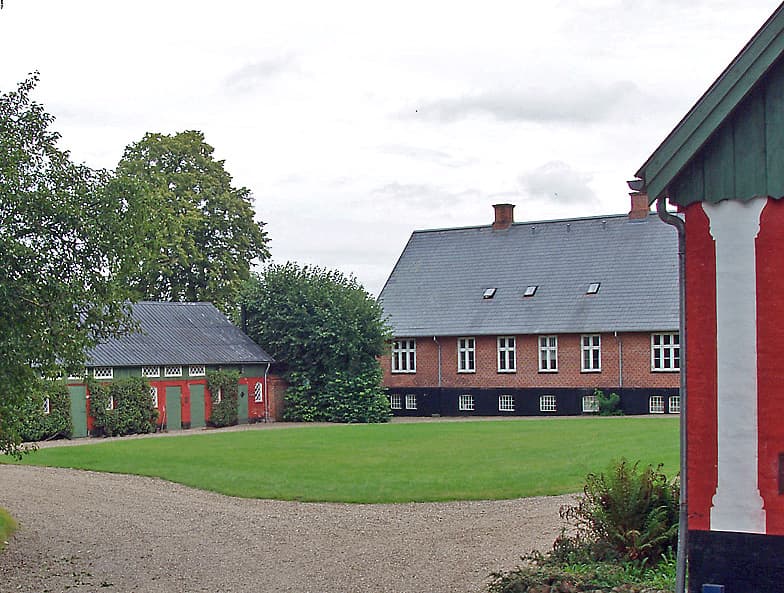
Voer Abbey was one of Denmark's oldest Benedictine abbeys, founded before 1100 and possessing significant wealth and land holdings. It played a role in local infrastructure by diverting the Gudenå River to power a grist mill. Following reforms and the Reformation, the abbey was dissolved, its buildings demolished, and its materials repurposed.

Halsted Priory
Halsted Priory, formerly a Benedictine monastery, is now a manor house and estate near Nakskov, Denmark. Founded in the Viking era with a church built in the 12th century, it served as a daughter monastery dedicated to St. Samson the Breton and gained prominence as a pilgrimage site. After being sacked and restored, it eventually reverted to the crown and later became a royal fief before transitioning to a family estate, retaining its historical name.

Vestervig Abbey
Vestervig Abbey, established around 1059, is one of Denmark's most ancient religious sites. Originally a wattle and clay church built by missionary Saint Thøger, it grew into an Augustinian abbey and became a significant pilgrimage destination due to its sacred spring and Thøger's reputation as a healer. The abbey church, later becoming the Vestervig parish church, still houses bells from its monastic past.