
Halsted Priory
Benedictine·Denmark·Manor house and estate with cultural centre
Halsted Priory, formerly a Benedictine monastery, is now a manor house and estate near Nakskov, Denmark. Founded in the Viking era with a church built in the 12th century, it served as a daughter monastery dedicated to St. Samson the Breton and gained prominence as a pilgrimage site. After being sacked and restored, it eventually reverted to the crown and later became a royal fief before transitioning to a family estate, retaining its historical name.
Key Facts
- ›The site dates back to the Viking era.
- ›A granite parish church was built on the site in the 12th century.
- ›The priory was recognized by papal decree in 1177.
- ›During its Benedictine period, the priory was dedicated to St. Samson the Breton.
- ›The Hanseatic League sacked and burned the priory in 1510.
- ›The modern Neo-Gothic main building was constructed between 1847 and 1849.

Gothic, Neo-Gothic, Baroque
Halsted Church, Old Main Building From 1591, Neo-Gothic Main Building From 1847-1849, Baroque-Style Park, Reliquary of St. Samson the Breton
Halsted Kloster, Juellinge
Jutta, Prince Erik, Jens Fugl, Sophie, Magdalene Sybille, Sophie Amalie, Jens Juel-Vind, Jens Krag-Juel-Vind, Frederik Carl Krag-Juel-Vind-Frijs, Carl Ludvig Krag-Juel-Vind-Frijs, Frederik Julius Krag-Juel-Vind-Frijs
- Papal recognition of the priory
- Possession by Jutta and her will to the priory
- Prince Erik's stay before burial
- Sacked and burned by the Hanseatic League
- Reversion to the Crown
- Restoration of the barony name Juellinge
- Dissolution of the barony and restoration of Halsted Kloster name
About Halsted Priory
Halsted Priory, historically known as Halsted Kloster, is a significant estate and manor house located near Nakskov on the island of Lolland in southeastern Denmark. Its origins trace back to the Viking era, evolving into a Benedictine priory with a granite church constructed in the 12th century. The priory received papal recognition in 1177 and is mentioned in historical records from 1231. It functioned as a daughter monastery dedicated to St. Samson the Breton, becoming a pilgrimage site due to a reliquary containing his head.
History and Transformation
The priory was built in a Gothic architectural style, as evidenced by the surviving church. It was a relatively small monastic house. A notable historical event involved Prince Erik, son of Christoffer II, who stayed at Halsted before his final resting place. In 1510, the Hanseatic League attacked and set fire to the priory, though it was later restored. The priory's monastic life concluded around the time of the Danish Reformation, eventually reverting to the crown in 1537.
After its secularization, Halsted Priory became a royal fief and served as a life estate for various royal figures, including dowager queens. In 1719, it was ceded to Jens Juel-Vind and renamed Juellinge, becoming the administrative center of the Barony of Juellinge. The estate has remained in the possession of the Krag-Juel-Vind-Frijs family through subsequent generations.
Architecture and Modern Day
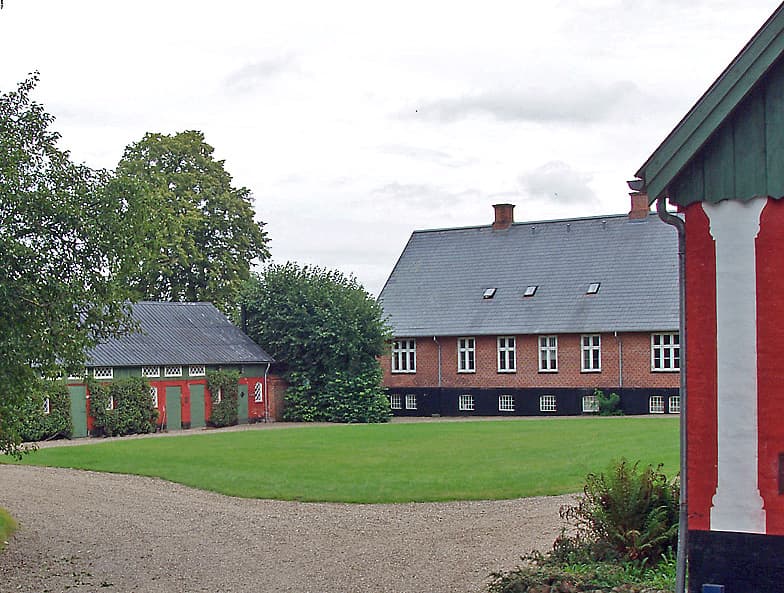
The modern Neo-Gothic main building of Halsted Priory was constructed between 1847 and 1849, designed to evoke the priory's original architectural character. The estate is flanked by Halsted Church to the north and the old main building, dating from 1591, to the south. This older structure has been renovated and now operates as a local cultural center. The property also features a Baroque-style park of approximately 6.5 hectares, which is open to the public.
In 1921, following the dissolution of the barony, the estate's name was restored to Halsted Kloster in 1922. Today, Halsted Priory is a large estate comprising a manor house, farmland, and woodland, and it also hosts a golf club. The historical significance of the site is preserved through its surviving structures and its ongoing role as a cultural and historical landmark.
Source: Wikipedia ↗
Frequently Asked Questions
When was Halsted Priory founded?
The site of Halsted Priory dates back to the Viking era. A granite parish church was constructed on the site in the 12th century, and a papal recognition of the priory was written in 1177.
What was the religious significance of Halsted Priory?
Halsted Priory was a Benedictine monastery dedicated to St. Samson the Breton. The church housed a reliquary with his head, making it a pilgrimage site for commoners and royalty alike.
What historical events affected Halsted Priory?
The priory was sacked and set ablaze by the Hanseatic League in 1510. It also served as a temporary refuge for Prince Erik before his burial at Sorø Abbey.
When did Halsted Priory cease to be a monastery?
Following the Reformation in Denmark, the priory reverted to the crown in 1537. The last abbot, Jens Fugl, was installed around 1520, and the priory's monastic function ended shortly thereafter.
What is the current status of Halsted Priory?
Today, Halsted Priory is a manor house and estate. The Neo-Gothic main building dates from 1847-1849, and the old main building from 1591 is operated as a local cultural center. The Baroque-style park is open to the public.
Related Monasteries

Ringsted Abbey
Ringsted Abbey was one of the earliest and most significant Benedictine monasteries in Denmark, established in the late 11th century. It gained immense importance as the burial site of Knud Lavard and later became a prominent pilgrimage destination and a resting place for Danish royalty. Despite surviving the Reformation, the abbey and its properties were eventually secularized, with only its church remaining today.
Voer Abbey
Voer Abbey was one of Denmark's oldest Benedictine abbeys, founded before 1100 and possessing significant wealth and land holdings. It played a role in local infrastructure by diverting the Gudenå River to power a grist mill. Following reforms and the Reformation, the abbey was dissolved, its buildings demolished, and its materials repurposed.
Vissing Priory
Vissing Priory was a Benedictine nunnery located in Denmark, likely founded in the mid-12th century by a Bishop of Aarhus, potentially as a double monastery with the nearby Voer Abbey. The priory faced destruction by fire in 1244 during civil conflict and its subsequent rebuilding is uncertain. It was formally dissolved between 1424 and 1449, with its estates eventually transferred to the Bishop of Aarhus and later partially to Voer Abbey.