
Tuman Monastery
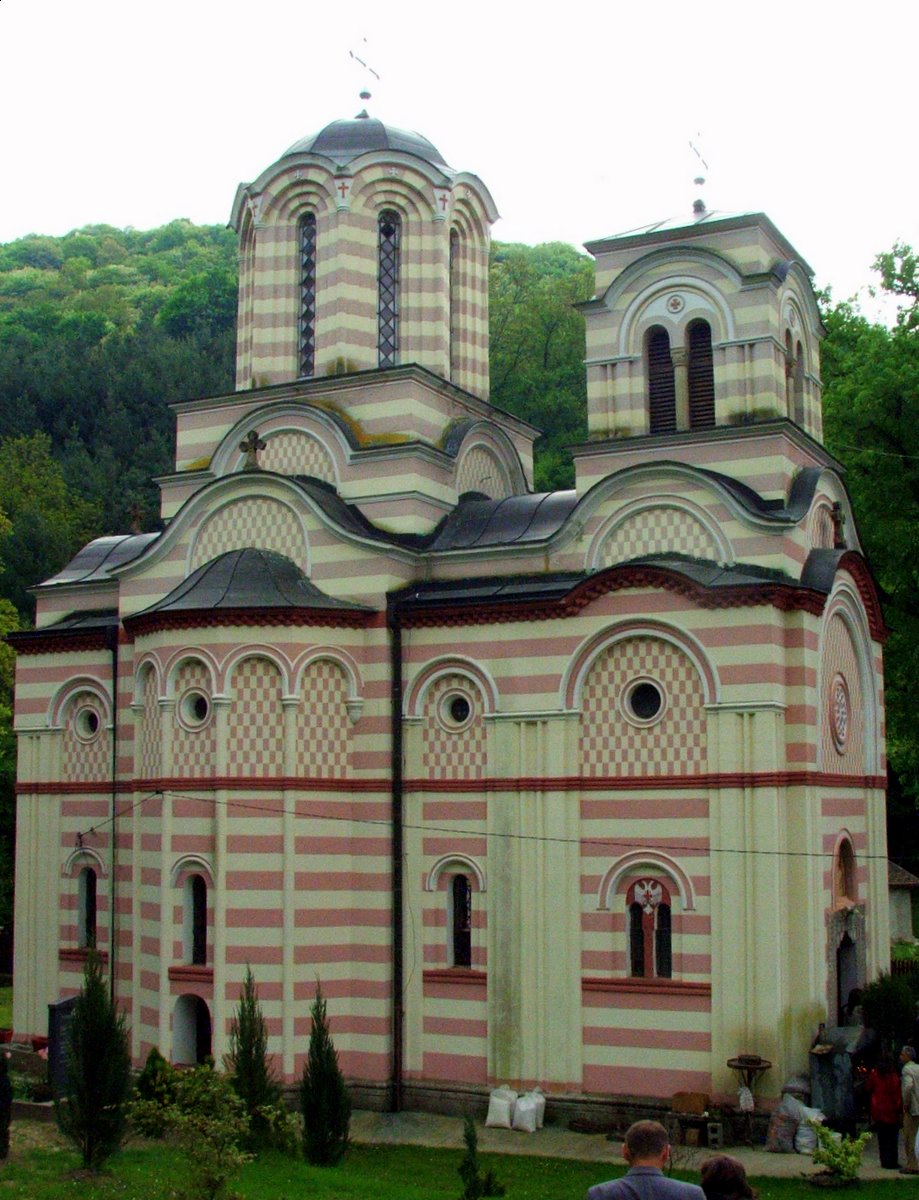
The Tuman Monastery, also known as Tumane Monastery, is a 14th-century Eastern Orthodox monastery situated in Serbia, near the town of Golubac. Renowned as the "Ostrog of the Đerdap" due to its historical healers, it is the second most visited pilgrimage site in the Serbian Orthodox Church. The principal church is dedicated to the Archangel Gabriel, and the monastery's origins are intertwined with local legends involving Miloš Obilić and Saint Zosimus.
Key Facts
- ›Founded in the second half of the 14th century, completed just before the Battle of Kosovo in 1389.
- ›The main church is dedicated to the Archangel Gabriel.
- ›It is one of the most visited pilgrimage sites in the Serbian Orthodox Church, attracting approximately 1 million visitors annually.
- ›Known for historical healers, earning it the nickname "Ostrog of the Đerdap".
- ›The monastery's name may derive from the archaic Serbian word for 'fog' or 'mist', or from the Greek word for 'grave mound'.
- ›The remains of Saint Zosimus of Tuman are a central relic of the monastery.
- Remains of Saint Zosimus of Tuman
- Zosimus' Cave and Poustinia
- Mini-Zoo With Various Animals
- Active Economy With Animal Husbandry and Agriculture
- Watermill
- Future Library With 50,000 Books
Tumane Monastery
Saint Zosimus of Tuman, Miloš Obilić, Prince Lazar, Saint Jacob the New of Tuman, Elder Thaddeus of Vitovnica, Patriarch Arsenije Iii Crnojević, Count đOrđE Branković, Hegumenia Matrona, Bishop Ignatije Midić
- Completion of Construction Just Before the Battle of Kosovo
- Writing of the Tuman Apocryphal Code
- Mentioned In Ottoman Census
- Meeting Between Patriarch Arsenije Iii Crnojević and Count đOrđE Branković
- Burned By Ottomans During KočA's Frontier Rebellion
- Restored
- Damaged During First and Second Serbian Uprisings
- Rebuilt Under Prince Miloš Obrenović
- Damaged By Earthquake , Repaired
- Old Church Ordered Demolished
- New Church Consecrated
- Arrival of Russian Monks From Milykovo Monastery
- Discovery of Saint Zosimus' Remains
- World War Ii Interrupted Development
- Became A Female Monastery
- Transformed Back Into A Male Monastery
- Massive Renovation
- Canonization of Saint Jacob the New of Tuman
About Tuman Monastery
Tuman Monastery: A Spiritual Haven in Serbia
The Tuman Monastery, also known as Tumane Monastery, stands as a significant 14th-century Eastern Orthodox monastic complex in Serbia, located near the town of Golubac. Its principal church is dedicated to the Archangel Gabriel. The monastery is recognized as the second most visited pilgrimage site within the Serbian Orthodox Church, drawing an estimated one million visitors annually. Its reputation for historical healers has earned it the evocative moniker "Ostrog of the Đerdap," underscoring its importance as a place of spiritual solace and recovery.
History and Legends
The construction of Tuman Monastery began in the latter half of the 14th century, with its completion predating the pivotal Battle of Kosovo in 1389. Local traditions frequently associate its founding with the renowned knight Miloš Obilić, who, according to legend, commenced building the church as a penance after accidentally wounding Saint Zosimus the Sinaite during a hunt. The narrative suggests that Obilić was summoned to war before the monastery's completion, with the local Vlach population subsequently finishing the construction. Historical records first mention the monastery in the 16th century, noting its existence during the Ottoman period, albeit as a small establishment with few resident monks.
Over centuries, Tuman Monastery has experienced periods of destruction and restoration. It was burned by the Ottomans during the 1788 Koča's frontier rebellion, and subsequently damaged during the First and Second Serbian Uprisings in the early 19th century. Rebuilding efforts were undertaken during the reign of Prince Miloš Obrenović. The church continued to deteriorate, leading to its demolition in 1910 to make way for a new structure consecrated in 1924. A resurgence occurred in 1936 with the arrival of Russian monks, and the rediscovery of Saint Zosimus' remains greatly boosted its popularity. The monastery transitioned to a female community in 1966 before reverting to a male one in 2014, followed by extensive renovations.
Spiritual Significance and Features
Central to the monastery's spiritual draw are the relics of Saint Zosimus of Tuman, also known as Zosimus Sinait and The Venerable Zosimus of Tuman. He is venerated for his extreme asceticism and is recognized as a miracle worker. His cave, a poustinia located south of the monastery, remains a site of pilgrimage. The monastery also holds the remains of Saint Jacob the New of Tuman, a former diplomat who became a monk. Modern additions include a functioning watermill, a mini-zoo, and extensive agricultural activities. Future plans include a large library and conference facilities, indicating a continued commitment to spiritual and intellectual growth.
Source: Wikipedia ↗
Frequently Asked Questions
When was Tuman Monastery founded?
The building of Tuman Monastery began in the second half of the 14th century and was completed just before the Battle of Kosovo in 1389. Its exact founding date is linked to this period of Serbian medieval history.
What is the main dedication of Tuman Monastery's church?
The principal monastery church is dedicated to the Archangel Gabriel. This dedication is central to the spiritual life and services held at the monastery.
Why is Tuman Monastery called "Ostrog of the Đerdap"?
Tuman Monastery is nicknamed "Ostrog of the Đerdap" because of the several historical healers who dwelled within its complex. This association highlights its significance as a place of spiritual healing and pilgrimage, similar to Ostrog Monastery.
Who is credited with the founding of Tuman Monastery?
Local legends attribute the founding to the knight Miloš Obilić, who began construction as an act of repentance. However, historical accounts suggest it was endowed by one of Prince Lazar's voivodas, with local Vlach population finishing the church.
What are the significant relics or figures associated with Tuman Monastery?
The remains of Saint Zosimus of Tuman, also known as Zosimus Sinait or The Venerable Zosimus of Tuman, are the central relic of the monastery. Saint Jacob the New of Tuman is also buried here, and Elder Thaddeus of Vitovnica was an archimandrite.
How many visitors does Tuman Monastery receive?
Tuman Monastery is the second most visited pilgrimage site within the Serbian Orthodox Church, receiving approximately 1 million visitors annually. This makes it a significant spiritual and tourist destination.
Related Monasteries

Meteora
Meteora is a rock formation in northwestern Greece famous for its complex of Eastern Orthodox monasteries built atop towering natural pillars. Established primarily from the 14th century onwards, these monasteries offered refuge and spiritual centers, with 24 originally built and six still extant today. Recognized for their unique architecture, beauty, and religious significance, Meteora is a UNESCO World Heritage site visited by many for its history, culture, and natural splendor.

St. Mary's Church
St. Mary's Church, also known as Virgin Mary's Church, is an Eastern Orthodox cave church situated on Maligrad Island in the Albanian part of Lake Prespa. Constructed in 1369 by Serbian nobleman Kesar Novak, it features frescoes and Greek inscriptions from its founding year, notably depicting Kesar Novak and his wife Kalia.

Alexander Nevsky Lavra
The Alexander Nevsky Lavra, officially Saint Alexander Nevsky Monastery, is a prominent Eastern Orthodox monastery in Saint Petersburg, Russia. Founded by Peter the Great in 1710, it was intended to commemorate the victory of Alexander Nevsky, though the chosen site was not the actual battlefield. The monastery holds significant religious and historical importance, serving as a burial place for many famous Russians and housing the relics of its namesake saint.