
Meteora
Eastern Orthodox·Greece·Active monasteries and ruins·14th century
Meteora is a rock formation in northwestern Greece famous for its complex of Eastern Orthodox monasteries built atop towering natural pillars. Established primarily from the 14th century onwards, these monasteries offered refuge and spiritual centers, with 24 originally built and six still extant today. Recognized for their unique architecture, beauty, and religious significance, Meteora is a UNESCO World Heritage site visited by many for its history, culture, and natural splendor.
Key Facts
- ›Meteora hosts one of the most prominent complexes of Eastern Orthodox monasteries in Greece.
- ›Twenty-four monasteries were established on natural rock pillars, mainly from the second half of the 14th century.
- ›As of December 2025, four monasteries remain actively managed by monks or nuns and are open to visitors.
- ›The complex was added to the UNESCO World Heritage List in 1988.
- ›The rock formations are composed of sandstone and conglomerate, sculpted by millions of years of weathering.
- ›Human presence in the area dates back at least 50,000 years, with evidence found in Theopetra Cave.

Athonite
Natural Rock Pillars, Unesco World Heritage Site, Theopetra Cave, Monastery of Great Meteoron, Monastery of Varlaam, Steps Carved Into Rock For Access
Saint Athanasios the Meteorite, Saint Joasaph, Varlaam, Theophanes, Nektarios Apsarades, John Uroš
- Establishment of Hermitages From the 800s Ce
- Monks Occupying Caverns From the 11th Century
- Foundation of Monasteries From the 14th Century Onwards
- Threats From Turkish Raiders In the 14th and 15th Centuries
- World War Ii Bombing
- Conversion of St. Stephen To A Nunnery In 1961
About Meteora
Meteora is a striking rock formation in northwestern Greece, renowned for hosting a spectacular complex of Eastern Orthodox monasteries. These monastic communities were primarily established from the second half of the 14th century onwards, with twenty-four monasteries originally built atop the immense natural pillars and rounded boulders that define the landscape. The name 'Meteora' itself translates to 'lofty' or 'elevated,' aptly describing the monasteries' dramatic, sky-high locations.
History and Significance
The origins of monastic life in Meteora can be traced back to the 800s CE, when ascetic hermit monks began inhabiting caves and fissures in the rock towers. However, the construction of organized monasteries did not commence until the 14th century, driven by a need for refuge from increasing attacks. Simeon Uroš, a local ruler, sponsored the establishment of these monastic communities, with Athanasios Koinovitis playing a pivotal role in founding the Monastery of Great Meteoron in 1356. The inaccessible nature of the rock pillars provided an ideal sanctuary from political upheaval and external threats, including raids by the Turks and later the expanding Ottoman Empire.
Architectural and Geological Marvel
The monasteries are characterized by their unique integration with the natural rock formations. Much of their architecture is of Athonite origin, reflecting a distinct monastic tradition. Geologically, the Meteora pillars are composed of sandstone and conglomerate, formed over millions of years from ancient deltaic deposits and subsequently sculpted by weathering. This unusual formation, combined with the abrupt vertical weathering, creates a landscape of unparalleled beauty. The complex was recognized for its outstanding architecture, beauty, and religious significance when it was added to the UNESCO World Heritage List in 1988.
Contemporary Status
While 24 monasteries once stood, today only six remain extant. Of these, four continue to function as active monasteries: the Great Meteoron, Varlaam, Holy Trinity, and Saint Stephen. The Monastery of Saint Stephen was converted to a nunnery in 1961 and is now home to a community of nuns. The other extant monasteries, Saint Nicholas Anapausas and Rousanou, are no longer in active use for monastic life but are preserved. Access to the monasteries, once a challenging feat involving ladders and ropes, has been made easier by steps carved into the rock, particularly since the 1920s, allowing visitors to explore this extraordinary site.
Source: Wikipedia ↗
Frequently Asked Questions
What does the name "Meteora" mean?
The name Meteora means "lofty" or "elevated." It is etymologically related to the word "meteor."
When were the monasteries at Meteora founded?
While the exact founding dates are often unknown, monasteries began to be built from the 14th century onwards. The Monastery of Great Meteoron was founded between 1356 and 1372, and the Monastery of Varlaam was built in 1517.
How many monasteries are currently active at Meteora?
As of December 2025, four of the original monasteries are occupied and in active use as monasteries. These are Great Meteoron, Varlaam, Holy Trinity, and Saint Stephen (which is now a convent run by nuns).
What is the geological origin of the Meteora rock formations?
The rock pillars are not volcanic but are composed of sandstone and conglomerate. They were formed over millions of years by deposits from ancient streams and later uplifted and weathered by natural forces.
Are the Meteora monasteries accessible to the public?
Yes, the active monasteries are open to visitors. While access was historically difficult, steps were carved into the rock in the 1920s, making them more accessible.
What is the religious tradition of the Meteora monasteries?
The monasteries at Meteora are part of the Eastern Orthodox Church tradition.
Related Monasteries

Mount Athos
Mount Athos is a mountain and peninsula in Greece renowned as a major center of Eastern Orthodox monasticism. Its history stretches back to at least the 9th century, evolving from scattered hermitages to organized monastic communities supported by Byzantine emperors and later Orthodox rulers. The area is governed by the monastic community of Mount Athos, ecclesiastically under the Patriarch of Constantinople, and is notable for its prohibition of women and its designation as a UNESCO World Heritage Site due to its well-preserved architecture and natural environment.
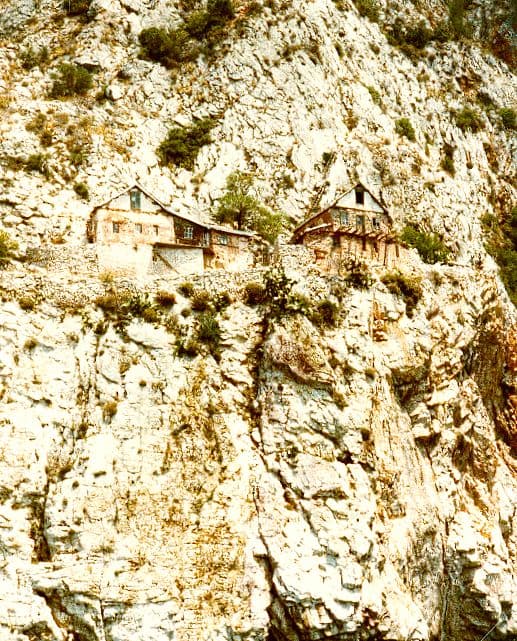
Karoulia
Karoulia is an Eastern Orthodox skete on Mount Athos, subordinate to the Great Lavra. Situated on the southernmost shore, it is known for its 12 hermitages built in the 17th century, where approximately 10 monks practice hesychasm and asceticism in challenging cliffside dwellings. Access to these remote huts is primarily by ladder or rope, reflecting a life of deep contemplation and austerity.
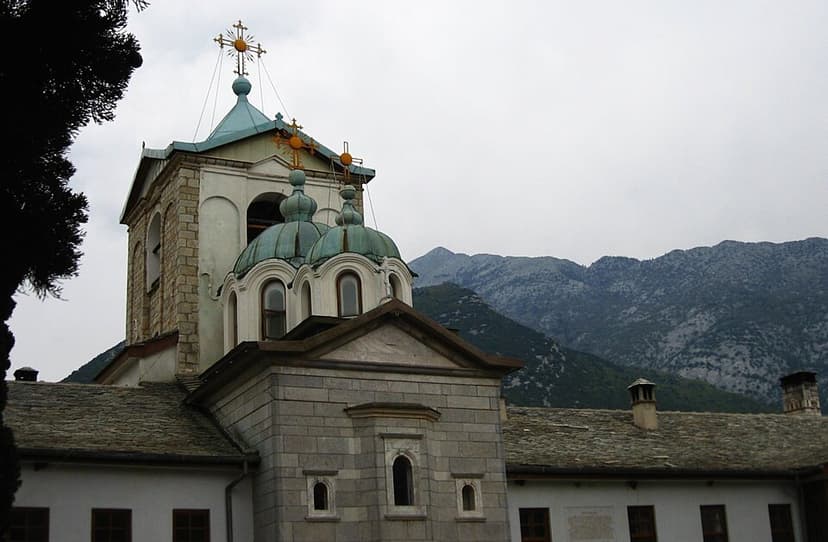
Prodromos (Mount Athos)
The Skete of Prodromos, also known as Romanian Skete Prodromos, is a Romanian cenobitic skete on Mount Athos, Greece, affiliated with the Great Lavra Monastery. Founded by Romanian monks, it became a significant center for Romanian Orthodox monasticism on the Holy Mountain, eventually receiving official recognition and support from both ecclesiastical and state authorities.