
Prodromos (Mount Athos)
The Skete of Prodromos, also known as Romanian Skete Prodromos, is a Romanian cenobitic skete on Mount Athos, Greece, affiliated with the Great Lavra Monastery. Founded by Romanian monks, it became a significant center for Romanian Orthodox monasticism on the Holy Mountain, eventually receiving official recognition and support from both ecclesiastical and state authorities.
Key Facts
- ›It is a Romanian cenobitic skete belonging to the Great Lavra Monastery on Mount Athos.
- ›Its origins trace back to Romanian monks living in seclusion around 1750.
- ›It was officially recognized as a skete with a deed from Great Lavra in 1820 and approved by Patriarch Cyril VII of Constantinople in 1856.
- ›The skete's church, dedicated to the Baptism of Jesus, was built between 1857 and 1866.
- ›It houses the icon of Theotokos 'Acheiropoieta' (Prodromița), believed to be miraculous.
- ›The skete's library contains over 5000 volumes and about 200 manuscripts.
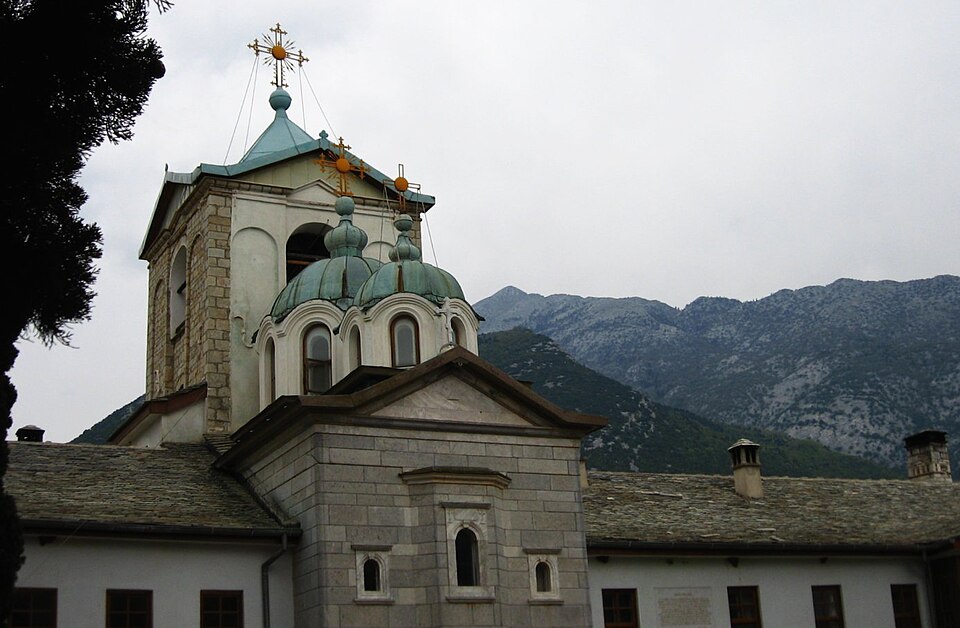
Renaissance-Inspired
- Icon of Theotokos 'Acheiropoieta'
- Library With Over 5000 Volumes and 200 Manuscripts
- Depiction of Mount Athos With Monasteries and Saints On the Church's Porch
- Belfry
- Ossuary For Exhumed Bones
- Cave of Athanasios the Athonite
Skete of Prodromos, Romanian Skete Prodromos, Schitul Prodromu
Macarie, Iustin the Vlach, Patapie, Grigore, Nifon, Nectarie, Grigore Alexandru Ghica, Sofronie, Cyril Vii of Constantinople, Isaia Vicol, Irinarh șIșMan, Dionysius V of Constantinople, Petroniu TăNase, Atanasie Floroiu
- Greek Revolution Which Halted Founding Efforts
- Union of Wallachia and Moldavia Leading To Name Change
- Communist Regime In Romania Confiscating Properties
- Mount Athos Millennium Celebration Aiding Recovery
- Restoration Efforts Starting In 1984
- Romanian Chamber of Deputies Passing Bill For Yearly Financing
About Prodromos (Mount Athos)
The Skete of Prodromos, also known by its Romanian name Schitul Prodromu and the Latinized exonym Moldavian Skete Prodromos, is a significant Romanian cenobitic skete situated on Mount Athos, Greece. It falls under the spiritual jurisdiction of the Ecumenical Patriarchate of Constantinople and is administratively affiliated with the Great Lavra Monastery, the oldest monastery on the Holy Mountain. The skete's name, 'Prodromos,' is Greek for 'The Forerunner,' a cognomen of St. John the Baptist, to whom it is dedicated.
History and Establishment
The roots of Romanian monastic presence at this location can be traced to around 1750, with a few monks living in seclusion near a chapel dedicated to St. John the Baptist. Around 1800, hermits like Iustin the Vlach resided there. The desire to establish a more formal skete grew as the number of Romanian monks increased. Hieromonk Iustin sought permission from Great Lavra to expand their cell into a skete, but he died in 1816 before this could be realized. His successors obtained a deed in 1820, outlining the conditions for a coenobitic skete belonging to Great Lavra. The Greek Revolution of 1821 temporarily halted these plans. Later, monks Nifon and Nectarie found the deed and, in 1851, purchased the cell from Greek monks. With support from Prince Grigore Alexandru Ghica and metropolitans, the establishment finally received approval from Patriarch Cyril VII of Constantinople in 1856.
Architecture and Features
The construction of the skete's main church, consecrated to the Baptism of Jesus, commenced in 1857 and concluded in 1866. The church is notable for its three domes and interior paintings executed in a Renaissance-inspired style, characteristic of 19th-century Romanian art. A 23-meter high belfry stands over the main entrance, alongside a chapel dedicated to the Dormition of the Theotokos. The skete also houses a significant library with over 5,000 volumes and approximately 200 manuscripts, including a ten-volume history of the Holy Mountain written by monk Irinarh Șișman. Among its revered possessions is the icon of Theotokos 'Acheiropoieta' (Prodromița), widely considered miraculous. Traditional Athonite burial practices are observed, with a single gravesite and subsequent exhumation and bone storage in an ossuary. The skete currently hosts 35 monks.
Source: Wikipedia ↗
Frequently Asked Questions
What is the Skete of Prodromos?
The Skete of Prodromos is a Romanian cenobitic skete located on Mount Athos, Greece. It is affiliated with the Great Lavra Monastery and is dedicated to St. John the Baptist, known as 'The Forerunner' in Greek.
When was the Skete of Prodromos founded?
While Romanian monks were present in the area around 1750, the skete received a deed of establishment from Great Lavra in 1820. Its formal approval and the start of construction for its main church occurred in the mid-19th century, with the church being consecrated in 1866.
What is special about the Skete of Prodromos?
The skete is notable for being one of the two Romanian establishments on Mount Athos and for housing the icon of Theotokos 'Acheiropoieta' (Prodromița), which is believed to perform miracles. It also possesses a significant library with over 5000 volumes and 200 manuscripts.
How many monks live at the Skete of Prodromos?
Currently, 35 monks reside in the Skete of Prodromos. Historically, the number was established by deed to be up to 60 monks and 10 brothers.
What is the architectural style of the Skete of Prodromos?
The skete's church, built in the 19th century, features three domes and was painted in a Renaissance-inspired style, which was typical of Romanian paintings of that era. The belfry is 23 meters high.
Related Monasteries
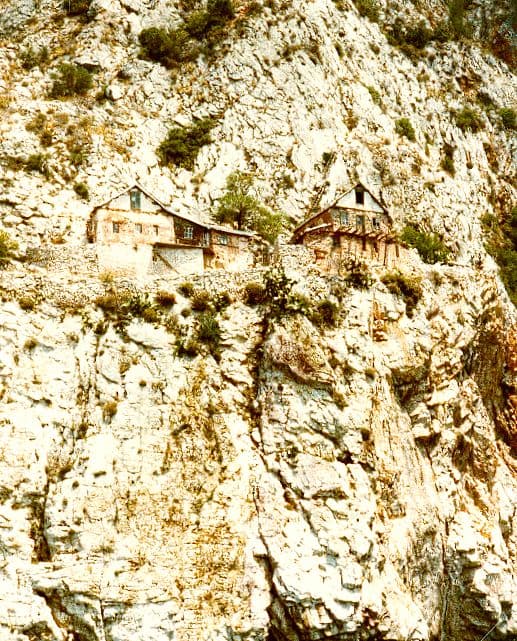
Karoulia
Karoulia is an Eastern Orthodox skete on Mount Athos, subordinate to the Great Lavra. Situated on the southernmost shore, it is known for its 12 hermitages built in the 17th century, where approximately 10 monks practice hesychasm and asceticism in challenging cliffside dwellings. Access to these remote huts is primarily by ladder or rope, reflecting a life of deep contemplation and austerity.

Mount Athos
Mount Athos is a mountain and peninsula in Greece renowned as a major center of Eastern Orthodox monasticism. Its history stretches back to at least the 9th century, evolving from scattered hermitages to organized monastic communities supported by Byzantine emperors and later Orthodox rulers. The area is governed by the monastic community of Mount Athos, ecclesiastically under the Patriarch of Constantinople, and is notable for its prohibition of women and its designation as a UNESCO World Heritage Site due to its well-preserved architecture and natural environment.

Greece
Greece, officially the Hellenic Republic, is a country in Southeastern Europe renowned as the cradle of Western civilization and the birthplace of democracy, philosophy, and the arts. Throughout its long and complex history, Greece transitioned from independent city-states to Roman and Byzantine provinces, enduring periods of Ottoman rule before emerging as a modern nation-state in 1830. Today, it is a developed country with a significant cultural legacy, evidenced by its numerous UNESCO World Heritage Sites and its vital role in global tourism and shipping.