
Karoulia
Karoulia is an Eastern Orthodox skete on Mount Athos, subordinate to the Great Lavra. Situated on the southernmost shore, it is known for its 12 hermitages built in the 17th century, where approximately 10 monks practice hesychasm and asceticism in challenging cliffside dwellings. Access to these remote huts is primarily by ladder or rope, reflecting a life of deep contemplation and austerity.
Key Facts
- ›Eastern Orthodox skete subordinate to the Great Lavra.
- ›Located on the southernmost shore of Mount Athos.
- ›Features 12 huts constructed in the 17th century.
- ›Currently inhabited by approximately 10 monks.
- ›Monks practice hesychasm and asceticism in cliffside dwellings.
- ›Access to dwellings is via ladder or rope.
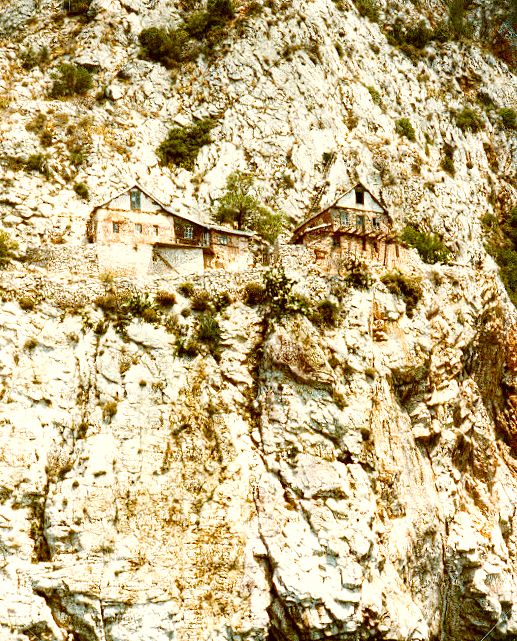
Cliffside Hermitages, Ladder and Rope Access To Dwellings, Outer Karoulia, Inner Karoulia
Nikon of Karoulia
About Karoulia
Karoulia is an Eastern Orthodox skete, a monastic community, situated on Mount Athos in Greece. It operates under the authority of the Great Lavra and is uniquely located on the southernmost shore of the Athonite peninsula. The skete is characterized by its challenging and remote setting, with its dwellings being caves or small huts built into the side of the mountain, often at elevations of 100 to 500 meters above sea level.
History and Description
The 12 hermitages that constitute Karoulia were constructed in the 17th century. Approximately 10 monks currently inhabit these dwellings, dedicating their lives to the practice of hesychasm and asceticism. The extreme nature of their abodes means that access is typically only possible via ladders or ropes, underscoring the profound commitment to solitude and contemplation. The monks engage in prayer, often alone or with a small number of companions, finding spiritual reflection in the contemplation of the sea and the surrounding landscape.
Karoulia is geographically divided into two parts: Outer Karoulia, which lies closer to the seashore, and Inner Karoulia, also known by the more evocative name 'Frightful Karoulia,' located higher up in the cliffs. Historically, vegetarian monks, known as 'boskoi' for their diet of plants and herbs, once resided in Karoulia. The skete's port is named Katounakia, which serves as a point of connection with Dafni via ferry.
Notable Figures
One notable figure associated with Karoulia is Nikon of Karoulia, a Russian hermit who lived at St. George's, Karoulia, from 1941 to 1963, further attesting to the skete's long-standing tradition of eremitical life.
Source: Wikipedia ↗
Frequently Asked Questions
What is Karoulia?
Karoulia is an Eastern Orthodox skete, a monastic community, located on Mount Athos. It is subordinate to the Great Lavra and is situated on the southernmost shore of the peninsula.
When were the huts at Karoulia built?
The 12 huts that make up Karoulia were built in the 17th century. These structures serve as the dwellings for the monks practicing asceticism there.
How many monks live at Karoulia?
Approximately 10 monks currently reside at Karoulia. They are dedicated to a life of hesychasm and asceticism in their remote cliffside homes.
What is the terrain like at Karoulia and how do monks access their homes?
Karoulia's dwellings are caves or small huts clinging to the mountainside, between 100 and 500 meters above sea level. Access to these challenging locations is only possible by ladder or rope.
What is the difference between Outer and Inner Karoulia?
Karoulia is divided into Outer Karoulia, the lower section by the seashore, and Inner Karoulia, also known as 'Frightful Karoulia,' which is situated further up in the cliffs.
Is there a port associated with Karoulia?
Yes, the port of Karoulia is called Katounakia. From Katounakia, there is a ferry service that connects to Dafni.
Related Monasteries

Mount Athos
Mount Athos is a mountain and peninsula in Greece renowned as a major center of Eastern Orthodox monasticism. Its history stretches back to at least the 9th century, evolving from scattered hermitages to organized monastic communities supported by Byzantine emperors and later Orthodox rulers. The area is governed by the monastic community of Mount Athos, ecclesiastically under the Patriarch of Constantinople, and is notable for its prohibition of women and its designation as a UNESCO World Heritage Site due to its well-preserved architecture and natural environment.

Meteora
Meteora is a rock formation in northwestern Greece famous for its complex of Eastern Orthodox monasteries built atop towering natural pillars. Established primarily from the 14th century onwards, these monasteries offered refuge and spiritual centers, with 24 originally built and six still extant today. Recognized for their unique architecture, beauty, and religious significance, Meteora is a UNESCO World Heritage site visited by many for its history, culture, and natural splendor.
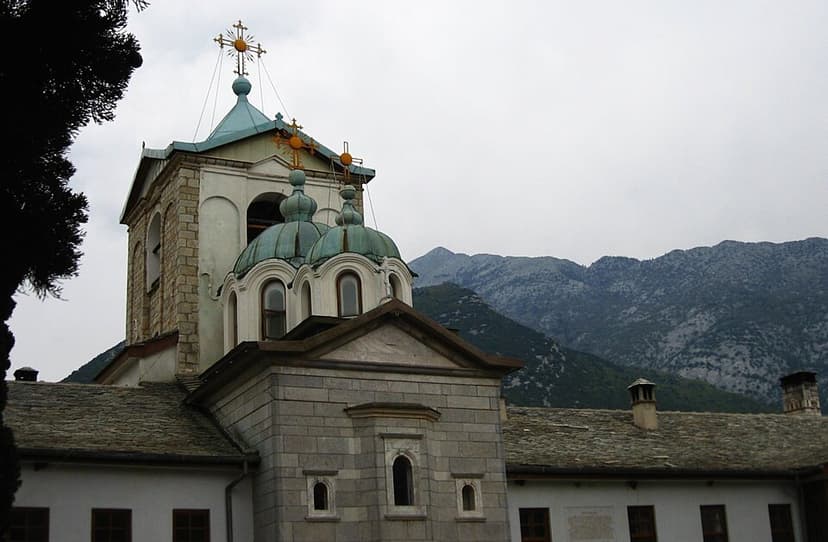
Prodromos (Mount Athos)
The Skete of Prodromos, also known as Romanian Skete Prodromos, is a Romanian cenobitic skete on Mount Athos, Greece, affiliated with the Great Lavra Monastery. Founded by Romanian monks, it became a significant center for Romanian Orthodox monasticism on the Holy Mountain, eventually receiving official recognition and support from both ecclesiastical and state authorities.