
Tsozong Gongba
Tsozong Gongba Monastery, meaning "castle in the lake," is a small Tibetan Buddhism monastery situated on Tashi Island in Pagsum Lake, eastern Tibet. Founded in 1400 and belonging to the Nyingma tradition, it comprises four buildings around a central yard. The monastery faced destruction during the Cultural Revolution but was later restored.
Key Facts
- ›Founded in the year 1400.
- ›Practices the Nyingma tradition of Tibetan Buddhism.
- ›Located on Tashi Island in the middle of Pagsum Lake.
- ›The name 'Tsozong Gongba' translates to 'castle in the lake'.
- ›Houses a small community of nuns.
- ›Statues were destroyed during the Cultural Revolution and subsequently restored.
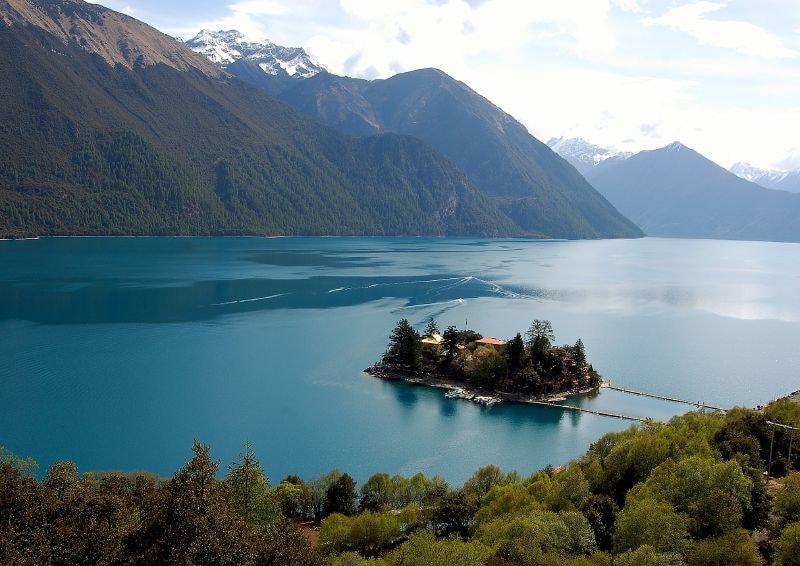
- Island Location On Pagsum Lake
- Four Buildings Around A Central Yard
- Restored Statues of Chenresig, Guru Rimpoché, and Sakya Thukpa
- Nearby Holy Sites Including A Sky Burial Site and A 'Body-Print' of Gesar
Tsodzong, Tsomum
Sungye Lingpa, Dudjom Rimpoche, Chuni Rimpoche
- Destruction of Statues During the Cultural Revolution
- Restoration of Statues
About Tsozong Gongba
Tsozong Gongba Monastery
Tsozong Gongba Monastery is a significant site within Tibetan Buddhism, notable for its picturesque and somewhat isolated location. The monastery's name, derived from Tibetan, translates to "castle in the lake," a fitting description given its setting on Tashi Island in the center of Pagsum Lake.
History and Founding
The monastery was established in the year 1400, making it a 15th-century foundation. Its construction was overseen by the Nyingma monk Sungye Lingpa. Tsozong Gongba adheres to the Nyingma tradition, one of the oldest schools of Tibetan Buddhism. The monastery itself is composed of four distinct buildings arranged around a small central courtyard.
The Cultural Revolution and Restoration
Like many religious sites in Tibet, Tsozong Gongba Monastery experienced significant challenges during the Cultural Revolution. During this period, its three principal statues—representing Chenresig, Guru Rimpoché, and Sakya Thukpa—were destroyed by the People's Liberation Army. Fortunately, these important religious artifacts were later restored through the efforts of the local lama Dudjom Rimpoche and his son, Chuni Rimpoche. Chuni Rimpoche is now a resident at Lamaling Monastery near Bayi town.
Location and Surroundings
Tsozong Gongba Monastery is situated in eastern Tibet, specifically in Gongbo'gyamda County, Nyingchi Prefecture, within the Tibet Autonomous Region. The monastery is positioned within the Nyenchen Tanglha Mountains. A small pilgrimage circuit, known as a kora, encircles the monastery, leading visitors past several subtle yet significant holy sites. Among these are a traditional Sky burial site and a 'body-print' attributed to Gesar, a legendary warrior king in Tibetan lore.
Source: Wikipedia ↗
Frequently Asked Questions
When was Tsozong Gongba Monastery founded?
Tsozong Gongba Monastery was founded in the year 1400. This places its establishment in the 15th century.
What religious tradition does Tsozong Gongba Monastery belong to?
The monastery practices the Nyingma tradition of Tibetan Buddhism. This is one of the oldest schools of Tibetan Buddhism.
Where is Tsozong Gongba Monastery located?
Tsozong Gongba Monastery is situated on Tashi Island in the middle of Pagsum Lake, within Gongbo'gyamda County in Nyingchi Prefecture, Tibet Autonomous Region. Its location is famously described by its name, meaning "castle in the lake."
What happened to the statues at Tsozong Gongba Monastery?
The three main statues at Tsozong Gongba Monastery were shot and burned by the People's Liberation Army during the Cultural Revolution. They were later restored by the local lama Dudjom Rimpoche and his son Chuni Rimpoche.
What is the meaning of the name Tsozong Gongba?
The name Tsozong Gongba is derived from the Tibetan language and translates to 'castle in the lake'. This name aptly describes its unique island setting.
Related Monasteries

Dorje Drak
Dorje Drak, also known as Indestructible Rock Vihara, is a significant Tibetan Buddhist monastery of the Nyingma school, recognized as one of its 'Six Mother Monasteries' in Tibet. Originally founded as Ewam Chogar Gompa, it was enlarged and renamed Dorje Drak following the discovery of auspicious natural signs. The monastery has a history marked by destruction and rebuilding, most notably its relocation in 1632 and subsequent destruction during the 1960s, leading to a new foundation in India.
Kirti Gompa
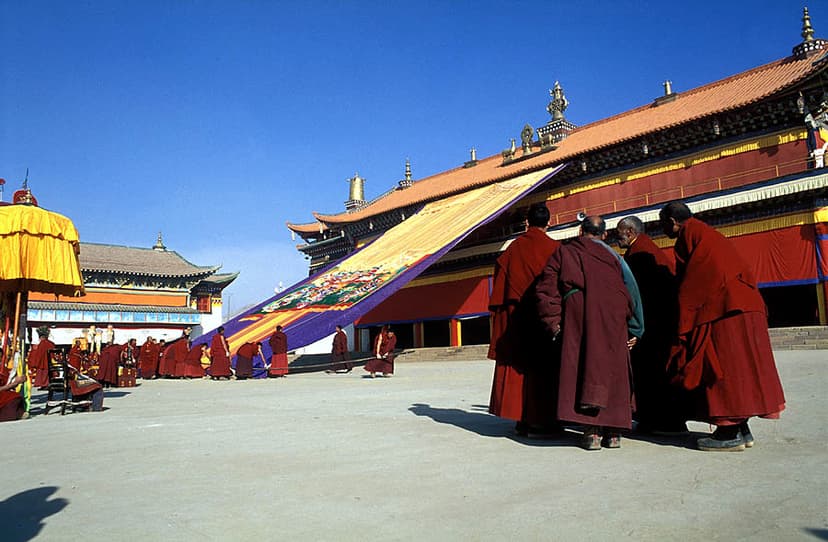
Kirti Gompa is a significant Tibetan Buddhist monastery founded in 1472 in Ngawa, Sichuan province, traditionally part of the Amdo region. Historically a large monastic center, it has faced severe repression from Chinese authorities, including mass arrests and patriotic re-education programs, leading to a drastic reduction in its monk population. The monastery gained international attention as the site where a wave of Tibetan self-immolations began in protest against Chinese rule.

Sanga Monastery
Sanga Monastery is a Tibetan Buddhist monastery situated in the old city of Dagzê, Lhasa, Tibet. Founded in 1419 by Je Tsongkhapa, it belongs to the Gelug sect and was once home to one hundred monks. Although it suffered destruction during the Cultural Revolution, the monastery was reopened after repairs in 1986 and continues to house a monastic community.