
Trub Abbey
Christian·Switzerland·Former monastery, church now a parish church·12th century
Trub Abbey was a Benedictine monastery founded in the early 12th century in Bern, Switzerland. Originally established as a monk's cell, it quickly became an independent abbey dedicated to the Holy Cross. Over centuries, it accumulated significant landholdings and played a role in the local community, but was ultimately dissolved in the 16th century following the Protestant Reformation.
Key Facts
- ›Founded in 1125 as a monk's cell and raised to an independent abbey between 1128 and 1130.
- ›Dedicated to the Holy Cross.
- ›Acquired significant properties in the Emmental and Oberaargau regions, as well as more distant locations.
- ›The village of Trub grew around the Abbey, which provided chaplains and priests to local communities.
- ›Suffered major fires in 1414 and 1501, leading to rebuilding efforts.
- ›Secularized by the city of Bern in 1528 during the Protestant Reformation, leading to its dissolution.

Romanesque
- Coat of Arms Became the Coat of Arms For the Municipality of Trub
Monasterium De Trouba, Convent Von Truob
ThüRing Von LüTzelflüH, Kaspar Von Scharnachtal, Heinrich Ruoff
- Founded In 1125
- Became An Independent Abbey Between 1128 and 1130
- Confirmed By Pope Innocent Ii and King Conrad Iii In 1139
- Residents Became Citizens of Bern In 1286
- Suffered A Fire In 1414
- Suffered A Fire In 1501
- Secularized In 1528 During the Protestant Reformation
About Trub Abbey
Trub Abbey was a former Benedictine monastery situated in the municipality of Trub, within the canton of Bern, Switzerland. Its history began in 1125 when Thüring von Lützelflüh donated land for a monk's cell, which was elevated to an independent abbey dedicated to the Holy Cross within a few years. The abbey, known in Latin sources as "monasterium de Trouba" and later as the "convent von Truob," received confirmation of its lands and rights in 1139.
Over the centuries, Trub Abbey grew in influence and property, owning numerous holdings across western Switzerland. A Romanesque church was constructed on its grounds, and the village of Trub itself developed around the abbey. The abbey also played a role in local religious life, providing chaplains and priests to surrounding communities. However, the abbey's existence was marked by significant challenges, including devastating fires in 1414 and 1501 that necessitated rebuilding.
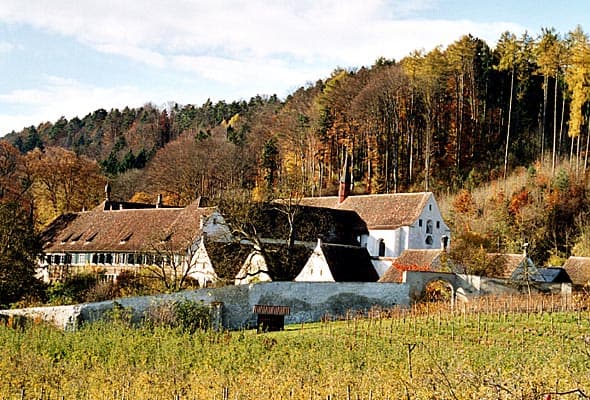
The abbey's end came in 1528 when Bern adopted the Protestant Reformation and secularized all monasteries within its territory. The last abbot, Heinrich Ruoff, and the remaining nine residents were provided with stipends to leave. The abbey church was subsequently converted into a Swiss Reformed parish church, and the remaining monastic buildings gradually fell into disrepair, were demolished, or repurposed, such as the south wing being converted into a farmhouse. The abbey's coat of arms ultimately became the symbol for the municipality of Trub.
Source: Wikipedia ↗
Frequently Asked Questions
When was Trub Abbey founded?
Trub Abbey was founded in 1125 as a monk's cell, and it was raised to an independent abbey a few years later, between 1128 and 1130.
What religious order was associated with Trub Abbey?
Trub Abbey was a Benedictine monastery.
What happened to Trub Abbey after the Reformation?
In 1528, Bern secularized the monastery. The last abbot and remaining residents left with a stipend, the church was converted into a Swiss Reformed parish church, and parts of the abbey fell into disrepair or were demolished.
Does Trub Abbey still exist as a monastery today?
No, Trub Abbey was dissolved in 1528. The church now serves as a Swiss Reformed parish church, and parts of the former abbey buildings have been converted or demolished.
What significant events impacted Trub Abbey?
Trub Abbey was significantly impacted by two major fires, one in 1414 that nearly destroyed it and another in 1501 that destroyed large parts. The most significant event was its secularization in 1528 due to the Protestant Reformation.
Related Monasteries

Bonmont Abbey
Bonmont Abbey, a former Cistercian monastery in Vaud, Switzerland, was founded between 1110 and 1120. Initially adhering to strict Benedictine and Cistercian rules, it grew wealthy through donations, leading to architectural and decorative changes. Secularized in 1536 during the Reformation, its buildings were repurposed for agricultural and administrative uses, though the church was preserved and later restored as a national monument.

Bubikon Commandery
Bubikon Commandery, also known as Bubikon Castle, was a medieval monastery of the Knights Hospitaller. Founded between 1191 and 1198, it grew to own significant lands across the present-day Canton of Zürich. The commandery was secularized during the Reformation, and its buildings now house a museum dedicated to its history and the Order.
Ittingen Charterhouse
Ittingen Charterhouse, located near Warth in Switzerland's Canton Thurgau, was initially founded as a monastery for Canons Regular in 1150. It later became a Carthusian monastery in 1461, enduring destruction during the Reformation and eventual dissolution in 1848. Today, the meticulously restored precinct serves as an education and seminar center, housing museums, a farm, hotels, and a residential home for individuals with mental illnesses or learning difficulties.