
Bonmont Abbey
Christian·Switzerland·Museum/Restored Monument·12th century
Bonmont Abbey, a former Cistercian monastery in Vaud, Switzerland, was founded between 1110 and 1120. Initially adhering to strict Benedictine and Cistercian rules, it grew wealthy through donations, leading to architectural and decorative changes. Secularized in 1536 during the Reformation, its buildings were repurposed for agricultural and administrative uses, though the church was preserved and later restored as a national monument.
Key Facts
- ›Founded between 1110 and 1120, first mentioned in 1123.
- ›Joined the Cistercian Order by 1131.
- ›The church construction spanned from 1131 to the end of the 12th century, exhibiting Romanesque and Gothic elements.
- ›Became one of the wealthiest monasteries in the Lake Geneva area by the 13th century.
- ›Secularized in 1536 during the Bernese conquest and Reformation, with buildings repurposed.
- ›The abbey church was declared a National Monument in 1942 and restored between 1982 and 1995.

Romanesque, Gothic
- Abbey Church With Romanesque and Gothic Elements
- Restored National Monument
Abbayede Bonmont
Bernard of Clairvaux
Secularization In 1536, Reformation In Vaud, Bernese Conquest of Vaud
About Bonmont Abbey
Bonmont Abbey is a former Cistercian monastery located in Chéserex, in the canton of Vaud, Switzerland. It is recognized as a Swiss heritage site of national significance.
History and Significance
The foundation of Bonmont Abbey is placed between 1110 and 1120, with its first mention in 1123. Established in the context of the 11th-century Benedictine reform, its foundation was likely supported by Savoyard abbeys. By 1131, the monastery had officially joined the Cistercian Order, a fact confirmed by a deed of gift from local lords. The construction of the abbey church began in 1131 and continued until the close of the 12th century. This period saw the church built in a transitional style, incorporating both Romanesque and Gothic architectural elements, reflecting an initial adherence to simple, sober design.
However, the abbey's adherence to strict monastic rules was soon superseded by accumulating wealth. Numerous donations from local nobility expanded its possessions, creating strong ties between the monks and the ruling class. By the 13th century, under the protection of the House of Savoy, Bonmont Abbey had become one of the most prosperous monasteries in the Lake Geneva region. This newfound wealth led to significant alterations in architectural and decorative practices, with the church interior being adorned with vibrant colors and paintings, deviating from the austere Cistercian tradition. A notable structural change occurred in 1488 with the addition of a massive tower over the transept, replacing a modest roof turret.
The abbey's trajectory shifted dramatically with the conquest of Vaud by Bern and the advent of the Reformation in 1536. Bonmont Abbey was secularized, and its monastic buildings were largely converted for agricultural purposes or demolished. The abbey church, however, was adapted for practical uses such as a wine warehouse, granary, cheese factory, and bakery, with a small chapel remaining operational. This repurposing ultimately saved the structure from demolition. The interior of the church underwent a complete remodeling in 1761. Following the Vaud Revolution in 1798, the abbey buildings became state property before passing into private ownership in 1802. The church itself was significantly altered again in 1820 with the addition of new entrances and a residence. Recognizing its historical importance, the church was declared a National Monument in 1942 and was extensively restored by the Canton of Vaud between 1982 and 1995.
Source: Wikipedia ↗
Frequently Asked Questions
When was Bonmont Abbey founded?
Bonmont Abbey was founded between 1110 and 1120. It was first mentioned in historical records in 1123.
What religious order was Bonmont Abbey a part of?
Bonmont Abbey was a Cistercian monastery. It joined the Cistercian Order by 1131, following the Benedictine reform movement.
What happened to Bonmont Abbey after the Reformation?
Following the conquest of Vaud by Bern and the Reformation, the abbey was secularized in 1536. Its monastic buildings were converted into agricultural structures or demolished, and the church was adapted for secular use.
Is the Bonmont Abbey church still standing?
Yes, the abbey church was saved from demolition due to its secular use. It was declared a National Monument in 1942 and underwent extensive restoration, concluding in 1995.
What architectural styles can be seen at Bonmont Abbey?
The abbey church was built during the transition from Romanesque to Gothic architecture, incorporating elements of both styles. Later modifications also introduced new architectural features.
Related Monasteries

Bubikon Commandery
Bubikon Commandery, also known as Bubikon Castle, was a medieval monastery of the Knights Hospitaller. Founded between 1191 and 1198, it grew to own significant lands across the present-day Canton of Zürich. The commandery was secularized during the Reformation, and its buildings now house a museum dedicated to its history and the Order.
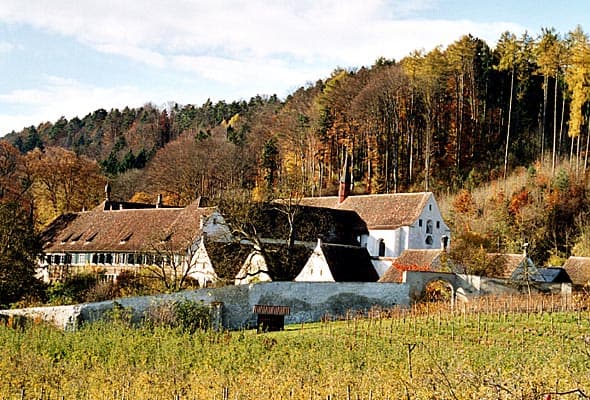
Ittingen Charterhouse
Ittingen Charterhouse, located near Warth in Switzerland's Canton Thurgau, was initially founded as a monastery for Canons Regular in 1150. It later became a Carthusian monastery in 1461, enduring destruction during the Reformation and eventual dissolution in 1848. Today, the meticulously restored precinct serves as an education and seminar center, housing museums, a farm, hotels, and a residential home for individuals with mental illnesses or learning difficulties.
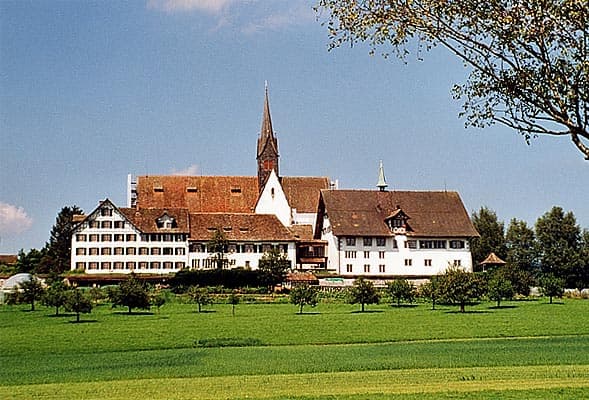
Kappel Abbey
Kappel Abbey was a former Cistercian monastery founded around 1185 by the Freiherr of Eschenbach in Kappel am Albis, Swiss canton of Zurich. It experienced a spiritual and economic golden age until the mid-14th century, amassing extensive properties. Following the Reformation, the monastery was abolished in 1527, its assets transferred to the city of Zurich, and the church became a parish church. Today, the complex houses a hotel and is used as a spiritual retreat center.