
Ittingen Charterhouse
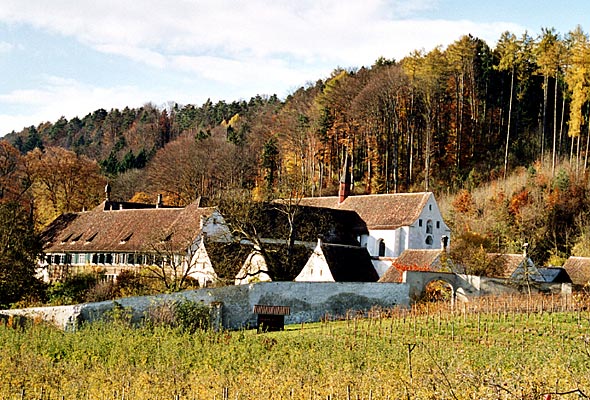
Ittingen Charterhouse, located near Warth in Switzerland's Canton Thurgau, was initially founded as a monastery for Canons Regular in 1150. It later became a Carthusian monastery in 1461, enduring destruction during the Reformation and eventual dissolution in 1848. Today, the meticulously restored precinct serves as an education and seminar center, housing museums, a farm, hotels, and a residential home for individuals with mental illnesses or learning difficulties.
Key Facts
- ›Founded in 1150 as a monastery for Canons Regular.
- ›Became a Carthusian monastery in 1461.
- ›Destroyed during the Reformation in 1524 and rebuilt.
- ›Dissolved in 1848 and later privately owned until 1977.
- ›Restored between 1979 and 1983 by the Kartause Ittingen Foundation.
- ›Currently operates as an education and seminar center with museums and a farm.
- Art Museum of Canton Thurgau
- Ittinger Museum
- Evangelical Meeting and Education Centre
- Residential Home For Individuals With Mental Illnesses Or Learning Difficulties
- Hotels
- Restaurant Zur MüHle
- Agricultural Concern Producing Wine and Cheese
Kartause Ittingen
Ittingersturm, Dissolution
About Ittingen Charterhouse
Ittingen Charterhouse (Kartause Ittingen) is a significant historical site located near Warth in the Canton of Thurgau, Switzerland. Its origins trace back to 1150 when it was established as a monastery for the Canons Regular. The religious community transitioned to the Carthusian order in 1461, adopting their strict way of life. The monastery experienced a tumultuous period during the Reformation, being destroyed in the Ittingersturm of 1524, but was subsequently rebuilt. Despite surviving until 1848, it was eventually dissolved following state intervention.
History and Transformation
The precinct of Ittingen Charterhouse remained largely intact through various historical phases. Following its dissolution, it was privately owned and operated as an agricultural concern for several generations until 1977. The charitable foundation Kartause Ittingen then acquired the property and undertook a comprehensive restoration between 1979 and 1983. This extensive work preserved the historical architecture while preparing the site for its contemporary functions.
Present Day Operations
Today, Ittingen Charterhouse serves a multifaceted role as an education and seminar centre. The historic buildings now house the art museum of Canton Thurgau and the Ittinger Museum, alongside tecum, an Evangelical meeting and education centre. The site also includes a residential home for approximately 30 individuals with mental illnesses or learning difficulties, who are employed in the various businesses on the premises. Furthermore, Ittingen Charterhouse features two hotels and a restaurant, and its agricultural operations are among the largest in the canton, producing wine, beer, and cheeses.
Source: Wikipedia ↗
Frequently Asked Questions
What was Ittingen Charterhouse originally founded as?
Ittingen Charterhouse was originally founded in 1150 as a monastery for the Canons Regular. It later transitioned to become a Carthusian monastery.
What happened to Ittingen Charterhouse during the Reformation?
During the Reformation in 1524, the monastery was destroyed in an event known as the Ittingersturm. However, it was subsequently rebuilt during the Counter-Reformation period.
When was Ittingen Charterhouse dissolved?
Ittingen Charterhouse was finally dissolved in 1848, after officials of the Helvetic Republic forbade the acceptance of novices and declared the monastery's assets as state property in 1798.
What is Ittingen Charterhouse used for today?
Today, the former monastery precinct functions as an education and seminar centre. It houses two museums, a farm, hotels, and a residential home for individuals with mental illnesses or learning difficulties.
Who currently manages Ittingen Charterhouse?
After being privately owned by the Fehr family from 1867 to 1977, the property was taken over by the charitable foundation Kartause Ittingen. This foundation oversaw its comprehensive restoration.
Related Monasteries

Bonmont Abbey
Bonmont Abbey, a former Cistercian monastery in Vaud, Switzerland, was founded between 1110 and 1120. Initially adhering to strict Benedictine and Cistercian rules, it grew wealthy through donations, leading to architectural and decorative changes. Secularized in 1536 during the Reformation, its buildings were repurposed for agricultural and administrative uses, though the church was preserved and later restored as a national monument.

Bubikon Commandery
Bubikon Commandery, also known as Bubikon Castle, was a medieval monastery of the Knights Hospitaller. Founded between 1191 and 1198, it grew to own significant lands across the present-day Canton of Zürich. The commandery was secularized during the Reformation, and its buildings now house a museum dedicated to its history and the Order.
Kappel Abbey
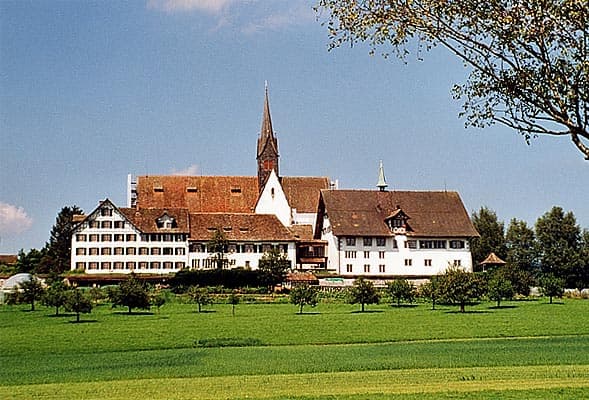
Kappel Abbey was a former Cistercian monastery founded around 1185 by the Freiherr of Eschenbach in Kappel am Albis, Swiss canton of Zurich. It experienced a spiritual and economic golden age until the mid-14th century, amassing extensive properties. Following the Reformation, the monastery was abolished in 1527, its assets transferred to the city of Zurich, and the church became a parish church. Today, the complex houses a hotel and is used as a spiritual retreat center.