
Tradruk Temple
Tradruk Temple, also known as Changzhu Monastery, is one of Tibet's earliest geomantic temples, located in the Yarlung Valley. Founded in the 7th century, it is significant for its role in Tibetan Buddhism, its historical importance as a royal monastery, and its architectural and artistic treasures, including a pearl-embroidered thangka said to be made by Princess Wencheng. Despite damage from historical conflicts and the Cultural Revolution, Tradruk has been restored and remains an active pilgrimage site.
Key Facts
- ›Considered one of Tibet's earliest great geomantic temples, possibly predating the Jokhang.
- ›Said to have been founded in the 7th century under King Songtsen Gampo.
- ›Historically served as one of Tibet's three royal monasteries.
- ›Houses a significant 7th-century pearl-embroidered thangka depicting Princess Wencheng as White Tara.
- ›Suffered damage during periods of persecution and invasion but was restored and enlarged multiple times.
- ›Is a stop on the Yarlung pilgrimage route known as 'three sanctuaries, three chortens'.

- Pearl-Embroidered Thangka of Princess Wencheng As White Tara
- Clay Figures Containing Fragments of Original 7th-Century Statues
- Statue of Padmasambhava At Age Eight
- Innermost Chapel Believed To Date To the Original Temple
- Changzhu Monastery
- Trandruk
- Tradruk
- Tradrug
- Trandrug
- Trangdruk
- Trhandruk
- Traduk
- 昌珠寺
- Changzhu Si
- G.Yo Ru Khra 'Brug Bkra Shis Byams Snyoms Lha Khang
Songtsen Gampo, Trisong Detsen, Muné Tsenpo, Langdarma, 5th Dalai Lama, 7th Dalai Lama, Princess Wencheng, Padmasambhava, Rin-Cen
- Foundation In the 7th Century
- Inclusion As One of Three Royal Monasteries Under Trisong Detsen
- Damage During Persecution of Buddhism Under Langdarma
- Damage During 16th-Century Mongol Invasion
- Restoration and Enlargement In 1351
- Receiving A Golden Roof During the Reign of the 5th Dalai Lama
- Expansion Under the 7th Dalai Lama
- Destruction of Several Buildings During the Cultural Revolution
- Renovation and Reconsecration In the 1980s
About Tradruk Temple
Tradruk Temple, known in Chinese as Changzhu Monastery, is a significant religious site located in the Yarlung Valley of the Tibet Autonomous Region. Often cited as one of Tibet's earliest great geomantic temples, some historical accounts suggest it predates the Jokhang Temple. Its founding is traditionally attributed to the 7th century under King Songtsen Gampo, and it is considered one of the most important surviving royal foundations in the Yarlung Valley.
Historical Significance and Legends
According to legend, Tradruk Temple was one of twelve geomantic temples built to subdue a supine ogress, with the temple situated on her left shoulder. Another legend describes the site as originally a lake inhabited by a dragon, which was defeated by a falcon summoned through meditation by Songtsen Gampo, thus clearing the way for the temple's construction. Historically, under rulers like Trisong Detsen, Tradruk served as one of Tibet's three royal monasteries. The temple has endured periods of damage, including during the persecution of Buddhism under Langdarma and a 16th-century Mongol invasion, but has been repeatedly restored and expanded throughout its history, notably in 1351 and under the reigns of the 5th and 7th Dalai Lamas.
Architecture and Treasures
The innermost chapel of Tradruk Temple is believed to be part of the original structure from the 7th century. Among its most prized possessions is a unique thangka, meticulously embroidered with thousands of pearls, which is said to have been created by Princess Wencheng herself. This artwork depicts her as White Tara and is considered one of only three such thangkas made by her. The temple also features a notable 'talking' statue of Padmasambhava at the age of eight. Although a famous bell inscribed with the name of Trisong Detsen is no longer at the monastery, historical records indicate its presence and significance.
Contemporary Role
Despite suffering damage during the Cultural Revolution, Tradruk Temple underwent renovation and reconsecration in the 1980s. Today, the complex spans 4667 square meters and is recognized as a site of national protection. It continues to be an active pilgrimage destination and is part of the Yarlung pilgrimage route known as "three sanctuaries, three chortens." Annually, in June, the temple hosts ritual dances called Métok Chöpa, or 'Flower Offering'.
Source: Wikipedia ↗
Frequently Asked Questions
When was Tradruk Temple founded?
Tradruk Temple is said to have been founded in the 7th century under King Songtsen Gampo. Some sources suggest it may even predate the Jokhang Temple, which is also among Tibet's earliest great geomantic temples.
What is the significance of the pearl thangka at Tradruk Temple?
The most important treasure at Tradruk Temple is a thangka embroidered with thousands of pearls. This artwork is attributed to Princess Wencheng and depicts her as White Tara, making it a significant artifact of both religious and historical importance.
Has Tradruk Temple always been in its current state?
No, Tradruk Temple has undergone significant damage and restoration throughout its history. It was heavily damaged during the persecution of Buddhism under Langdarma and again during a 16th-century Mongol invasion. It was restored and enlarged in 1351, received a golden roof during the reign of the 5th Dalai Lama, and was further expanded under the 7th Dalai Lama. Many buildings were destroyed during the Cultural Revolution but were renovated in the 1980s.
What is the architectural style of Tradruk Temple?
While specific architectural styles are not detailed, the innermost chapel is believed to date back to the original temple built by Songtsen Gampo. The monastery has been expanded and renovated over centuries, incorporating various architectural influences and additions.
Is Tradruk Temple still an active religious site?
Yes, Tradruk Temple was reconsecrated in 1988 after renovations and is currently under national protection. It remains an important pilgrimage site and hosts annual ritual dances known as the Métok Chöpa.
Related Monasteries
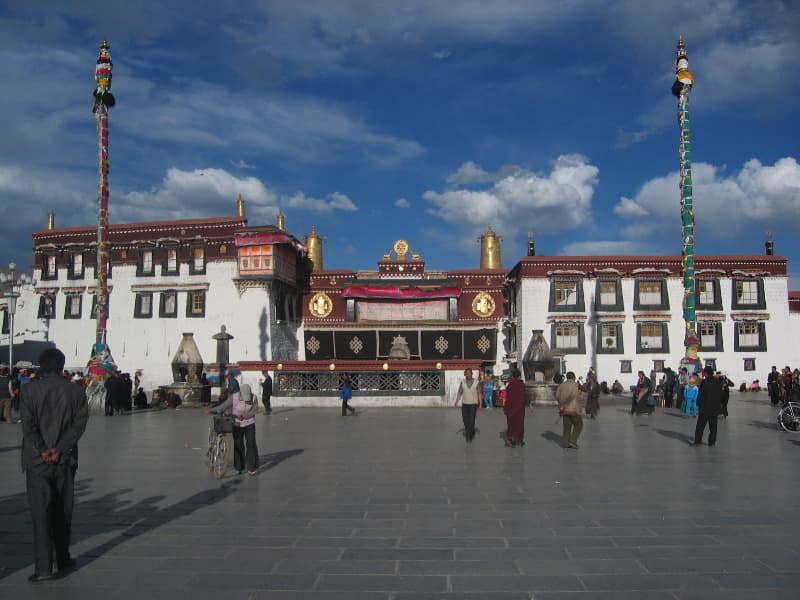
Jokhang Temple
The Jokhang Temple, also known as Rasa Trulnang or Zuglagkang, is a Tibetan Buddhist temple complex and monastery in Lhasa, considered the spiritual heart of the city. Constructed around 640 CE by King Songsten Gampo, it was built to house the Jowo Mikyo Dorje statue. Over centuries, it has undergone expansions and renovations, most notably by the Fifth Dalai Lama in 1610, and was designated a UNESCO World Heritage Site in 2000 as an extension of the Potala Palace.

Gonchen Monastery
Gonchen Monastery, also known as Derge Monastery, is a significant Sakya Tibetan Buddhist monastery situated in the town of Derge, within the Kham region of Sichuan, China. Founded by the renowned polymath Thang Tong Gyalpo, it is recognized for its unique architectural design and its association with the historic Derge Parkhang printing house, which continues to produce Buddhist scriptures using traditional methods. Though largely destroyed during the Cultural Revolution, the monastery was restored in the 1980s and remains a vital center for Tibetan Buddhism.
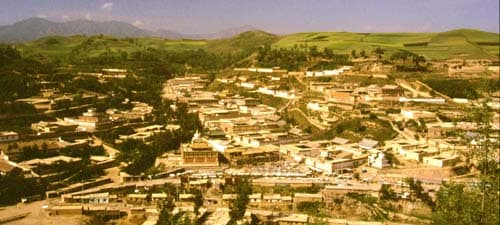
Kumbum Monastery
Kumbum Monastery, also known as Ta'er Temple, is a significant Tibetan Buddhist monastery founded in 1583 in Lusar, Qinghai, China. It holds a prominent place in Tibetan Buddhism, second only to Lhasa's Drepung Monastery. The monastery is renowned for its origins tied to Je Tsongkhapa, the founder of the Gelug school, and the miraculous "Tree of Great Merit" that grew from his birthplace.