
Torphichen Preceptory
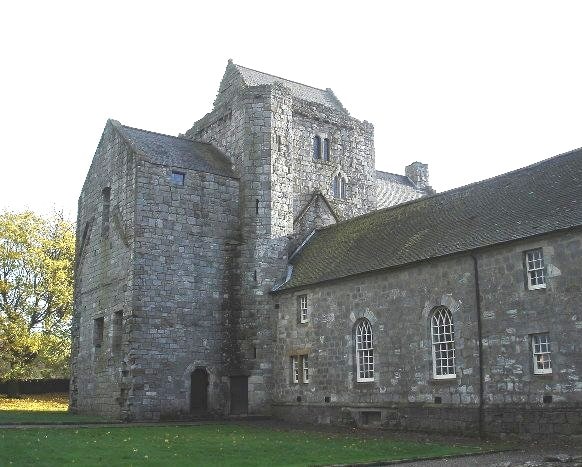
Torphichen Preceptory is a significant historical site in West Lothian, Scotland, representing the former headquarters of the Knights Hospitaller in the region. Established in the 1140s and expanded in the 13th century, it comprised a cruciform church and various domestic buildings, including a hospital. After the Reformation, parts were adapted for parish use, though much fell into disrepair, with later demolitions and new construction on the site.
Key Facts
- ›The Preceptory was built in the 1140s, with significant expansion in the 13th century.
- ›It served as the headquarters for the Knights Hospitaller in Scotland.
- ›Surviving masonry dates to the late 12th and early 13th centuries and showcases refined architectural detail.
- ›A unique cloister was completed in the 15th century, with only its foundations remaining.
- ›The site is associated with William Wallace, who held his last parliament here before the Battle of Falkirk in 1298.
- ›Sanctuary stones mark a former sanctuary area that extended one Scots mile around the village, possibly predating the Preceptory.
Romanesque, Gothic
Central Tower, Transepts, Sanctuary Stones, Kirkyard With 17th-18th Century Headstones
Alexander De Welles, William Wallace, Edward I of England, Sir William Knollys, Sir James Sandilands
Battle of Falkirk, Suppression of the Knights Templar, Battle of Bannockburn, Battle of Flodden
About Torphichen Preceptory
Overview
Torphichen Preceptory is a significant historical and archaeological site located in the village of Torphichen, West Lothian, Scotland. It represents the former headquarters of the Knights Hospitaller, also known as the Order of St John of Jerusalem, in Scotland. The origins of the Preceptory date back to the 1140s, when it was established around an existing church, possibly of early Christian provenance. The complex underwent substantial expansion during the 13th century, with the erection of its most prominent standing structures, including a cruciform church with a central tower and transepts, alongside various domestic buildings and a hospital.
Architectural and Historical Significance
The surviving masonry of the church, particularly the crossing beneath the central tower, showcases some of the best-preserved late 12th and early 13th-century stonework in Scotland, featuring refined architectural details. In the 15th century, a cloister was completed, an unusual feature situated on the north side of the church; only its foundations now remain. Following the Reformation, the nave of the Preceptory church was repurposed as the local parish kirk, while the remaining buildings gradually fell into disrepair. The site has seen further alterations, with the nave and domestic buildings being demolished in 1756 and a new T-plan kirk constructed. The remnants of the Preceptory also served as a courthouse for a period.
Sanctuary and Associations
An intriguing aspect of Torphichen is its historical association with sanctuary. A 'sanctuary stone' in the kirkyard marks the centre of an 'area of sanctuary' that once extended one Scots mile around the village, with two other original stones still standing. These stones are potentially of much earlier origin, possibly linked to Neolithic sites like Cairnpapple Hill. The Preceptory holds notable connections to Scottish history, including the presence of William Wallace, who is recorded as having held his last parliament here before the Battle of Falkirk in 1298. The Hospitallers, who fought on the English side during the Wars of Scottish Independence, later returned to their place in Scottish affairs. The last Preceptor, Sir James Sandilands, surrendered the Preceptory lands to the Crown in 1564, receiving them back with the secular title Lord Torphichen.
Source: Wikipedia ↗
Frequently Asked Questions
What is Torphichen Preceptory?
Torphichen Preceptory is a historic church and former headquarters of the Knights Hospitaller in Scotland. It is located in the village of Torphichen, West Lothian.
When was Torphichen Preceptory built?
The Preceptory began construction in the 1140s around an existing church. Significant expansions and the erection of the buildings that still stand occurred during the 13th century.
What happened to the Preceptory after the Reformation?
Following the Reformation, the nave of the church was converted into a parish kirk. However, the rest of the buildings gradually fell into disrepair, with later demolitions and new structures built on the site.
What is the significance of the sanctuary stones at Torphichen?
Sanctuary stones at Torphichen mark the boundary of a historical sanctuary area that once encompassed a mile around the village. These stones may be older than the medieval Preceptory and potentially linked to Neolithic sites.
Is any part of Torphichen Preceptory still standing?
Yes, the central tower and transepts of the original cruciform church remain. The surviving crossing of the church, beneath the central tower, is noted for its well-preserved late 12th-early 13th century masonry.
What is the connection between Torphichen Preceptory and William Wallace?
William Wallace is recorded as having held his final parliament at Torphichen Preceptory prior to the Battle of Falkirk in 1298. A document signed as Guardian of Scotland by Wallace was also prepared there.
Related Monasteries
Arbroath Abbey
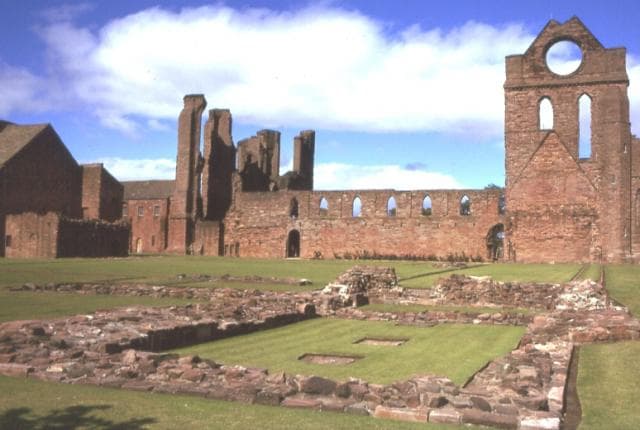
Arbroath Abbey, a ruined Cistercian monastery located in Arbroath, Scotland, was founded in 1178 by King William the Lion. It is renowned as the site where the Declaration of Scottish Independence was likely drafted in 1320. The Abbey, once the wealthiest in Scotland, is now managed by Historic Environment Scotland and is a popular tourist attraction, notable for its distinctive red sandstone ruins.

Dundrennan Abbey
Dundrennan Abbey was a Cistercian monastery established in 1142 in Dundrennan, Scotland. Known for its Romanesque architecture, the abbey reflects the austere Cistercian ideal and is noted for the preservation of its original forms due to its hard-weathering grey sandstone construction. Although extensively ruined, it holds historical significance as the site where Mary, Queen of Scots, spent her final night in Scotland in 1568 before fleeing.
Glenluce Abbey
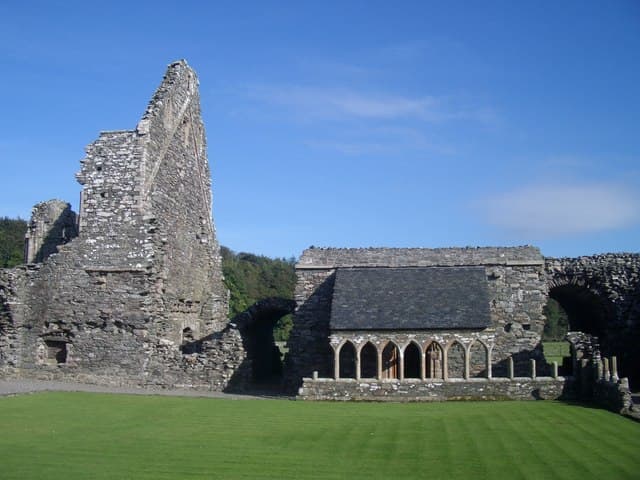
Glenluce Abbey was a Cistercian monastery founded around 1190 by Rolland, Lord of Galloway. After the Scottish Reformation in 1560, the abbey fell into disuse and its lands were controversially acquired by the Kennedy family. Today, the ruins of Glenluce Abbey are a scheduled monument, having undergone partial restoration.