
Tongerlo Abbey
Tongerlo Abbey is a Premonstratensian monastery located in Tongerlo, Belgium, with a history dating back to around 1133. It played a significant role in the Campine region, serving as a large religious and educational center and influencing local politics. After a period of disestablishment during the Napoleonic era, the abbey was re-established in 1838 and remains an active monastery today, notable for its historical library and a museum housing a life-size copy of Leonardo da Vinci's "The Last Supper."
Key Facts
- ›Founded around 1133 by Abbot Waltman of St Michael's Abbey and Giselbert of Kasterlee.
- ›Was a significant religious and educational center in the Campine region.
- ›Briefly disestablished during the French Napoleonic era.
- ›Re-established in 1838 and remains an active monastery.
- ›Houses a Leonardo da Vinci Museum with a full-size copy of 'the Last Supper'.
- ›Has a historical library that supported the work of the Bollandists.

- Library
- Leonardo Da Vinci Museum
- Full-Size Copy of Leonardo Da Vinci's 'the Last Supper'
Abdij Van Tongerlo, Abbaye De Tongerlo
Waltman, Giselbert of Kasterlee, Bernard of Clairvaux, Burchard of Cambrai, Arnold Vessem, Hendrik Bosch, Peter Janssens, Francis Wichmans, Adrianus Stalpaerts, Willem Ignatius Kerricx, Peter Hubert Evermode Backx, Thomas Louis Heylen
- Disestablished During Napoleonic Era
- Re-Established In 1838
- Three Canons Became Catholic Martyrs Due To Calvinism
About Tongerlo Abbey
Tongerlo Abbey is a Premonstratensian monastery situated in Tongerlo, a submunicipality of Westerlo in Belgium. Established around 1133, its exact founding circumstances are not fully clear, with historical accounts pointing to Abbot Waltman of St Michael's Abbey and Giselbert of Kasterlee as key figures. The abbey became a significant religious and educational hub in the Campine region, historically a wild area that now straddles northeastern Belgium and the southern Netherlands. It played a notable role in the politics of the Duchy of Brabant and was entrusted with the charge of numerous parishes.
History and Significance
The abbey's influence grew over time, with bishops and landowners entrusting it with parish responsibilities. A significant administrative shift occurred in the 16th century with the erection of new dioceses, which placed considerable financial burdens on Tongerlo. The abbey was a center of learning, boasting one of the largest libraries and supporting the work of scholars like the Bollandists. The rise of Calvinism led to conflict, resulting in the martyrdom of three canons from Tongerlo. The monastery also experienced periods of upheaval, including its disestablishment following the French conquest during the Napoleonic era. It was successfully re-established in 1838 and continues to operate as an active monastery.
Notable Features
Tongerlo Abbey is recognized for its historical library, which was instrumental in scholarly pursuits. More recently, it has become home to a Leonardo da Vinci Museum. This museum features a full-size copy of Leonardo da Vinci's "The Last Supper," created in the 16th century. This copy is significant as it reveals details that have since deteriorated in the original fresco, offering a unique perspective on the masterpiece.
Source: Wikipedia ↗
Frequently Asked Questions
When was Tongerlo Abbey founded?
The exact details of its foundation are unclear, but Tongerlo Abbey was most likely established around 1133. Its founding involved Abbot Waltman of St Michael's Abbey and a local nobleman, Giselbert of Kasterlee, who provided land and canons.
What religious order is Tongerlo Abbey part of?
Tongerlo Abbey belongs to the Premonstratensian order, also known as the Norbertines. This order was founded by St. Norbert of Xanten.
Is Tongerlo Abbey still active?
Yes, Tongerlo Abbey was re-established in 1838 after being disestablished during the Napoleonic era, and it remains an active monastery to this day.
What is Tongerlo Abbey known for?
Tongerlo Abbey was a large religious center and played an important role in the politics of the Duchy of Brabant. It is also known for its historical library and for housing a Leonardo da Vinci Museum with a full-size copy of 'The Last Supper'.
What historical events affected Tongerlo Abbey?
The abbey was disestablished during the French conquest in the Napoleonic era and later re-established after the Belgian Revolution. It also faced conflict due to the rise of Calvinism in the Netherlands, with three of its canons becoming Catholic martyrs.
Related Monasteries
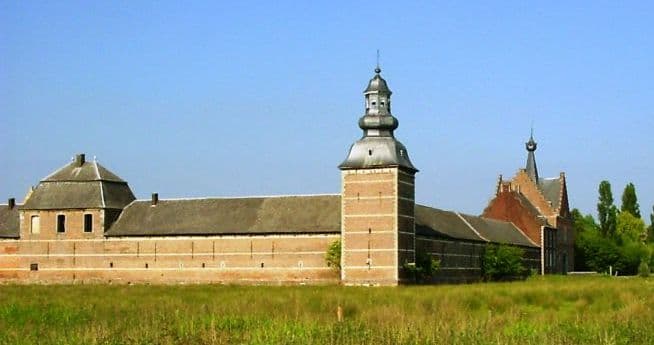
Herkenrode Abbey
Herkenrode Abbey was a significant Cistercian nunnery founded around 1182 in Kuringen, Belgium, becoming the wealthiest women's monastery of its order in the Low Countries. Though it faced decline in the 15th century, it experienced a revival and underwent reconstruction in the 18th century. The abbey was dissolved by the French Revolutionary Army in 1795, leading to its dispersal and eventual ruin, though much of its 16th-century stained glass has survived and is considered globally significant.

Amay Priory
Chevetogne Abbey, also known as the Monastery of the Holy Cross, is a Catholic Benedictine monastery founded in 1925 by Dom Lambert Beauduin with the aim of promoting Christian unity, particularly between the Catholic and Eastern Churches. Originally established in Amay, the community relocated to Chevetogne in 1939, where it continues its ecumenical mission with separate Eastern and Western chapels and the publication of the journal Irénikon.

Louvain-la-Neuve
Louvain-la-Neuve is a planned town in Belgium, established to house the French-speaking Université catholique de Louvain (UCLouvain) following linguistic disputes in the 1960s. Designed with a focus on pedestrian accessibility, its city center is built on a concrete slab with vehicular traffic routed underground. While initially conceived as an academic hub, it has diversified with cultural and commercial amenities, aiming for a balanced community beyond its student population.