
Herkenrode Abbey
Catholic·Belgium·Ruins with active religious community in surviving buildings·12th century
Herkenrode Abbey was a significant Cistercian nunnery founded around 1182 in Kuringen, Belgium, becoming the wealthiest women's monastery of its order in the Low Countries. Though it faced decline in the 15th century, it experienced a revival and underwent reconstruction in the 18th century. The abbey was dissolved by the French Revolutionary Army in 1795, leading to its dispersal and eventual ruin, though much of its 16th-century stained glass has survived and is considered globally significant.
Key Facts
- ›Founded in or about 1182 by Gerard, Count of Loon, as a Cistercian monastery for nuns.
- ›Formally accepted into the Cistercian Order in 1217, it became the first, largest, and wealthiest women's monastery of the Order in the Low Countries.
- ›The abbey served as the burial place for the Counts of Loon until the 14th century.
- ›Suffered decline in the 15th century but experienced a revival around 1500, with 18th-century reconstructions including Neo-Classical abbesses' lodgings and an English garden.
- ›Dissolved by the French Revolutionary Army in 1795, the monastic community was dispersed, and the buildings eventually fell into disrepair.
- ›Surviving 16th-century stained glass from Herkenrode is considered the most significant body of Flemish stained glass worldwide.
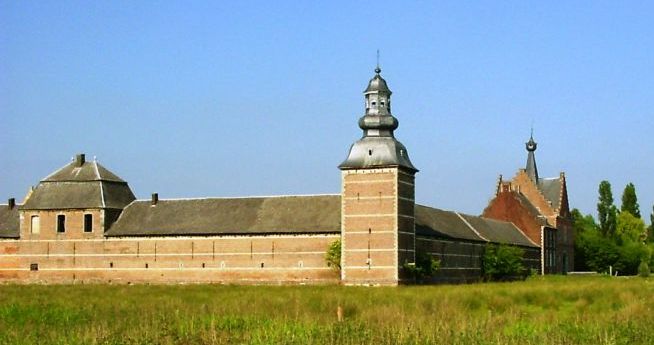
Neo-Classical
- Surviving 16th-Century Stained Glass
- Neo-Classical Abbesses' Lodgings
- English Garden With Exotic Trees
- Site of the Burial Place For the Counts of Loon
Abdij Van Herkenrode
Gerard, Count of Loon, Rudolf of ZäHringen, Lambert Lombard
- Foundation of the Abbey
- Formal Acceptance Into the Cistercian Order
- French Revolutionary Army Occupation and Dissolution
- Fire Destroying Much of the Church
- Demolition of Remaining Ruins
About Herkenrode Abbey
Herkenrode Abbey, known in Limburgish as Abdij van Herkenrode, was a prominent Catholic monastery of Cistercian nuns located in Kuringen, within the municipality of Hasselt in the Belgian province of Limburg. Its foundation in or about 1182 by Gerard, Count of Loon, marked the beginning of an institution that would become the first, largest, and wealthiest women's monastery of the Cistercian Order in the Low Countries. The abbey held significant historical importance, serving as the final resting place for the Counts of Loon until the mid-14th century.
History and Decline
After its formal acceptance into the Cistercian Order in 1217, Herkenrode Abbey flourished for centuries. Despite a period of severe decline during the 15th century, the abbey experienced a revival around the turn of the 16th century. The 18th century saw plans for a comprehensive reconstruction, resulting in the addition of Neo-Classical abbesses' lodgings and the creation of an intact English garden featuring exotic trees. However, the abbey's existence as a monastic community was irrevocably altered in 1795 when the French Revolutionary Army occupied the region. The abbey was seized, the nuns were expelled, and the monastic community was permanently dispersed. Subsequently, the buildings were sold and gradually fell into disrepair, exacerbated by a fire in 1826 that destroyed much of the church. By 1844, the remaining ruins, including the mausoleum of the Counts of Loon, were demolished.
Legacy and Revival
Despite the destruction of the main structures, a significant legacy of Herkenrode Abbey endures in its surviving 16th-century stained glass. This collection is recognized as the most important body of Flemish stained glass worldwide, with pieces finding their way into various churches and cathedrals in England. In 1972, the Canonesses Regular of the Holy Sepulchre acquired part of the former abbey grounds and have since established their own monastery and retreat center there, undertaking restoration work on the remaining historical buildings dating from the 16th to 18th centuries. The site and its surrounding estate were designated and protected as a national historical monument and landscape in 1974.
Source: Wikipedia ↗
Frequently Asked Questions
When was Herkenrode Abbey founded?
Herkenrode Abbey was founded in or about 1182 by Gerard, Count of Loon. Some historians suggest he was compelled to found it as penance.
What religious order was Herkenrode Abbey associated with?
Herkenrode Abbey was a Catholic monastery of Cistercian nuns. It was formally accepted into the Cistercian Order in 1217.
What happened to Herkenrode Abbey after the French Revolution?
The French Revolutionary Army occupied the region in 1795, seized the abbey, and expelled the nuns, permanently dispersing the monastic community. The buildings were sold and gradually fell into disrepair, with a fire in 1826 destroying much of the church.
Is any part of Herkenrode Abbey still in use?
Since 1972, some surviving buildings have been home to a community of the Canonesses of the Holy Sepulchre, who have since built a new retreat center and church on the site. Restoration work has been carried out on the remaining 16th-18th century buildings.
What is significant about the stained glass from Herkenrode Abbey?
The surviving 16th-century stained glass from Herkenrode Abbey constitutes the most significant collection of Flemish stained glass globally. Some of this glass was installed in English cathedrals and churches after the abbey's dissolution.
Who were the Counts of Loon and their connection to Herkenrode Abbey?
Gerard, Count of Loon, founded the abbey. After his death during the Third Crusade, his body was brought back and buried at the abbey, which subsequently became the burial place for all Counts of Loon until the 14th century.
Related Monasteries

Tongerlo Abbey
Tongerlo Abbey is a Premonstratensian monastery located in Tongerlo, Belgium, with a history dating back to around 1133. It played a significant role in the Campine region, serving as a large religious and educational center and influencing local politics. After a period of disestablishment during the Napoleonic era, the abbey was re-established in 1838 and remains an active monastery today, notable for its historical library and a museum housing a life-size copy of Leonardo da Vinci's "The Last Supper."

La Cambre Abbey
La Cambre Abbey, also known as Ter Kameren Abbey, is a former Cistercian monastery located in Brussels, Belgium. Founded around 1196, it was a significant religious site that reached its peak in the 13th century. Though suppressed during the French Revolution and largely rebuilt in the 18th century, parts of the medieval structure remain, and today the site houses a Catholic parish, a community of Norbertine canons, the Belgian National Geographic Institute, and a prestigious visual arts school.

Louvain-la-Neuve
Louvain-la-Neuve is a planned town in Belgium, established to house the French-speaking Université catholique de Louvain (UCLouvain) following linguistic disputes in the 1960s. Designed with a focus on pedestrian accessibility, its city center is built on a concrete slab with vehicular traffic routed underground. While initially conceived as an academic hub, it has diversified with cultural and commercial amenities, aiming for a balanced community beyond its student population.